Driving Medical Reports: A Complete Guide to Staying Fit to Drive
Whether you’re a car driver renewing your licence past 70, a lorry driver chasing a C1 medical, or a taxi operator needing your annual sign-off, a driving medical is something almost every UK driver licence holder will encounter at some point. Understanding what these assessments involve and where to get a reliable medical report can save you weeks of delay and unnecessary stress.
This guide walks through everything you need to know about driving medical reports, from the standard car licence check to HGV medical requirements, taxi driver medicals and the paperwork behind them, including the D4 form for medical and DVLA-approved eyesight standards.
What Is a Driving Medical Report?
A driving medical report is a formal assessment, completed by a GP or approved doctor, confirming whether a person is medically fit to drive. It’s typically requested by the DVLA (or DVA in Northern Ireland), an employer, or an insurance provider when a driving license NI applicant or holder has a medical condition, is renewing an older-style paper licence driving record, or needs to drive professionally.
At Friends Medical Service, our GPs provide comprehensive medical reports covering driving, sports, employment and travel needs. For a standard driving medical appointment, you’ll need to bring a completed DLM1 form for the doctor to review and sign.
Why You Might Need One
- Renewing your licence after turning 70 (over 65 driving test age-related checks often start earlier for professional drivers),
- Applying for or renewing an HGV medical test or LGV medical,
- Working as a taxi driver, PCO medical holder, or private hire operator,
- Recovering from a stroke, seizure, or other health event (driving following stroke),
- Living with a condition that affects vision, such as those with “can you drive with one eye” queries,
- Being flagged under DVLA fitness to drive notification rules, or
- Needing a medico legal report following an accident or injury claim.
Types of Driving Medical Assessments
Not all driving medicals are the same. The type you need depends on your licence category and how you intend to use it.
1. Group 1 (Car and Motorcycle) Medicals
This covers category A on driving license (motorcycles), driving licence B (standard cars) and other everyday categories. Most Group 1 drivers only need a medical if they disclose a relevant condition or reach a certain age.
2. Group 2 (HGV/LGV) Medicals
Also known as the HGV medical form or medical C1 assessment, this is a stricter test required for anyone driving vehicles over 3.5 tonnes. HGV medical requirements include:
- A full eyesight assessment against DVLA standards
- Blood pressure and cardiovascular checks
- Urine testing for diabetes indicators
- A general health questionnaire and physical exam
- Assessment for drug driving risk factors and alcohol use
If you’re searching for a safety critical medical near you, an HGV/LGV medical falls into this “safety critical medicals” category, alongside roles in aviation, rail and offshore work.
3. Taxi and Private Hire (PCO) Medicals
Taxi driver medicals, sometimes called taxi medical checks, are required by most councils before issuing or renewing a taxi licence. In London, this is the well-known PCO medical. Many people search for a taxi doctor or driver medics near them; this is exactly the kind of assessment our GPs handle regularly.
4. D4 Medical Form (Bus, Coach and Some HGV Renewals)
The D4 medical form, sometimes just called the D4 form for medical, is the official DVLA document a doctor completes for bus, coach and certain lorry licence applications. It mirrors the HGV medical closely but is specific to PCV (passenger-carrying vehicle) categories.
What Happens During a Driving Medical Appointment
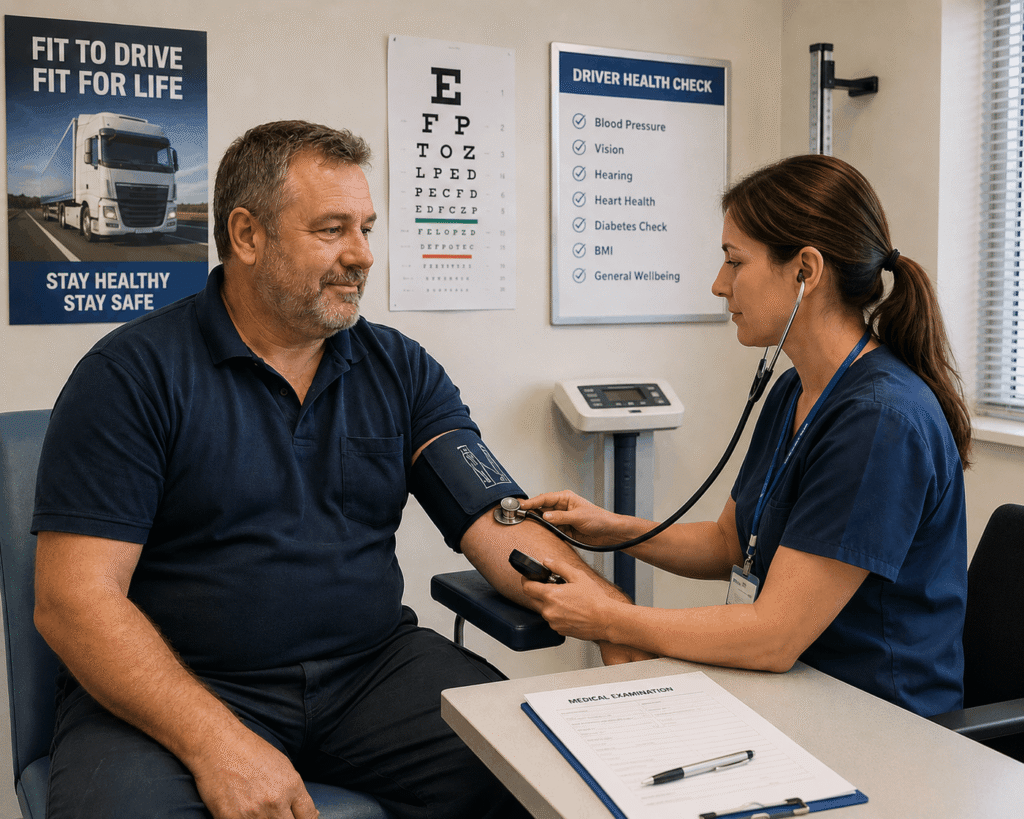
A typical driving medical, whether it’s a standard car check or a safety critical medical, includes:
- Medical history review: current conditions, medications and past surgeries,
- Eye vision test for driving: checking visual acuity and field of vision,
- Blood pressure and heart check: sometimes supported by an ECG if there’s a cardiac history,
- Urine test: screening for diabetes and other markers relevant to safe driving,
- General physical examination: mobility, reflexes and any condition-specific checks and
- Completion of the relevant form: DLM1, D4, or HGV medical form, depending on your licence type,
Some patients also require additional blood testing and health checks, which can be arranged as part of the same visit.
The Driving Eyesight Test Explained
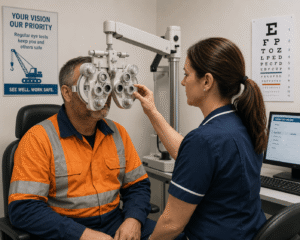
Vision is one of the most heavily scrutinised areas of any driving medical. The DVLA eye test standard requires drivers to read a number plate from 20 metres in good daylight, alongside a formal eye test for driving using a DVLA eye test chart for visual acuity and field of vision.
Common questions that people have before their test include:
-
Are you allowed to drive with one eye?
- Yes, in most cases, you can, provided your remaining eye meets the required visual acuity and field of vision standards and you’ve adapted to monocular vision. A period of adjustment and, sometimes, a field test may be required.
-
What’s the DVLA sight test standard?
- You must be able to read a car number plate (post-2001 style) from 20 metres away, with glasses or contact lenses if needed.
-
Do I need a separate drivers eye test?
- Opticians can carry out a driving eyesight test, but for professional or Group 2 licences, your GP will usually incorporate this into the full medical.
HGV Medical Requirements and Validity
If you’re booking an HGV medical test, here’s what to expect:
-
Who needs it?
- Drivers applying for Category C, C1, C+E, or D licences.
-
How long does it last?
- Generally, HGV medicals are valid for 5 years if you’re under 45 and must be renewed every 1–5 years after age 45, depending on DVLA guidance and any health conditions.
-
What’s assessed?
- Vision, cardiovascular health, diabetes markers and general fitness.
-
Where to book?
- A “safety critical medicals near me” search should point you toward GP practices experienced in Group 2 assessments, such as ours.
Elderly Driver Safety and Licence Renewal
Elderly driver safety is a growing focus for the DVLA. Once you turn 70, your licence must be renewed every three years and you’re required to self-declare any relevant medical conditions. While there isn’t an automatic over 65 driving test, certain conditions (vision changes, cognitive decline, mobility issues, etc.) may trigger a formal medical review as part of your medical driving licence renewal progress.
If you’re helping an older relative through this process, a proactive driving medical can clarify fitness to drive and support a smooth renewal.
Getting or Renewing a UK Driving Licence
For anyone new to the system, getting a UK driver’s license (or getting driving license in UK) involves:
- Applying online or by post through DVLA/DVA once you meet the minimum driving UK age (17 for most categories, younger for some vehicles)
- Passing a theory test
- Booking and passing a practical driving test
- Declaring any medical conditions that could affect fitness to drive
You can usually check your driving license or track a driver licence application status online. If your licence shows a code 79(3) driving licence restriction or the letters FKQ on driving licence, this typically relates to automatic transmission or specific vehicle adaptations. Always check the official DVLA code list if you’re unsure what a driving licence FKQ entry means for you.
Booking Your Practical Driving Test
Whether you’re a learner or an instructor trying to book a driving test for pupil, a few points are worth knowing:
-
How long is the driving test?
- The practical driving test typically runs around 40 minutes (extended tests for certain licence categories can run longer).
-
What manoeuvres are required on a driving test?
- Current UK tests assess a mix from 4 standard manoeuvres, which are: reversing around a corner, parallel parking, bay parking and pulling up on the right and reversing.
-
How can I get my driving test rebooked?
- If you need to reschedule, you can usually swap driving test dates online, subject to availability and notice periods.
-
How do I find driving test centres near me?
- Availability varies by driving test centres location, so booking early is worthwhile, especially around exam-heavy periods.
-
How to become a driving examiner?
- This route generally requires several years of driving experience, a clean licence and passing DVSA’s examiner assessment process.
Instructors will also be familiar with the driving test marking sheet (or drive test marking sheet), which examiners use to record faults during the assessment, which is useful for pupils reviewing practical driving test questions ahead of test day.
Medical Reports vs Medico-Legal Reports
It’s worth distinguishing between a standard driving medical report and a medico legal report. A driving medical confirms fitness to hold a licence; a medico-legal report is typically prepared for solicitors following an accident, injury, or insurance claim and carries different legal weight. If you’ve been involved in a road traffic incident and need documentation for a claim, our medico-legal reporting service is separate from, but often connected to, driving medical assessments.
Frequently Asked Questions
What is a driving medical report?
It’s a document completed by a doctor confirming whether you’re medically fit to hold or renew a driving licence, often required for HGV, taxi, or age-related renewals.
How long does an HGV medical last?
Typically five years under age 45, then more frequent renewals as required by the DVLA once you’re over 45.
Can you drive with one eye?
Generally yes, provided your remaining eye meets DVLA visual acuity and field of vision standards and you’ve had time to adapt.
What form do I need for a driving medical?
Most car licence medicals use the DLM1 form; HGV and PCV medicals use the HGV medical form or D4 form respectively.
Where can I arrange for a safety critical medical near me?
GP practices experienced in occupational health, such as Friends Medical Service, offer safety critical medicals for HGV, taxi and other professional drivers.
Do taxi drivers need a medical every year?
Most councils require an annual or biennial taxi medical, though requirements vary by local authority. Check with your licensing council.
What happens if I fail a driving medical?
Your doctor will explain the reasons and may recommend further tests, a specialist referral, or temporary licence restrictions while the condition is managed.
How do I check my driving licence status?
You can check your driving licence and any codes or restrictions through the official DVLA “view your driving licence” online service.
Further Reading
If you’d like to read more about this topic from trusted sources, the following resources offer clear and accessible information:
- nidirect – Medical Conditions and Driving: DVA’s official guidance for Northern Ireland drivers on reporting a medical condition, medical licence renewals and reapplying once you’re passed fit to drive.
- nidirect – Driving Eyesight Requirements: Official NI guidance on the legal eyesight standards for driving, including visual acuity and field of vision.
- GOV.UK – Health Conditions and Driving: Searchable list of medical conditions that must be reported to the DVLA or DVA, and what happens next.
- GOV.UK – DVLA Eyesight Rules for Driving: The official Snellen chart and number-plate standards used to assess fitness to drive.
Final Thoughts
Whatever stage you’re at, whether it is a first-time car medical, a C1 medical for your HGV licence, or an annual taxi sign-off, getting the right driving medical report sorted early makes the whole licensing process smoother. Our GPs are experienced across standard car and motorcycle medicals, HGV, LGV and PCO/taxi medicals, D4 form completions for PCV licences and medico-legal reports for personal injury solicitors, with same-week appointments available.
Visit our Medical Reports page for pricing and to book your appointment, or browse our full range of GP services if you need bloods or health checks alongside your medical. For anything else, get in touch with our team as we’re more than happy to help.