
When a child needs a scan, the stakes feel different. Smaller bodies, harder-to-explain instructions and a parent standing anxiously in the corner of the room all change what “good imaging” looks like. That’s exactly why paediatric radiology exists as its own specialty, separate from general radiology, with its own training, its own techniques and its own understanding of how growing bodies differ from adult ones.
This guide explains what paediatric radiology covers, why paediatric ultrasound is usually the imaging method of choice for children, what to expect from a scan and how to access private paediatric ultrasound in Northern Ireland through Friends Medical Service.
What Is Paediatric Radiology?
Paediatric radiology is the branch of medical imaging dedicated to diagnosing and monitoring conditions in babies, children and adolescents. A consultant paediatric radiologist is a doctor who has completed general radiology training and then undertaken further specialist fellowship training focused specifically on interpreting scans of children.
This distinction matters more than it might seem. Children are not simply small adults:
- Anatomy changes with age. Growth plates, developing organs and bone structure look different at six months, six years and sixteen years old and a radiologist needs to know what’s normal at each stage to avoid over- or under-diagnosing.
- Radiation sensitivity is higher. Children’s tissues are more sensitive to ionising radiation than adult tissue, so paediatric specialists are trained to choose the lowest-dose, safest imaging option that still answers the clinical question.
- Communication and comfort differ. A scan that takes two minutes with a calm adult might take twenty minutes with a frightened four-year-old and paediatric imaging teams are trained in techniques to keep children still, settled and cooperative without sedation wherever possible.
- Conditions differ. Some conditions are unique to childhood (such as developmental hip dysplasia or certain congenital abnormalities), while others that also occur in adults present very differently in a child.
Because of these differences, a scan reported by a general radiologist and one reported by a consultant paediatric radiologist can lead to meaningfully different clinical conclusions, particularly for subtle or borderline findings.

Why Ultrasound Is the Cornerstone of Children’s Imaging
Among all imaging methods, ultrasound holds a special place in paediatrics. Unlike X-rays or CT scans, ultrasound uses sound waves rather than radiation, which makes it one of the safest imaging tools available for children of any age, including neonates (“newborns”).
A paediatric ultrasound scan offers several advantages:
- No radiation exposure, making it suitable for repeated scans if a condition needs to be monitored over time.
- No sedation required in the vast majority of cases, since the scan is painless and non-invasive.
- Real-time imaging, allowing the radiologist to see movement, blood flow and organ function as it happens rather than a single static image.
- Quick to perform, which matters enormously when working with a child’s limited patience and attention span.
- Highly detailed soft tissue imaging, particularly useful for abdominal organs, the urinary tract, hips and superficial lumps or swellings.
For these reasons, ultrasound is very often the first imaging test recommended for a child and in many cases the only one needed to reach a diagnosis.
Common Reasons Children Are Referred for Ultrasound
Parents searching online for a “paediatric ultrasound near me” are usually doing so because a GP or paediatrician has identified a specific concern. Some of the most common reasons a child might be referred include:
- Abdominal pain: used to investigate possible causes such as appendicitis, constipation, gallstones, or other abdominal organ issues.
- Urinary tract concerns: including recurrent urinary tract infections, suspected kidney abnormalities, or antenatally detected kidney findings that need follow-up after birth.
- Developmental hip dysplasia (DDH): a hip ultrasound is the standard screening and diagnostic tool for infants with risk factors or an abnormal hip examination.
- Undescended testes: ultrasound can help locate testes that haven’t descended normally and guide further management.
- Lumps, bumps and swellings: used to determine whether a soft tissue lump is a cyst, lymph node, hernia, or something requiring further investigation.
- Growth or puberty concerns: sometimes used alongside other paediatric endocrinology assessments when investigating growth or hormonal issues.
- Follow-up monitoring: for children with a known condition that needs periodic reassessment without repeated radiation exposure.
If your child’s GP or a family member has raised any of these concerns, a referral for a private paediatric ultrasound scan can often be arranged faster than waiting-list routes, with results reviewed by an expert in paediatric radiology.
What to Expect During a Paediatric Ultrasound Appointment
Preparing a child for a medical appointment is often more challenging than the appointment itself. Here’s what typically happens, step by step:
- Referral first. A referral from a GP or another clinician is required so the correct scan is booked and results are reviewed by the appropriate specialist.
- Preparation guidance. Depending on the type of scan (for example, an abdominal ultrasound may require a period of fasting, while a bladder ultrasound may require a full bladder), you’ll be given simple preparation instructions in advance.
- Arrival and settling in. Bringing a comfort item, a favourite toy, or a tablet with a show ready to go can make a real difference in keeping a child relaxed.
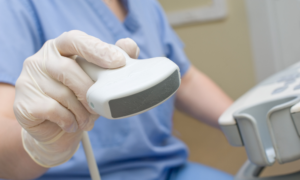
- The scan itself. A cool gel is applied to the skin and a handheld probe is gently moved over the area being examined. It is painless and usually takes between 10 and 30 minutes depending on what’s being looked at.
- Getting dressed and finishing up. Most children can resume normal activities, eating and drinking immediately afterwards.
- Review and results. Because the scan is reported by a consultant paediatric radiologist, parents can be confident that subtle or borderline findings are interpreted with paediatric-specific expertise and results are fed back through the referring clinician.
Why Choose Private Paediatric Ultrasound?
Waiting times for children’s imaging within the public system can be lengthy, particularly for non-urgent but still worrying symptoms. Choosing a private paediatric ultrasound service offers several practical benefits for families:
- Faster access, often with appointments available within days rather than months.
- Specialist reporting, with scans reviewed by a dedicated consultant paediatric radiologist rather than a general reporting pool.
- A calmer environment, with appointments that aren’t rushed and a team experienced in putting young patients at ease.
- Flexible scheduling, working around school hours and family routines.
- Continuity of care, with clear communication back to your GP or referring clinician so nothing falls between the cracks.

Meet Our Consultant Paediatric Radiologist
Friends Medical Service is proud to offer access to Dr Josip Marjanovic, our Consultant Paediatric Radiologist. Dr Marjanovic trained at the Medical School of the University of Zagreb, completed radiology training in Croatia and undertook a dedicated paediatric imaging fellowship through the ESR/ESOR Exchange Programme at the Royal Hospital for Sick Children, Glasgow. He is a member of the Royal College of Radiologists, the European Society of Paediatric Radiology and the British Society of Paediatric Radiology, with specialist interests in ultrasound and MRI imaging.
Having scans reported by an expert in paediatric radiology means parents get more than an image; they get a considered, specialist opinion that takes a child’s age, development and clinical history into account.
Our Ultrasound Service
Ultrasound scans and ultrasound-guided procedures at Friends Medical Service are delivered through our dedicated Ultrasound & Ultrasound Guided Injection service, which covers general abdominal and pelvic scans, musculoskeletal scans and transvaginal ultrasound, with scans priced from £230. A referral appointment can be arranged for £70 for those who don’t already have a referral. For families of children with a specific concern, this pathway allows a scan to be booked and reported with paediatric-specific expertise, without the long waits that can come with public system routes.
If your child’s imaging concern relates to growth, puberty, or hormonal symptoms, it may also be worth exploring our Paediatric Endocrinology service, which works closely alongside imaging to build a full clinical picture. For general enquiries or to arrange a referral, you can also book a GP Appointment with our team.
Frequently Asked Questions
What is paediatric radiology?
Paediatric radiology is the branch of medical imaging focused specifically on diagnosing and monitoring conditions in babies, children and teenagers, using techniques and expertise tailored to a growing body.
How is paediatric ultrasound different from adult ultrasound?
The technology is the same, but the approach differs. A paediatric ultrasound requires a radiologist and sonographer who understand normal childhood anatomy at different ages, use techniques to keep young patients calm and still and interpret results with age-specific reference ranges in mind.
Is ultrasound safe for children?
Yes. Ultrasound uses sound waves rather than ionising radiation, making it one of the safest imaging methods available and suitable for children of any age, including newborns.
Do I need a referral for a private paediatric ultrasound?
Yes, a referral is required to ensure the correct scan is booked and that results are reviewed by the right clinician, with an appropriate follow-up pathway in place. If you don’t already have one, a referral appointment can be arranged directly.
How long does a children’s ultrasound scan take?
Most paediatric ultrasound scans take between 10 and 30 minutes, depending on the area being examined and how settled the child is during the appointment.
Does my child need to fast before an ultrasound?
It depends on the type of scan. Abdominal ultrasounds may require a short period of fasting, while some pelvic or bladder scans require a full bladder. You’ll be given specific instructions when your appointment is booked.
What conditions can paediatric ultrasound detect?
Paediatric ultrasound is commonly used to investigate abdominal pain, urinary tract and kidney concerns, hip development in infants, undescended testes and soft tissue lumps or swellings, among other conditions.
Why choose a consultant paediatric radiologist rather than a general radiologist?
A consultant paediatric radiologist has additional specialist training in interpreting children’s imaging, meaning subtle, borderline, or age-specific findings are less likely to be missed or misinterpreted.
How quickly can I get a private paediatric ultrasound appointment?
Private appointments are typically available far sooner than public waiting list routes, often within days, helping to ease parental anxiety while a diagnosis is reached.
Further Reading
For more general, reputable information on children’s imaging and paediatric health, the following resources may be helpful:
- NHS – Ultrasound Scan
- Royal College of Radiologists
- British Society of Paediatric Radiology
- Royal College of Paediatrics and Child Health
- Great Ormond Street Hospital – Radiology Information for Families
Final Thoughts
Getting a scan for your child shouldn’t mean months of waiting or uncertainty about who’s reviewing the results. With access to Dr Josip Marjanovic, our Consultant Paediatric Radiologist, and a dedicated Ultrasound & Ultrasound Guided Injection service, Friends Medical Service offers families a faster, calmer route to specialist-reported paediatric imaging.
If your child has been referred for a scan, or you’d like to discuss whether a private paediatric ultrasound is the right option, get in touch with our team today. You can book a GP Appointment to arrange a referral, or contact us directly to find out more.