Private DEXA Scans in Northern Ireland: Cost, Booking & What to Expect
Bone health is essential for staying active, independent and well as we age. Strong bones support movement, protect vital organs and are far more resistant to fracture. Yet many people don’t realise their bones have weakened until they suffer a break, often after a relatively minor fall. This is why bone density testing matters so much. A DEXA scan (also written as a DXA scan) is the gold-standard test for measuring Bone Mineral Density (BMD) and remains one of the most accurate ways to identify osteoporosis or osteopenia before a serious injury occurs.
If you’ve been searching for a “private DEXA scan near me” or a “DEXA scan near me” in Northern Ireland, Friends Medical Service (FMS) offers fast, private access to bone densitometry DXA scanning, without the long NHS waiting list. Every scan is interpreted by our experienced consultant radiologists, including Dr Imran Yousuf and Dr Simon Porter, so your results are assessed to the highest clinical standard. Patients can also access our full range of private diagnostic services, including blood testing and ultrasound, all under one roof.
What Is a DEXA / DXA Scan?
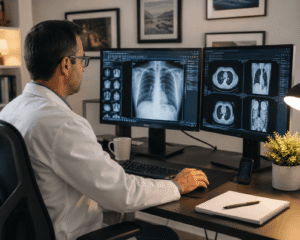
Dual-Energy X-ray Absorptiometry (DEXA or DXA) is the gold-standard test for measuring bone mineral density and assessing how strong your bones really are. Unlike a standard X-ray, which mainly shows the shape and structure of bone, a DEXA scan measures the mineral content within the bone, particularly calcium. This gives a much clearer picture of bone strength and helps clinicians determine whether your bones are healthy, somewhat lower in density than average, or affected by osteoporosis.
Because osteoporosis often develops silently, many people don’t know they have it until they experience a fracture. A DEXA bone density scan can detect bone loss much earlier, allowing treatment and lifestyle changes to begin proactively rather than reactively.
How Much Does a DEXA Scan Cost?
One of the most common questions we’re asked is: how much is a DEXA scan? The cost of a DEXA scan can vary depending on whether you require a standard bone density assessment or a combined bone and body composition scan, and whether any additional consultant reporting or follow-up is needed.
At Friends Medical Service, we aim to keep our private DEXA scan pricing transparent and competitive for patients across Northern Ireland. For the most accurate, up-to-date DEXA scan price, we’d recommend visiting our services page or contacting our team directly, as costs can be confirmed at the time of booking. We also welcome enquiries from patients travelling from across the border who are seeking a private bone density scan in Northern Ireland.
While price is naturally an important factor, it’s worth remembering that a private DEXA scan also buys you faster access, expert interpretation and peace of mind. These are benefits that are difficult to put a number on when it comes to protecting your long-term bone health.

How Does Bone Densitometry (DXA) Scanning Work?
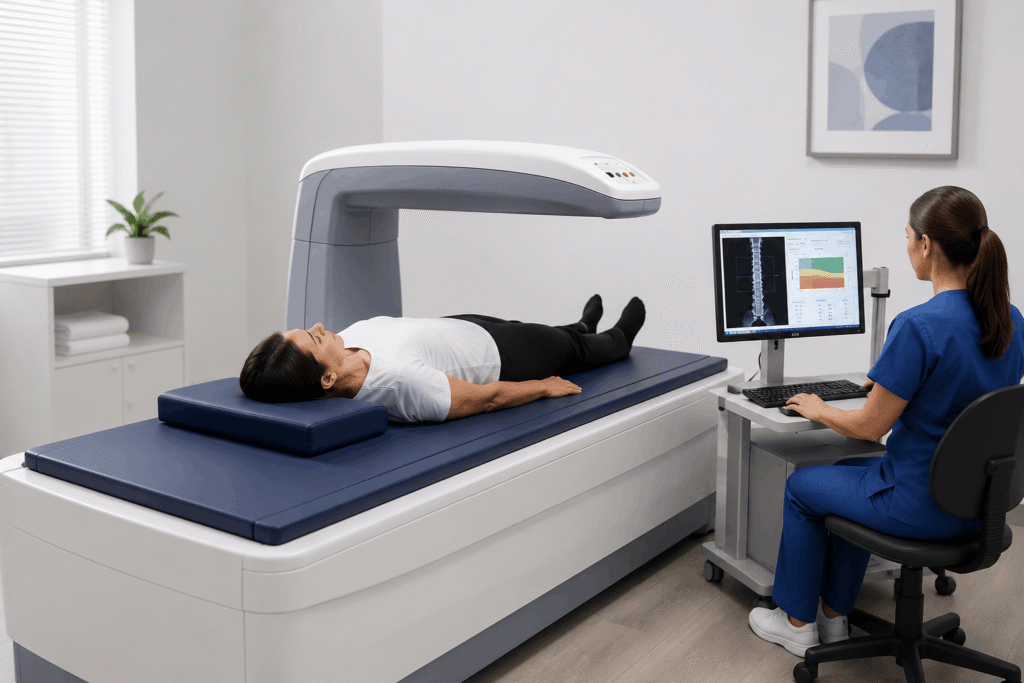
A DEXA scan uses a DXA machine to pass two very low-dose X-ray beams through the body. Different tissues absorb X-rays differently: bone absorbs more of the beam than soft tissue such as muscle or fat. By comparing how much of each beam is absorbed, the scanner calculates your bone mineral density.
This process is quick, painless and highly accurate. The radiation dose used is extremely low, typically around ten times lower than a standard chest X-ray, making DEXA scanning a safe and reliable method of assessing bone health. The scan is completely non-invasive as there are no needles, injections or surgical procedures involved. You simply lie still on the scanning table while the machine takes its measurements.
How Long Does a DEXA Scan Take?
Many patients are pleasantly surprised by how quick and simple the procedure is. Most private DEXA scan appointments take around 10 to 20 minutes from start to finish, although this can vary slightly depending on the type of scan being performed. During the scan you’ll need to remain still, but you can breathe normally throughout. There’s no enclosed tunnel and no recovery time needed afterwards, so you can return to your normal day straight away.
Who Might Need a DEXA Scan?
There are several reasons a doctor or healthcare professional may recommend a bone density scan. The most common is to diagnose or monitor osteoporosis, a condition in which bones become weaker, thinner and more likely to fracture. Osteoporosis is more common among older adults, particularly in a female DEXA scan context for postmenopausal women, though it can also affect younger men and women.
A DEXA scan can also identify osteopenia, which is a condition indicating bone density that is lower than normal but not yet low enough to be classed as osteoporosis. Catching osteopenia early gives you and your clinician the chance to act before further bone loss occurs.
You may benefit from a bone densitometry DEXA scan if you:
- are a postmenopausal woman
- are over the age of 50 and have risk factors for osteoporosis
- have had a fracture after a minor fall or injury
- have a family history of osteoporosis or hip fracture
- have rheumatoid arthritis or another inflammatory condition
- have been taking steroid medication such as prednisolone for several months or longer
- have low body weight or poor nutritional intake
- smoke or drink alcohol regularly in excess
- have a condition affecting bone health, such as coeliac disease, thyroid disease or early menopause
- need monitoring to check whether osteoporosis treatment is working
A scan may also be recommended if a consultant wants to assess your fracture risk before starting certain medications, or if you’ve already been diagnosed with osteoporosis and need follow-up testing over time.
Can a DEXA Scan Measure Body Composition?
Although best known for measuring bone density, DEXA body composition scan technology can also assess:
- body fat percentage
- lean muscle mass
- bone mass
- fat distribution
This information can be useful in sports medicine, nutrition, rehabilitation and research. Athletes may use body composition analysis to monitor training progress, while clinicians may use it to support weight management or muscle health assessments. However, for most patients attending Friends Medical Service, the primary purpose of the scan remains assessing bone health and identifying osteoporosis or osteopenia. If you’re unsure which type of scan is right for you, our team can advise before you book.
What Happens During Your Private DEXA Scan?
When you arrive at Friends Medical Service, a certified radiographer will explain the process and answer any questions. They’ll record your height and weight, then ask you to lie on a padded scanning table while the scanner arm moves slowly above your body. The scan usually focuses on the hips and lower spine, as these areas are most commonly affected by osteoporosis and most useful for assessing fracture risk. Many patients also combine their visit with our blood testing and health check services for a fuller picture of their overall health.
How Should I Prepare for My DEXA Scan?
Preparing for a DEXA scan is straightforward and usually requires very little effort. To help ensure the most accurate results, we recommend the following:
- wear comfortable clothing without metal zips, buttons or underwires where possible
- remove jewellery, belts and other metal objects before the scan
- avoid taking calcium supplements for 24 hours before your appointment unless advised otherwise
- tell us if you are pregnant or think you may be pregnant
- let us know if you’ve recently had a barium examination or a CT scan with contrast, as your appointment may need to be rescheduled
- fill out our LMP form prior to your appointment
For more general guidance on getting ready for any private appointment, take a look at our advice on how to prepare for a routine medical check-up.
Understanding Your DEXA Scan Results
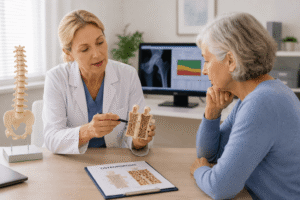
After your scan, the images and measurements are reviewed and interpreted by our experienced consultant radiologists, including Dr Imran Yousuf and Dr Simon Porter, so your results are assessed carefully and accurately. Bone density results are usually reported using a T-score, which compares your bone density with that of a healthy young adult.
In general, a normal result means your bone density is within the expected range; osteopenia means your bone density is somewhat lower than average; and osteoporosis means your bone density is significantly reduced and your fracture risk is much higher. Your referring clinician will explain what your result means in practical terms and discuss next steps, which may include medication, repeat scanning, blood tests or lifestyle advice.
The Benefits of a Private DEXA Scan with Friends Medical Service
For those living in Northern Ireland, choosing a private DEXA scan offers several advantages over waiting for NHS availability. The main benefit is faster access to testing. If you’re worried about your bone health, waiting months for an appointment can be stressful, and a private bone density scan allows you to be seen sooner.
Other benefits of private DEXA scanning include:
- shorter waiting times
- flexible appointment availability
- prompt reporting and results
- access to experienced consultant radiologists
- a more personalised patient experience
- peace of mind if you’re concerned about osteoporosis
You can read more about the wider advantages of going private in our article on the benefits of utilising a private medical centre.
Where to Get a DEXA Scan Near You in Northern Ireland
If you’ve been searching for where to get a DEXA scan or a DEXA scan in Belfast and the wider Northern Ireland area, Friends Medical Service provides a convenient, private option without the need for lengthy referral waits. Our team is here to support you from your initial enquiry through to your results and if ongoing monitoring or wider health checks would help, ask us about our GP subscription options too.
Frequently Asked Questions
What is the difference between a DEXA scan and a DXA scan?
There is no difference as DEXA and DXA are simply two abbreviations for the same test, Dual-Energy X-ray Absorptiometry.
How much does a private DEXA scan cost in Northern Ireland?
DEXA scan cost varies depending on the type of scan required. For current pricing, please check our services page or contact our team directly for an accurate quote.
How long does a DEXA scan take?
Most DEXA scan appointments take around 10 to 20 minutes, and you can return to your normal activities immediately afterwards.
Do I need a GP referral for a private DEXA scan?
Yes, a GP referral is required for a DEXA scan. This can be from your own GP or, alternatively, you can request a referral from our own in-house private GP via a separate appointment.
Is a DEXA scan safe?
Yes. DEXA scans use a very low dose of radiation, typically around ten times lower than a standard chest X-ray, and the procedure is non-invasive with no needles or injections.
How often should I have a bone density scan?
This depends on your individual risk factors and any previous results. Your clinician will advise on an appropriate interval, particularly if you’re being monitored for osteoporosis or osteopenia.
Can men have a DEXA scan?
Yes. While bone density scans are often associated with postmenopausal women, men can also develop osteoporosis or osteopenia and may be advised to have a scan based on their individual risk factors.
What should I wear for my DEXA scan?
Comfortable clothing without metal zips, buttons or underwires is best, as metal can interfere with the scan. You’ll be asked to remove jewellery and other metal objects beforehand.
Further Reading
If you’d like to read more about DEXA scans, bone density and osteoporosis from trusted, independent health organisations, the following resources offer clear, patient-friendly information:
- NHS – DEXA Scan: NHS overview of what a DEXA scan involves, why it’s used and how to prepare for one.
- NHS – Osteoporosis: NHS guidance on osteoporosis causes, risk factors, diagnosis and treatment.
- Royal Osteoporosis Society: A patient-focused set of resources on osteoporosis from the UK’s leading osteoporosis charity, including practical information on living with this condition, such as bone-strengthening exercises and nutritional advice.
- NICE – Osteoporosis: risk assessment (NG259): Clinical guidance underpinning when a DEXA scan and fracture risk assessment are recommended.
Book Your Private DEXA Scan in Northern Ireland Today
If you’re concerned about osteoporosis, have risk factors for low bone density, or have simply been advised to have a bone density scan, there’s no need to delay. A DEXA scan is a quick, safe and reliable way to assess your bone health and identify problems early, and a private DEXA scan at Friends Medical Service offers fast access, expert interpretation and clear guidance on what your results mean.
Contact Friends Medical Service today or browse our full range of services to arrange your appointment. Taking action now could help protect your bone health, mobility and independence for years to come.