
Sleep Analysis Services: Your Complete Guide to Private Sleep Studies in Northern Ireland
If you’ve been searching online for a “sleep clinic near me” or a “sleep specialist near me” because you’re waking up exhausted, snoring loudly, or gasping in your sleep, you’re not alone. Sleep disorders, particularly obstructive sleep apnoea, affect a huge number of adults in the UK, yet many go undiagnosed for years simply because they don’t know what a sleep study actually involves or where to get one done quickly.
This guide walks through everything you need to know about sleep studies, sleep clinics and private sleep apnoea tests, including how to spot the warning signs, what happens during testing and how a private sleep clinic can get you answers far faster than the NHS sleep study waiting list.
At Friends Medical Service, our Sleep Analysis service is led by sleep physiologist Niall Totten via our partners Sleep Medical NI, offering fast, professional and discreet sleep testing without the long wait.
What Is a Sleep Study?
A sleep study (also called polysomnography, or simply a “sleep test”) is a diagnostic assessment that monitors what happens in your body while you sleep. It’s the standard way doctors identify sleep disorders tests results for conditions such as:
- Obstructive sleep apnoea (OSA)
- Snoring-related breathing problems
- Restless sleep and frequent night-time waking
- Excessive daytime sleepiness
A sleep lab or sleep centre style assessment typically records your breathing patterns, oxygen levels, heart rate and movement overnight, either in a clinical setting or, increasingly, from the comfort of your own bed via a home sleep test.
Signs You May Have Sleep Apnoea
Wondering how to know if you have sleep apnoea? The symptoms aren’t always obvious, especially if you live alone and no one is there to notice your breathing at night. Common sleep apnoea signs include:
- Loud, persistent snoring
- Choking or gasping sounds during sleep
- Pauses in breathing witnessed by a partner
- Waking up with a dry mouth or headache
- Excessive tiredness during the day, even after a full night’s sleep
- Difficulty concentrating or irritability
- Snoring when awake or noticeably heavy, laboured breathing while resting
If several of these sound familiar, it’s worth booking a sleep test rather than waiting for symptoms to worsen, as untreated sleep apnoea is linked to raised blood pressure, heart problems and increased accident risk from daytime fatigue.
Mild, Moderate and Severe Sleep Apnoea
Sleep apnoea is graded by how many breathing interruptions (“apnoeas” and “hypopnoeas”) occur per hour of sleep:
1. Mild sleep apnoea
5 to 14 events per hour. Often managed with lifestyle changes, weight management and positional therapy, though mild sleep apnoea treatment may still include CPAP for some patients.
2. Moderate sleep apnoea
15 to 29 events per hour. Usually requires active treatment, most commonly a CPAP device.
3. Severe sleep apnoea
30 or more events per hour. Requires prompt treatment to reduce long-term health risks.
Only a proper sleep assessment can tell you which category applies to you, which is why guessing based on symptoms alone isn’t enough.
NHS vs Private Sleep Clinics: Why the Wait Matters
Many people start their search on the NHS. Sleep apnoea NHS pathways typically begin with a GP referral and an NHS sleep study at home kit is often sent out for initial screening but the NHS sleep study waiting list can stretch to several months in many areas, particularly for a full sleep study NHS assessment or follow-up consultation.
A private sleep clinic removes that bottleneck. Choosing a private sleep study means:
- Appointments within days, not months.
- A named consultant overseeing your results, rather than a generic queue.
- Flexible appointment times around work and family life.
- A clear, itemised understanding of how much does a private sleep study cost UK patients typically pay, with no hidden fees.
- Faster access to treatment, such as a CPAP sleeping machine, if you’re diagnosed with obstructive sleep apnoea.
If you’ve been looking for a sleep apnoea clinic near you, the private route is usually the quickest way to get definitive answers.
Types of Sleep Tests We Offer
Not every sleep concern needs the same type of test. Depending on your symptoms, a sleep physiologist may recommend:
1. Home sleep apnoea test (HSAT)
A home sleep study using a small, portable monitor you wear overnight in your own bed. It measures airflow, oxygen saturation and breathing effort and is ideal for most suspected obstructive sleep apnoea cases.
2. Overnight pulse oximetry
Overnight oximetry tracks your blood oxygen levels and pulse rate continuously through the night using a simple finger sensor, useful as a first-line screening tool.
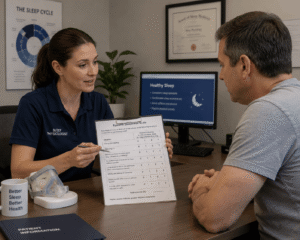
3. Epworth Sleepiness Scale questionnaire
A short, standardised sleep questionnaire used alongside testing to measure your general level of daytime sleepiness. Many patients search for the Epworth sleepiness scale PDF or sleep scale PDF beforehand. Your consultant will talk you through the scoring during your appointment.
4. Sleep-deprived EEG
In select cases, a sleep deprived EEG may be used to investigate other neurological causes of disturbed sleep, in coordination with the appropriate specialist.
What to Expect at Our Private Sleep Clinic
Booking a private sleep apnoea test with Friends Medical Service is straightforward:
1. Initial consultation
Discuss your symptoms, medical history and complete an Epworth sleepiness scale NHS-style questionnaire with our respiratory team.
2. Testing
Depending on your assessment, you’ll either attend our clinic or take home a monitoring device for a home sleep apnoea test.
3. Analysis
Your overnight data is reviewed by a respiratory consultant experienced in interpreting sleep studies and sleep disorders tests.
4. Results and treatment plan
You’ll receive a clear diagnosis, whether that’s mild sleep apnoea, moderate sleep apnoea, or no significant findings, along with a personalised treatment plan.
Our Sleep Analysis service page has full details on the process and how to book.
Treatment Options After Diagnosis
Once your results are in, treatment is tailored to severity:
• Lifestyle changes
- Weight management, reduced alcohol intake and side-sleeping can meaningfully improve mild cases.
• CPAP therapy
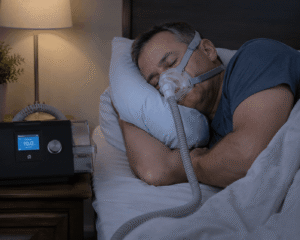
- A CPAP sleeping machine delivers continuous airway pressure to keep your airway open overnight and remains the gold-standard treatment for moderate to severe sleep apnoea machine
• Positional and dental devices
- For select mild presentations.
• Ongoing review
- Follow-up appointments to check the treatment is working and adjust settings as needed.
Why Choose Friends Medical Service
As a trusted private sleep clinic, we combine consultant-led expertise with the convenience patients are looking for when they type “sleep study near me” during their online searches for a solution:
- Direct access to our sleep physiologist, Niall Totten, without excessively lengthy referral chains (we have our own in-house private GP who we can utilise to provide an integrated referral and sleep analysis service).
- Appointments designed around sleep study private patients who want fast, accurate results.
- A calm, professional clinic environment rather than a busy hospital ward.
- Complementary services such as our Respiratory Consultant Service and Blood Testing & Health Checks if further investigation is needed.
- A full directory of our specialists on our consultants page.
Frequently Asked Questions
What is a somnologist?
A somnologist is a doctor or scientist who specialises in the study and treatment of sleep and sleep disorders. It is essentially another term for a sleep medicine specialist.
How much does a private sleep study cost in the UK?
Costs vary depending on the type of test (home monitoring versus in-clinic polysomnography) and whether a consultant review is included. Contact our team directly for current pricing on our Sleep Analysis service.
Can I do a sleep apnoea test at home?
Yes. A home sleep test is suitable for most people with suspected obstructive sleep apnoea and allows you to be monitored overnight in your own bed rather than an unfamiliar clinic setting.
What is the Epworth Sleepiness Scale?
It’s a short, widely used sleep questionnaire that scores how likely you are to doze off in everyday situations, helping clinicians gauge the severity of daytime sleepiness alongside your test results.
Is snoring always a sign of sleep apnoea?
Not always, as many people snore without having sleep apnoea. However, loud snoring combined with witnessed breathing pauses, choking, or excessive daytime fatigue warrants a proper sleep apnoea test.
How long does it take to get results from a private sleep study?
Private testing is typically much faster than NHS routes, with results and a consultant review often available within days rather than the months associated with an NHS sleep study waiting list.
Do I need a GP referral for a private sleep clinic?
Yes, however at Friends Medical Service we offer an integrated option to see our own in-house private GP to obtain the referral necessary to utilise our high quality sleep analysis services.
Take the First Step Toward Better Sleep
Poor sleep affects every part of your day, including your energy, concentration, mood and long-term health. If any of the sleep apnoea signs above sound familiar, don’t wait months for an NHS appointment when a private sleep study could give you answers this week.
Visit our Sleep Analysis service page to learn more about our partnership with Sleep Medical NI or find out about our sleep physiologist Niall Totten and book your assessment with Friends Medical Service today.