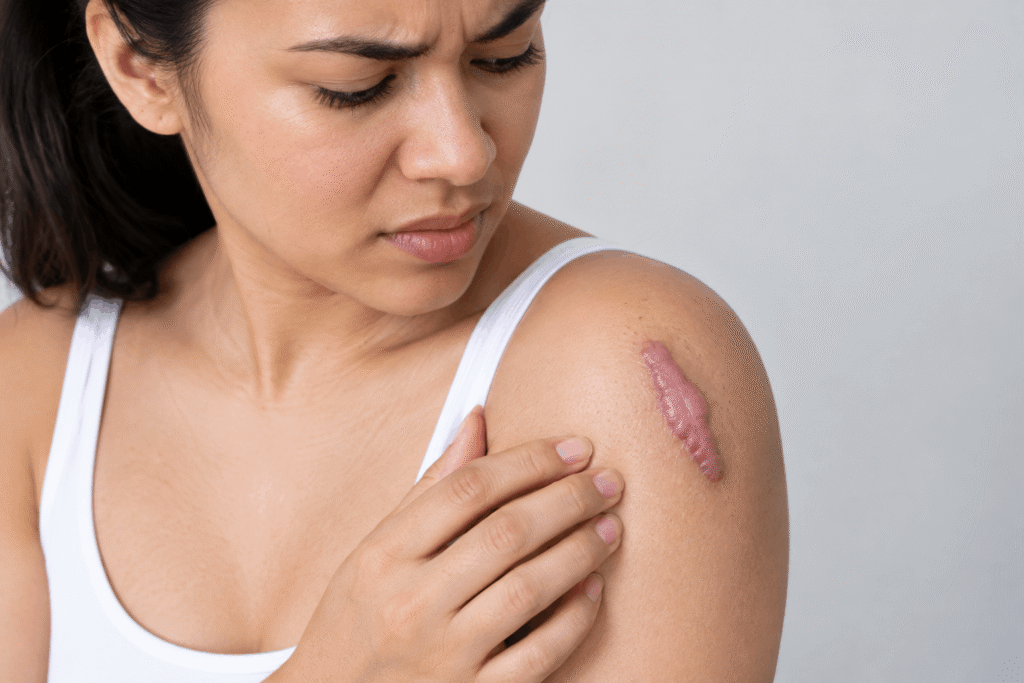
Scar revision is a minor surgical procedure that improves the appearance, texture or movement of a scar left by an old injury, a previous operation or an earlier skin procedure. At Friends Medical Service in Lurgan, this treatment is carried out as a day case under local anaesthetic by our consultant surgical team, giving patients across Craigavon, Belfast, Portadown, Lisburn, Banbridge and Armagh, as well as cross-border patients from the Republic of Ireland, access to a properly assessed, consultant-led alternative to searching for quick fixes online.
This guide explains what the procedure involves, who tends to benefit from it, what happens during a consultation, how recovery works and how to book an assessment with our team.
What Is Scar Revision?
Every wound that breaks the deeper layers of skin heals by forming scar tissue. Most scars settle down on their own over twelve to eighteen months, fading from red or pink to a paler, flatter mark. Not all scars follow that pattern, though. Some remain raised, tight, discoloured or wider than the original wound. This is where scar revision becomes relevant.
Scar revision does not remove a scar completely. No treatment can do that, since scar tissue is a permanent part of the healing process. What it can do is re-position, narrow, flatten or otherwise refine a mark so that it sits less obviously against the surrounding skin or so that it no longer restricts movement in a joint or affects how a feature such as an eyelid, lip or ear lobe sits. Because the goal is realistic improvement rather than erasure, an honest, detailed consultation is central to getting a good outcome, which is why our approach at Friends Medical Service always begins with a proper assessment rather than jumping straight to treatment.
Why Some Scars Need Revision
Scarring is unpredictable. Two people can have an identical wound and heal in completely different ways. Several distinct patterns of problem scarring are recognised in clinical practice:
- Hypertrophic scars stay within the boundary of the original wound but become raised, red and sometimes itchy or tender.
- Keloid scars grow beyond the edge of the original wound into surrounding skin and can continue enlarging for months or years.
- Atrophic scars sit below the surrounding skin level, often seen after acne or chickenpox.
- Contracture scars pull the skin tight as they heal, which can restrict movement if the scar crosses a joint, eyelid or lip.
- Widened or stretched scars occur when a wound has been under tension while healing, which is common after surgery on the back, shoulder or chest.
Age, skin tone, the depth and location of the original wound and genetics all play a part in which pattern develops. This is one of the reasons a revision plan is always built around the individual rather than offered as a one-size-fits-all treatment.
When to Consider Scar Revision
People come to us for this procedure for a mix of physical, functional and personal reasons. Common triggers include:
- A scar that is thickened, raised or discoloured and has not settled after twelve months or more
- A scar that pulls or restricts movement, particularly near a joint, the eyelids or the mouth
- Scarring left behind after a previous mole, skin tag or lipoma removal that has not healed as smoothly as hoped
- A torn or stretched ear lobe following jewellery trauma, where earlobe repair and scar revision are often considered together
- A scar in a visible area, such as the face, neck or hands, that affects day-to-day confidence
- Old surgical or injury scars that have widened, become lumpy or sit unevenly against the surrounding skin
If any of this sounds familiar, the next step is a consultation with one of our surgical team rather than researching over-the-counter creams or attempting self-treatment, since an in-person assessment is the only reliable way to know which approach, if any, will genuinely help your particular scar.
Techniques Used in Scar Revision
The right approach depends entirely on the type, size, age and location of the scar. This is assessed and discussed in detail at your consultation. Options that may be considered include:
- Surgical excision and re-suturing, where the old scar tissue is removed and the wound closed more precisely, often used for marks that have widened or healed poorly
- Z-plasty or W-plasty, techniques that reposition a scar along a more natural skin crease or break up a straight line so it reads as less conspicuous
- Steroid injections, sometimes used alongside surgery for raised or keloid scarring
- Silicone sheeting or gel, a non-surgical option your consultant may recommend on its own or alongside a surgical approach
Your consultant will explain which option is most appropriate for you, along with the expected result, before anything goes ahead. Timing also matters a great deal here. In many cases it is better to allow a mark to mature for six months to a year before considering surgery, since scars can continue to improve naturally during that window; operating too early can sometimes undo progress the body was already making on its own.
What Happens During Your Consultation
Scar revision at Friends Medical Service follows a straightforward, consultant-led pathway from first enquiry through to aftercare:
- Book a surgical consultation. Your first appointment is with one of our consultant surgeons, either Mr Abid Rashid (Consultant Plastic Surgeon with a specific focus on scar management) or Mr Muhammad Yousuf (Consultant General Surgeon).
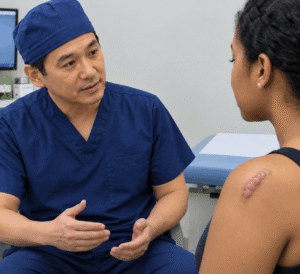
- Assessment. Your consultant examines the scar, discusses how it formed, asks about your general health and talks through what realistic improvement looks like for your particular case.
- Treatment plan. You will be given a clear explanation of the recommended technique, what the procedure involves and an individual price based on the scar’s size and complexity, since surgery and treatment prices are guidance only and depend on what your consultant recommends.
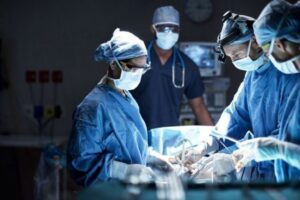
- The day of your procedure. Treatment is typically carried out under local anaesthetic as a day case at our Lurgan clinic, meaning you go home the same day.
- Aftercare. You will be given wound care instructions and, where relevant, advice on scar massage or silicone gel to support the healing skin.
This pathway is the same one used across our full range of minor surgical procedures, which also includes mole removal, skin tag removal, lipoma removal and excision of skin lesions, all carried out by the same experienced surgical team.
Recovery After Your Procedure
Recovery from scar revision is usually straightforward, though healing continues for many months after the surgery itself. General aftercare guidance includes:
- Keeping the new wound clean and dry for the first day or two, as advised by your consultant
- Applying a non-perfumed moisturiser once the wound has closed, to help keep the skin supple
- Massaging the healed area gently, once your consultant confirms it is ready, to encourage a flatter, softer result
- Protecting the site from direct sun exposure while it heals, since new scar tissue can darken permanently if exposed to UV light
- Being patient, since it can take twelve to eighteen months for a revised scar to fully settle and show its final result
If a wound becomes increasingly red, swollen, painful or starts discharging fluid at any point during recovery, contact your GP or clinic promptly rather than waiting for your next scheduled review.
Scar Revision Cost in Northern Ireland
Scar revision is individually priced, since the size, location and complexity of the scar, along with the technique your consultant recommends, all affect the cost. Rather than quoting a single figure that may not reflect your particular case, your consultant will confirm the price in writing after your consultation, so there are no surprises on the day. Current guide pricing for this treatment and our other minor surgical procedures is available on our website or you can ask our team directly when you book.
Where to Have Scar Revision in Northern Ireland
Scar revision, along with all of our other minor surgical procedures and gynaecology services, is carried out exclusively at our main clinic, Southside Healthcare, 41 High Street, Lurgan, Craigavon BT66 8AH. This location is easily reached from across Craigavon, Portadown, Lisburn, Banbridge, Armagh and Belfast. A growing number of our patients travel from further afield specifically for a consultant opinion on longstanding scars.
Our Limavady (Bovally Medical) and L/Derry (Quayside Medical) clinics offer no-scalpel vasectomy appointments only, so this treatment is not available at those two sites. All three of our clinics, including Lurgan, are open to cross-border patients travelling from the Republic of Ireland, many of whom choose Friends Medical Service for a quicker route to a consultant assessment than they might otherwise have close to home.
Frequently Asked Questions
Can a scar be completely removed?
No. A scar cannot be removed entirely because it is permanent tissue formed during the healing process. Treatment aims to make it flatter, narrower, less noticeable or better aligned with the surrounding skin, not to erase it completely.
How soon after an injury or operation can I have scar revision?
It depends on the scar. Many marks continue to improve naturally for six to twelve months, so your consultant may recommend waiting before considering surgery. Some scars, particularly those causing restricted movement, may be assessed sooner rather than later.
Is the procedure painful?
Scar revision is normally carried out under local anaesthetic, so the area is numbed before treatment begins. Most patients describe some mild discomfort as the anaesthetic wears off, which is manageable with simple over-the-counter pain relief.
Will I have a visible mark after scar revision?
Yes, in the sense that any surgical incision leaves a new scar. The aim of the procedure is for that new mark to be finer, better positioned or less noticeable than the one it replaces, not to leave no trace at all.
Can scar revision help with keloid scars?
It can, though keloid scars are more prone to recurrence than other types and may need a combination of approaches, such as surgery alongside steroid injections. Your consultant will explain the likelihood of success for your specific scar during your assessment, since outcomes vary considerably from person to person.
Does treatment involve much downtime?
Scar revision at Friends Medical Service is carried out as a day case, so you go home the same day. Most people return to normal daily activities within a few days, though your consultant will give you guidance specific to the size and location of your scar.
Is scar revision available on the NHS?
NHS provision is generally reserved for scars causing significant functional problems, such as restricted movement, rather than cosmetic concerns. Waiting times for an appointment can often be lengthy too. Choosing to have the procedure privately at Friends Medical Service offers a faster route to consultant assessment and treatment.
What is the difference between scar revision and earlobe repair?
Earlobe repair specifically treats a torn, split or stretched ear lobe, often caused by jewellery trauma, while scar revision covers a broader range of marks anywhere on the body. The two are frequently considered together, since a torn ear lobe leaves its own scar once repaired and the same surgical team carries out both procedures at our Lurgan clinic.
Further Reading
If you’d like to read more from independent, patient-focused sources before your consultation, the following are reputable places to start:
- NHS: Scars: an overview of how scars form, how long they take to settle and when to see a GP
- British Association of Dermatologists: Keloids: a patient information leaflet on keloid scarring, its causes and treatment options
- BAPRAS: Patient Information and Surgery Guides: guidance from the British Association of Plastic, Reconstructive and Aesthetic Surgeons
- Changing Faces: the UK’s leading charity supporting people living with a visible difference, including scarring
These resources are helpful for background reading, but they supplement rather than replace a one-to-one clinical assessment with a consultant who can examine your scar directly.
Book Your Scar Revision Consultation
If you have a scar that is affecting your movement, comfort or confidence, the first step is a proper assessment rather than guesswork. Our consultant surgical team at Lurgan can examine your scar, talk through realistic options and, where appropriate, carry out scar revision as a day case procedure close to home.
Contact our team to book a consultation or visit our minor surgical procedures page to find out more about scar revision and our other surgical services before you get in touch.