Understanding Your Asthma: Symptoms, Testing and Treatment Explained
Asthma affects millions of people across the UK, yet it remains one of the most misunderstood long-term conditions. Many people live with unexplained breathlessness or a persistent cough for years before receiving a proper diagnosis, often because they assume their symptoms are simply “normal” or related to fitness rather than a treatable airway condition.
At Friends Medical Service, our Respiratory Consultant Service and Lung Function Test clinic exist to close that gap, giving patients fast, accurate answers about their breathing without a lengthy wait. This guide walks through what asthma is, how it is diagnosed using modern testing methods such as spirometry and FeNO testing and what treatment options are available once a diagnosis is confirmed.
What Is Asthma?
Asthma is a long-term condition that affects the airways, the small tubes that carry air in and out of the lungs. In people with asthma, these airways become inflamed and sensitive, reacting to certain triggers by narrowing and producing extra mucus. This makes it harder for air to move freely, leading to the classic symptoms of wheezing, breathlessness and coughing.
Asthma can develop at any age, from early childhood through to later adulthood and its severity varies enormously from person to person. Some people experience mild, occasional symptoms, while others live with daily breathlessness that limits everyday activities such as walking, exercising or sleeping.
Common Asthma Symptoms
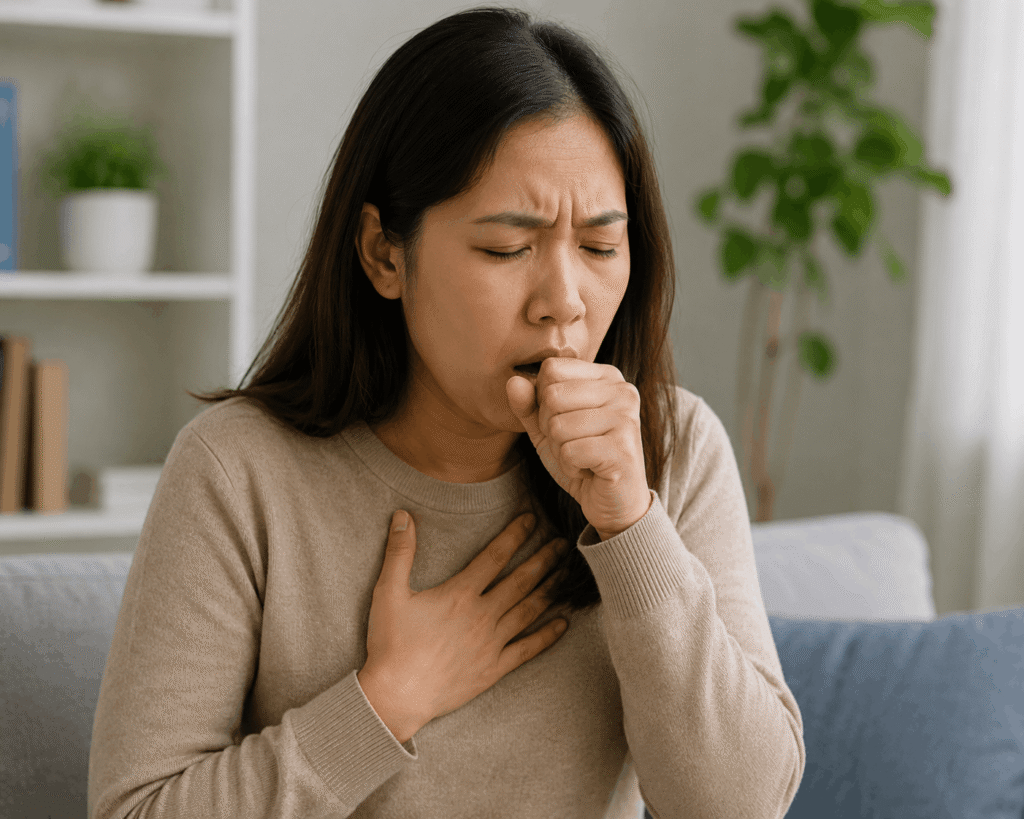
Recognising the pattern of asthma symptoms is often the first step towards getting help. Typical signs include:
- A persistent or recurring cough, particularly at night or early morning,
- Wheezing, a whistling sound when breathing out,
- Shortness of breath, especially during exercise or cold weather,
- A tight or constricted feeling in the chest,
- Symptoms that flare up with colds, exercise, allergens or cold air and/or
- Fatigue linked to disrupted sleep from night-time coughing or breathlessness.
Because these symptoms overlap with other respiratory conditions, they should never be self-diagnosed. Objective lung function testing gives a far more reliable picture than symptoms alone, which is why testing plays such a central role in confirming asthma.
What Causes Asthma and Common Triggers
The exact cause of asthma is not fully understood, but a combination of genetic and environmental factors is thought to play a role. A family history of asthma, eczema or hay fever increases the likelihood of developing the condition and early-life factors such as childhood respiratory infections can also contribute.
Once asthma is present, certain triggers can bring on or worsen symptoms, including:
- House dust mites, pollen and pet dander,
- Cigarette smoke and air pollution,
- Cold air and sudden changes in temperature,
- Respiratory infections such as colds and flu,
- Physical exercise,
- Strong smells, chemicals or workplace irritants,
- Emotional stress or anxiety and/or
- Certain medications, including some anti-inflammatory drugs.
Identifying personal triggers is an important part of long-term asthma management and is usually discussed as part of a respiratory consultation once testing has confirmed a diagnosis.
How Is Asthma Diagnosed?
Asthma cannot be confirmed by symptoms alone. Current UK clinical guidance from BTS, NICE and SIGN recommends a combination of objective tests to reach an accurate diagnosis, rather than relying on a clinical impression alone. The two tests used most often are spirometry and FeNO (fractional exhaled nitric oxide) testing, sometimes supported by a wider pulmonary function test if the picture is unclear.
What Is a Spirometry Test?
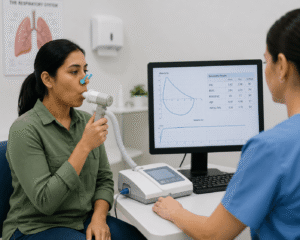
A spirometry test measures how much air you can breathe out and how quickly, using a small handheld or desktop device called a spirometer. It is one of the most widely used lung function tests and provides objective, repeatable data on how well the airways are working.
During spirometry testing, you will be asked to take a deep breath in and then blow out as hard and fast as possible into a mouthpiece connected to the spirometer. This is usually repeated a few times to ensure consistent, reliable results. The two key measurements produced are:
- FEV1 (Forced Expiratory Volume in 1 second), which is the amount of air you can force out in the first second of exhaling, and
- FVC (Forced Vital Capacity), which is the total amount of air you can force out after a full breath in.
The ratio between these two figures helps clinicians identify whether the airways are obstructed, which is a key indicator of asthma or other lung conditions such as COPD. Some spirometry tests also include a reversibility check, where you inhale a bronchodilator medication and repeat the test to see if your airflow improves, a strong indicator of asthma when it does.
What Is FeNO Testing?
FeNO testing, or fractional exhaled nitric oxide testing, is a quick breathing test that measures the level of nitric oxide in your exhaled breath. Nitric oxide is produced in higher amounts when the airways are inflamed, which is a hallmark feature of asthma. A raised FeNO test result therefore points strongly towards airway inflammation consistent with asthma, particularly when combined with spirometry findings.
A FeNO breathing test is simple and non-invasive. You breathe out slowly and steadily into a handheld device for around ten seconds and a result is generated within a couple of minutes. Because it specifically detects inflammation, a FeNO asthma test is particularly useful for:
- Supporting an initial asthma diagnosis alongside spirometry,
- Monitoring how well inhaled steroid treatment is controlling airway inflammation,
- Helping decide whether treatment needs to be stepped up or down and
- Distinguishing asthma from other causes of breathlessness or cough.
FeNO test scores are typically reported in parts per billion (ppb), with higher readings suggesting greater airway inflammation. Your consultant or GP will interpret your specific FeNO test results alongside your symptoms, spirometry findings and medical history, since normal ranges can vary between adults and children.
Full Pulmonary Function Tests
For patients with a more complex or unclear picture, a fuller set of pulmonary function tests may be recommended. Full pulmonary function testing can include additional measurements such as lung volumes and gas transfer, giving a more detailed assessment of how the lungs are working. This is often used when a diagnosis of COPD, interstitial lung disease or another chronic respiratory condition is being considered alongside asthma.
What to Expect During Lung Function Testing
Many patients want to know how long a lung function test takes and whether any preparation is needed. In general:
- A straightforward spirometry test and FeNO breathing test can usually be completed within 30 to 45 minutes in total, including time for explanation and repeat readings.
- You may be asked to avoid smoking, vigorous exercise and certain inhalers for a few hours beforehand, as these can temporarily affect results.
- The tests themselves are non-invasive and painless, though blowing forcefully into the spirometer can feel tiring for a few seconds.
- Results are often available on the same day, allowing your consultant to discuss findings and next steps at your appointment.
A pulmonary function test is usually required when someone has unexplained breathlessness, a chronic cough lasting more than a few weeks, recurrent chest infections, or symptoms that are not responding as expected to initial treatment. It may also be used to monitor a known condition such as asthma or COPD over time, or to assess lung health before certain types of surgery.
Asthma Treatment and Management
Once a diagnosis is confirmed, asthma is generally very manageable with the right treatment plan. Management typically includes:
- Reliever inhalers, used to quickly ease symptoms during a flare-up,
- Preventer inhalers, taken regularly to reduce airway inflammation and prevent symptoms occurring,
- Personalised asthma action plans, outlining what to do as symptoms change,
- Trigger avoidance strategies, tailored to your individual triggers,
- Regular monitoring, which includes periodic FeNO testing or spirometry to track control and adjust treatment, and
- Lifestyle measures, such as stopping smoking, maintaining a healthy weight and staying active within your limits.
Smoking is one of the most significant, and most modifiable, triggers for poorly controlled asthma. It irritates already sensitive airways, reduces the effectiveness of preventer inhalers, and accelerates long-term lung damage. If you smoke and have asthma, stopping is one of the single most effective steps you can take to improve control. Our guide on how to quit smoking covers practical strategies and support options available in Northern Ireland to help you take that step.
For most people, consistent use of preventer treatment combined with trigger management leads to good long-term control, allowing normal daily activities, exercise and sleep without significant disruption.
When to See a Respiratory Consultant
While many cases of asthma are managed successfully through a GP, there are situations where seeing a respiratory consultant privately can speed up diagnosis and treatment considerably, particularly if NHS waiting times are a concern. It is worth arranging a respiratory consultant appointment if you experience:
- Breathlessness or wheeze that has not been formally investigated,
- A persistent cough lasting several weeks without an obvious cause,
- Asthma symptoms that are not well controlled on current treatment,
- Recurrent chest infections,
- Symptoms that interfere with sleep, exercise or daily life, or
- A need for objective lung function testing to confirm or rule out a diagnosis.
Why Choose Friends Medical Service
At Friends Medical Service, our Lung Function Test clinic offers spirometry and FeNO testing as part of a fast, private diagnostic pathway, with packages for suspected asthma and suspected COPD alongside standalone FeNO testing for patients with an existing GP referral. Results feed directly into a clear management plan, whether that means treatment with your GP or onward referral to our Respiratory Consultant Service.
Our respiratory consultant, Dr Hagan, brings extensive NHS and specialist experience in asthma, COPD, chronic cough and complex breathlessness, offering thorough assessment and a personalised treatment pathway. For patients searching for a private respiratory consultant near them, our clinic provides an efficient alternative to long NHS waiting lists, with clear pricing and appointments that can often be arranged within days.
You can read more from our team on our blog, or get in touch with any questions about lung function testing or respiratory consultations.
Frequently Asked Questions
What is a FeNO test?
A FeNO test, or fractional exhaled nitric oxide test, measures the level of nitric oxide in your breath as a marker of airway inflammation. It is commonly used alongside spirometry to help diagnose and monitor asthma.
What is a spirometry test used for?
A spirometry test measures how much air you can exhale and how quickly, helping to identify whether your airways are obstructed. It is a key test for diagnosing and monitoring asthma and COPD.
How long does a lung function test take?
Most spirometry and FeNO combinations take around 30 to 45 minutes in total, including explanation, repeat readings and time to discuss results with your clinician.
How much does a spirometry test cost privately?
Private spirometry test prices vary depending on whether it is combined with FeNO testing or a wider consultation. Our current pricing for suspected asthma and suspected COPD testing packages is listed on our Lung Function Test page.
What do FeNO test results mean?
FeNO test scores are measured in parts per billion. Higher readings generally suggest more airway inflammation, which supports a diagnosis of asthma when combined with your symptoms and spirometry results. Your consultant will interpret your specific result in context, as normal ranges differ between adults and children.
When is a pulmonary function test required?
A pulmonary function test is typically recommended for unexplained breathlessness, a persistent cough, recurrent chest infections, or to monitor an existing respiratory condition such as asthma or COPD.
Can I get a private lung function test without a GP referral?
Yes. At Friends Medical Service, you can book a private lung function test directly, or use our GP referral appointment first if you would prefer to discuss your symptoms before testing.
What is the difference between a lung function test and a FeNO test?
A lung function test, such as spirometry, measures airflow and lung capacity, while a FeNO test measures airway inflammation. They assess different aspects of respiratory health and are often used together for a fuller picture.
Further Reading
For additional patient-friendly information on asthma, the following resources may be helpful:
- NHS: Asthma – symptoms, causes and treatment overview
- Asthma + Lung UK – patient support and living-with-asthma guidance
- NICE Guideline NG245: Asthma – diagnosis, monitoring and chronic asthma management – current UK clinical guidance
If you are experiencing symptoms of asthma or would like objective lung function testing, book a lung function test or arrange an appointment with our respiratory consultant service today.