

A cough that lingers for weeks after a cold has cleared is one of the most common reasons patients get in touch with our Lurgan clinic. Bronchitis is very often the cause. It is one of the most frequently diagnosed chest conditions in Northern Ireland, affecting people of every age, yet many patients are unsure whether their symptoms point to a short-lived chest infection or something that needs ongoing management. This guide explains what bronchitis is, what causes it, how it differs from other lung conditions and when it is time to book a GP appointment or a lung function test.
What Is Bronchitis?
Bronchitis is inflammation of the bronchial tubes, the airways that carry air into and out of your lungs. When these tubes become irritated and swollen, they produce extra mucus, which triggers the persistent cough most people associate with this type of chest infection. It typically falls into one of two categories:
- Acute bronchitis: a short-term chest infection that usually follows a cold or flu and clears up within a few weeks
- Chronic bronchitis: a long-term condition classed as a form of chronic obstructive pulmonary disease (COPD), defined by a productive cough on most days for at least three months of the year for two consecutive years
Understanding which type you are dealing with matters. The likely cause, the expected recovery time and the right treatment pathway all differ depending on whether your symptoms are short-lived or ongoing.
Acute Bronchitis vs Chronic Bronchitis: What’s the Difference?
| Feature | Acute Bronchitis | Chronic Bronchitis |
|---|---|---|
| Typical cause | Viral infection (occasionally bacterial) | Long-term irritation, most often from smoking |
| Duration | A few days to around three weeks | Ongoing, defined by symptoms lasting three months a year for two years running |
| Underlying condition | Usually a standalone infection | Part of chronic obstructive pulmonary disease (COPD) |
| Typical age group | Any age, common in young children and older adults | Usually adults over 40 with a smoking history |
| Management approach | Rest, fluids and symptom relief | Ongoing respiratory care, inhaler therapy and lifestyle changes |
What Causes Bronchitis?
The cause depends heavily on whether the episode is acute or chronic.
Acute cases are most commonly triggered by:
- A viral upper respiratory tract infection, such as the common cold or influenza
- Less frequently, a bacterial infection
- Exposure to smoke, dust or fumes shortly before symptoms begin
Chronic cases develop gradually and are usually linked to:
- Long-term cigarette smoking, by far the leading cause
- Prolonged exposure to air pollution, workplace dust or chemical fumes
- Repeated episodes of acute chest infections over time
- A family history of chronic obstructive pulmonary disease
Because the two forms share so many symptoms, patients with recurrent chest infections or a persistent cough are often referred for a lung function test to establish exactly what is happening in the airways.

How Bronchitis Differs From a Cold, Flu, Pneumonia or Asthma
Because a cough is such a common symptom, it can be difficult to know exactly what you are dealing with without an assessment. A few key differences are worth knowing:
- Common cold: usually milder symptoms centred on the nose and throat that settle within about a week
- Flu: comes on more suddenly, with higher fever, body aches and exhaustion alongside the cough
- Pneumonia: a lung infection that tends to cause a higher fever, faster breathing and greater chest pain, needing prompt medical assessment
- Asthma: involves recurring episodes of wheezing and breathlessness triggered by specific factors, rather than a single infective illness
If your symptoms do not fit neatly into one of these patterns or keep returning, a GP review and lung function test can help confirm what is actually going on.
Common Symptoms
The main symptoms tend to be similar whether the underlying cause is acute or chronic, though they vary in duration and severity:
- A persistent cough, often bringing up clear, yellow or green mucus
- Chest discomfort or a feeling of tightness when coughing
- Wheezing or a whistling sound when breathing
- Mild fever and general fatigue
- Sore throat and a runny or blocked nose, particularly in acute cases
- Shortness of breath, especially during activity, more common in chronic cases
Most people with an acute chest infection notice their other cold-like symptoms clear within a week or two, while the cough itself can linger for several weeks longer while the airways settle down. With the chronic form, a productive cough and breathlessness tend to be an ongoing feature of daily life rather than a passing illness.
How Is Bronchitis Diagnosed?
Diagnosis is generally based on your symptoms and a physical examination, including listening to your chest. However, because a persistent cough, wheeze or breathlessness can also point to asthma, pneumonia or COPD, further investigation is often useful to confirm the diagnosis and rule out anything more serious.
At Friends Medical Service, this typically involves:
- A GP consultation to review your history and examine your chest
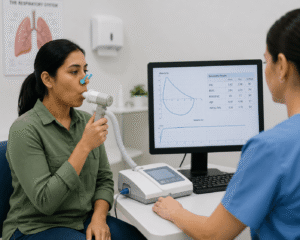
- A lung function test, also known as a pulmonary function test, which measures how well air moves in and out of your lungs and can help distinguish this condition from asthma or COPD
- Spirometry testing as part of that assessment, particularly useful where the chronic form is suspected
- Blood testing and health checks where infection markers or underlying health conditions need to be reviewed
If your symptoms suggest a more complex or long-standing respiratory condition, your GP may recommend a referral to a private respiratory consultant for a more detailed assessment.
When to See a GP
Most acute cases settle on their own with rest and simple self-care. However, you should book a GP appointment if you experience any of the following:
- A cough that lasts longer than three to four weeks
- A high temperature that does not settle after a few days
- Coughing up blood or mucus that becomes dark, rust-coloured or increasingly thick
- Chest pain, fast breathing or worsening shortness of breath
- Repeated chest infections within a short period
- An existing health condition, such as heart disease or diabetes, that makes you more vulnerable to complications
These signs can indicate that a chest infection is developing into something more serious such as pneumonia. They can also point to an underlying condition like COPD that has not yet been diagnosed.
Treating Acute Bronchitis
Because acute cases are usually caused by a virus, antibiotics are not routinely helpful and are generally reserved for people who are systemically unwell or at higher risk of complications, in line with current guidance from the National Institute for Health and Care Excellence (NICE) on managing acute cough. Most patients recover well with simple self-care measures:
- Rest and avoid smoking or smoky environments while you recover
- Drink plenty of fluids to help loosen mucus and prevent dehydration
- Take paracetamol or ibuprofen for fever, aches or chest discomfort
- Use a warm drink with honey and lemon to soothe a sore throat and cough
- Ask your pharmacist about suitable over-the-counter remedies for symptom relief
If your cough or breathlessness does not improve within the expected timeframe or you develop any of the red flag symptoms above, it is worth arranging a review with your GP.
Managing Chronic Bronchitis and COPD
The chronic form cannot be cured, but it can be managed effectively with the right ongoing care. Because it is classed as a form of chronic obstructive pulmonary disease, treatment usually focuses on controlling symptoms, slowing further airway damage and improving day-to-day breathing. This can include:
- Stopping smoking, which is the single most effective step for slowing disease progression
- Inhaler therapy to help open the airways and reduce inflammation
- Pulmonary rehabilitation and structured exercise programmes
- Regular monitoring of lung function to track changes over time
- Vaccination against flu and pneumococcal infection to reduce the risk of flare-ups
For patients managing a long-standing respiratory condition, our respiratory consultant service offers fast access to specialist assessment, diagnosis and an individual management plan. Our consultations are led by Dr Hagan, a consultant with extensive experience managing COPD, chronic cough and a wide range of other respiratory conditions.
Reducing Your Risk
Not every chest infection can be prevented, but there are practical steps that reduce your chances of developing one or experiencing repeated episodes:
- Avoid smoking and limit exposure to secondhand smoke wherever possible
- Wash your hands regularly, particularly during cold and flu season, to reduce the spread of respiratory viruses
- Keep up to date with flu and pneumococcal vaccinations, especially if you are over 65 or have an existing lung condition
- Limit exposure to dust, fumes and other airborne irritants at work or at home
- Seek early advice for a persistent cough or repeated chest infections rather than waiting for symptoms to settle on their own
Since smoking remains the single biggest driver of chronic bronchitis, quitting is one of the most effective steps you can take to lower your risk. If you currently smoke, our guide on how to quit smoking for good walks through stop smoking aids, a practical quit plan and how your GP can support you along the way.
Living With a Persistent Cough or Long-Term Chest Condition
A cough that keeps coming back or one that never quite clears understandably causes concern. Rather than guessing whether it is a lingering infection, seasonal irritation or the early signs of a long-term chest condition, a proper assessment gives you a clear answer and a treatment plan tailored to your circumstances. Our Lurgan clinic offers GP consultations, lung function testing and respiratory consultant appointments under one roof, serving patients across Belfast, Craigavon, Portadown, Lisburn, Banbridge and Armagh. Patients travelling from the Republic of Ireland are also welcome; further details are available on our cross-border patients page.
Frequently Asked Questions
What is the difference between acute and chronic bronchitis?
Acute bronchitis is a short-term chest infection, usually caused by a virus, that clears up within a few weeks. Chronic bronchitis is a long-term condition, classed as a form of COPD, defined by a productive cough on most days for at least three months of the year over two consecutive years.
How long does bronchitis usually last?
Acute cases typically improve within one to three weeks, although the cough itself can persist for several weeks after other symptoms have gone as the airways continue to heal. The chronic form, by contrast, is an ongoing condition that requires long-term management rather than a fixed recovery period.
Is bronchitis contagious?
Acute bronchitis caused by a viral infection can spread through coughing, sneezing and close contact in the same way as a cold or flu. Chronic bronchitis is not infectious, since it develops from long-term airway irritation rather than a passing infection.
Can bronchitis turn into pneumonia?
In most cases, this remains a self-limiting chest infection and does not progress further. However, in some people, particularly those who are older, smoke or have an existing health condition, an untreated or worsening chest infection can develop into pneumonia. This is one of the main reasons to seek medical advice if your symptoms worsen rather than improve.
Do I need antibiotics for bronchitis?
Most acute cases are caused by a virus, so antibiotics are not usually effective and are not routinely prescribed. Current NICE guidance recommends antibiotics only for patients who are systemically unwell or at higher risk of complications. If a bacterial cause is suspected or your symptoms are severe, your GP will discuss whether antibiotics are appropriate for you.
When should I get a lung function test?
A lung function test is useful for a persistent cough, recurrent chest infections, wheezing or breathlessness that has not settled. It is also used when your GP wants to distinguish between bronchitis, asthma and COPD or to monitor the chronic form over time and assess how well treatment is working.
Further Reading
If you would like to read more from independent, patient-focused sources before your consultation, the following are reputable places to start:
- NHS: Bronchitis, for an overview of symptoms, causes and self-care advice
- NICE Guideline NG120: Cough (acute) antimicrobial prescribing, for the current clinical guidance on when antibiotics are appropriate
- Asthma + Lung UK: Chronic bronchitis, for detailed information on living with the chronic form as part of COPD
These resources are a helpful starting point, but they supplement rather than replace a proper clinical assessment of your own symptoms.
Ready to Get Your Cough Checked?
If you have a cough that will not settle, recurrent chest infections or you are concerned about your breathing, do not wait for symptoms to worsen. Book a GP appointment for an initial assessment. If you are already managing an ongoing respiratory condition, arrange a consultation through our respiratory consultant service instead. You can also get in touch with our team directly to discuss which service is right for you.