
If you’ve searched for a “private ultrasound scan near me,” an “early scan near me,” or even “ultrasound direct Belfast,” chances are you’re looking for one thing: a clear, reliable picture of what’s going on inside your body, without a long wait for an appointment. Ultrasound is one of the most widely used diagnostic tools in medicine and for good reason. It’s quick, painless in the vast majority of cases and involves no radiation at all.
At Friends Medical Service, our ultrasound and ultrasound-guided injection service gives patients across Northern Ireland fast access to abdominal, pelvic, transvaginal and musculoskeletal scans, along with ultrasound-guided steroid injections for joint and soft tissue conditions. This guide walks through what an ultrasound scan actually involves, the different types available, how long each one takes, what it costs privately and how to prepare, so you know exactly what to expect before you book.
What Is an Ultrasound Scan and How Does It Work?
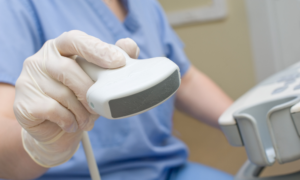
An ultrasound scan uses high-frequency sound waves, not radiation, to build a real-time picture of the tissues, organs and blood flow inside your body. A small handheld probe (called a transducer) is passed over the skin, or in some cases inserted internally and sends sound waves into the body. These waves bounce back off different tissues at different speeds and a computer converts the returning echoes into a moving image on screen.
Because there’s no ionising radiation involved, ultrasound is considered one of the safest imaging techniques available and can be repeated as often as clinically needed. A thin layer of gel is applied to the skin beforehand to help the sound waves travel clearly, which is why most scans involve that familiar “cold jelly” sensation.
Ultrasound scanning can be used to:
- Examine organs such as the liver, gallbladder, kidneys, pancreas and spleen
- Assess the female reproductive organs, including the uterus, ovaries and endometrial lining
- Look at muscles, tendons, ligaments and joints
- Guide a needle precisely during a steroid or diagnostic injection
- Monitor a baby’s growth and development during pregnancy
- Check blood flow through veins and arteries
Types of Ultrasound Scans Explained
Not all ultrasound scans are the same. The type you need depends entirely on the area of the body being examined and what your GP or consultant is trying to investigate.
Private Abdominal Ultrasound Scan
An abdominal ultrasound scan looks at the organs sitting within your tummy, including the liver, gallbladder, kidneys, spleen and pancreas. It’s commonly requested to investigate abdominal pain, bloating, abnormal blood test results, or suspected gallstones.
This is often where people start searching for terms like “liver ultrasound,” “gallbladder ultrasound,” “liver ultrasound scan,” or “ultrasound pictures liver.” On a scan, a healthy liver typically appears as a smooth, uniformly grey (or “homogeneous”) structure, while changes in texture, size or density can flag issues such as fatty liver disease, cysts or gallstones for further follow-up with your doctor. It’s worth stressing that an ultrasound image is only ever interpreted by a trained sonographer or radiologist and reviewed by a referring clinician; it isn’t something to self-diagnose from a picture.
Pelvic and Transvaginal Ultrasound Scans
Pelvic and transvaginal scans are both used to assess the female reproductive organs, but they work differently:
- Pelvic ultrasound (abdominal approach): The probe is moved across the lower tummy, usually with a full bladder to help create a clearer image of the uterus and ovaries.
- Transvaginal ultrasound: A slim, sterile-covered probe is gently inserted into the vagina, giving a much closer and more detailed view of the uterus, endometrial lining and ovaries.
This is one of the most searched areas of ultrasound, covering terms like “transvaginal ultrasound,” “vaginal ultrasound,” “private transvaginal ultrasound,” and “pelvic ultrasound vs transvaginal ultrasound.” In general, a transvaginal scan gives a sharper, more detailed image because the probe sits much closer to the pelvic organs, which is why it’s often used to investigate irregular bleeding, pelvic pain, fertility concerns, a thickened uterine lining seen on ultrasound, or suspected fibroids and ovarian cysts.
Is a transvaginal ultrasound painful? Most women describe it as feeling similar to a smear test, with some pressure but not sharp pain. You’re always in control of the scan and can ask the sonographer to stop or pause at any point. For related gynaecological concerns, our private gynaecology service and our gynaecology blog cover conditions like PCOS, endometriosis and abnormal bleeding in more depth.
Musculoskeletal (MSK) Ultrasound and Guided Injections
Musculoskeletal ultrasound looks at soft tissue structures such as tendons, ligaments, muscles and joints. It’s particularly useful for diagnosing conditions like tendinopathy, ligament tears, joint effusions and inflammation and it also plays a central role in ultrasound-guided steroid injections.
Rather than a clinician injecting “blind,” ultrasound guidance allows the needle to be watched in real time on screen, so it can be placed precisely into the affected joint, tendon sheath or bursa. This improves accuracy, reduces the risk of injecting into the wrong structure and can improve how effective the treatment is. We’ve covered this topic in detail in a previous post on whether ultrasound-guided injections are painful and it pairs closely with our Sports Injury & Physio service and our post on PRP injections, which also uses ultrasound guidance for precise delivery.
Other Types of Ultrasound Scan You May Have Heard Of
Ultrasound is used across many areas of medicine and you may have come across some of the following terms while researching:
- Breast ultrasound – used alongside or instead of a mammogram to assess breast lumps or dense tissue
- 4D ultrasound / maternity scans – used in pregnancy to monitor a baby’s growth, movement and wellbeing
- Testicular ultrasound – used to investigate lumps, pain or swelling in the testicles
- DVT scan (Doppler ultrasound) – used to check for blood clots in the veins of the leg
- Carotid Doppler – used to assess blood flow through the arteries in the neck
- Thyroid ultrasound – used to investigate nodules or swelling in the thyroid gland
At Friends Medical Service, our current diagnostic ultrasound service focuses on abdominal, pelvic, transvaginal and musculoskeletal scans, alongside guided injections. If you’re researching one of the scan types above, we’d always recommend getting in touch directly so we can advise on the most appropriate route, whether that’s with us or a referral elsewhere.
How Long Does an Ultrasound Scan Take?
One of the most commonly asked questions is simply: how long does an ultrasound take? The answer depends on the area being examined, but as a general guide:
| Scan Type | Typical Duration |
|---|---|
| Abdominal ultrasound | 15–30 minutes |
| Pelvic ultrasound | 15–30 minutes |
| Transvaginal ultrasound | 10–20 minutes |
| Musculoskeletal ultrasound | 15–20 minutes |
| Ultrasound-guided injection | 15–30 minutes (including the scan) |
Your appointment slot will usually allow a little extra time on top of this for preparation, discussion and any questions you have for the sonographer.
How to Prepare for Your Ultrasound Scan
Preparation depends on which part of the body is being scanned:
- Abdominal ultrasound: You’ll typically be asked not to eat for around 6 hours beforehand, as food can affect how clearly organs like the gallbladder appear. Small sips of still water are usually fine.
- Pelvic ultrasound: You may be asked to drink water beforehand and avoid going to the toilet, so you have a comfortably full bladder, which helps produce a clearer image of the uterus and ovaries.
- Transvaginal ultrasound: In contrast, you’ll usually be asked to empty your bladder just before this scan.
- Musculoskeletal ultrasound: No special preparation is usually required, though loose clothing that allows easy access to the area being scanned is helpful.
You’ll always be given specific instructions when you book, so if anything is unclear, it’s worth calling ahead to check.
Private Ultrasound Cost
Private ultrasound cost is a common question and pricing is straightforward at Friends Medical Service:
| Service | Price |
|---|---|
| Ultrasound scans (abdominal, pelvic, transvaginal or musculoskeletal) | From £230 |
| Ultrasound-guided injections | From £375 |
| Referral appointment (if you don’t already have one) | £70 |
A referral is required before a scan or guided injection can be booked. This isn’t red tape for its own sake; it ensures you’re booked in for the correct examination, that a clinician is available to explain your results afterwards and that any necessary follow-up or treatment pathway is already in place if something is found.
Ultrasound vs Other Types of Scan
It’s easy to see terms like “private CT scans,” “OPG x-ray,” or “nuclear medicine scan” alongside ultrasound in search results, so it’s worth understanding how these imaging methods differ:
- Ultrasound uses sound waves, involves no radiation and is excellent for soft tissue, organs, blood flow and real-time guidance during injections.
- X-ray uses a small amount of radiation and is best for looking at bones and detecting fractures.
- CT scan uses multiple X-ray images to build a detailed cross-sectional picture, typically used for more complex internal investigations and involves a higher radiation dose than a standard X-ray.
- MRI uses magnetic fields rather than radiation and produces highly detailed images, particularly of soft tissue and the brain, though scans take considerably longer than ultrasound.
- DEXA scan is a specialised, low-dose type of scan used specifically to measure bone density; you can read more in our bone health guide and our DEXA scan post.
Your GP or consultant will recommend the most appropriate scan type based on what they’re investigating, rather than there being a single “best” option for every situation.
Can an Ultrasound Detect Cancer?
This is understandably one of the more anxiety-inducing questions people search for, often phrased as “can ultrasound detect cancer?”, “signs of a bad pelvic ultrasound,” or “can you see cancer in the abdomen with ultrasound?” Ultrasound can be a useful part of investigating suspicious lumps, abnormal growths, or changes in an organ’s appearance and it’s commonly used alongside other tests such as blood work, mammography or biopsy.
However, ultrasound alone cannot definitively diagnose cancer. It can identify areas that need further investigation, but a firm diagnosis usually requires additional tests, most often a biopsy, reviewed together by your consultant. If you’re waiting on results or feeling anxious about an upcoming scan, that’s completely understandable; try to remember that most scans find nothing serious and your referring clinician will always talk you through what your specific results mean and what, if anything, happens next.
Why Book a Private Ultrasound Scan?
There are several reasons people choose to search “private pelvic ultrasound scan near me” or “reassurance ultrasound” rather than waiting for an NHS appointment:
- Faster access – private scans can often be booked within days rather than weeks or months
- Convenient appointment times – suited around work and family commitments
- A clear referral pathway – with a clinician on hand to explain your results and next steps
- Reassurance – for ongoing symptoms, pain, or simply peace of mind
- Combined care – scans can lead directly into treatment, such as an ultrasound-guided injection, without unnecessary delay

Frequently Asked Questions
What is a diagnostic ultrasound scan?
It’s a painless imaging test that uses sound waves rather than radiation to build a picture of organs, tissues or blood flow inside the body, helping a clinician diagnose or monitor a condition.
How long does an ultrasound scan take?
Most scans take between 15 and 30 minutes, though a transvaginal scan is often slightly quicker, at around 10 to 20 minutes.
Is an ultrasound scan safe?
Yes. Ultrasound uses sound waves rather than ionising radiation, so it’s considered one of the safest imaging options and can be repeated when clinically needed.
Does an ultrasound scan hurt?
Most external ultrasound scans are painless, though you may feel some pressure as the probe is moved over the skin. Internal scans, such as a transvaginal ultrasound, can cause mild discomfort but shouldn’t be painful and you can ask the sonographer to stop at any time.
Do I need a referral for an ultrasound scan?
Yes, a referral is required for all scans and guided injections at Friends Medical Service. If you don’t already have one, you can book a referral appointment with us first.
How do I prepare for an ultrasound scan?
It depends on the type of scan. Abdominal scans usually require a short period of fasting, pelvic scans typically require a full bladder and transvaginal scans require an empty bladder. You’ll receive specific instructions when you book.
How quickly will I get my results?
This varies depending on the scan and reason for referral, but your referring clinician will discuss your results with you and explain the appropriate next steps.
What’s the difference between a pelvic ultrasound and a transvaginal ultrasound?
A pelvic ultrasound is performed externally across the lower abdomen, while a transvaginal ultrasound uses an internal probe for a closer, more detailed view of the uterus and ovaries.
Can an ultrasound scan detect cancer?
Ultrasound can identify abnormal areas that need further investigation, but it can’t provide a definitive cancer diagnosis on its own. Further tests, such as a biopsy, are usually needed to confirm a diagnosis.
How much does a private ultrasound scan cost?
At Friends Medical Service, ultrasound scans start from £230, ultrasound-guided injections start from £375 and a referral appointment (if needed) is £70.
Further Reading
For further, independently written patient information on ultrasound scans, the following resources may be helpful:
- NHS: Ultrasound scan
- RadiologyInfo.org: Musculoskeletal ultrasound
- NHS: Ultrasound scans in pregnancy
- Cancer Research UK: Ultrasound scan
- Cancer Research UK: Transvaginal ultrasound scan
Booking Your Ultrasound Scan at Friends Medical Service
Booking is straightforward. If you already have a referral from your GP or consultant, you can go ahead and book your scan directly. If you don’t yet have one, you can book a referral appointment first and our clinical team will assess you and arrange the most appropriate scan. You can find full details, current pricing and our online booking links on our Ultrasound & Guided Injection service page, or get in touch with our team directly if you have any questions beforehand.