
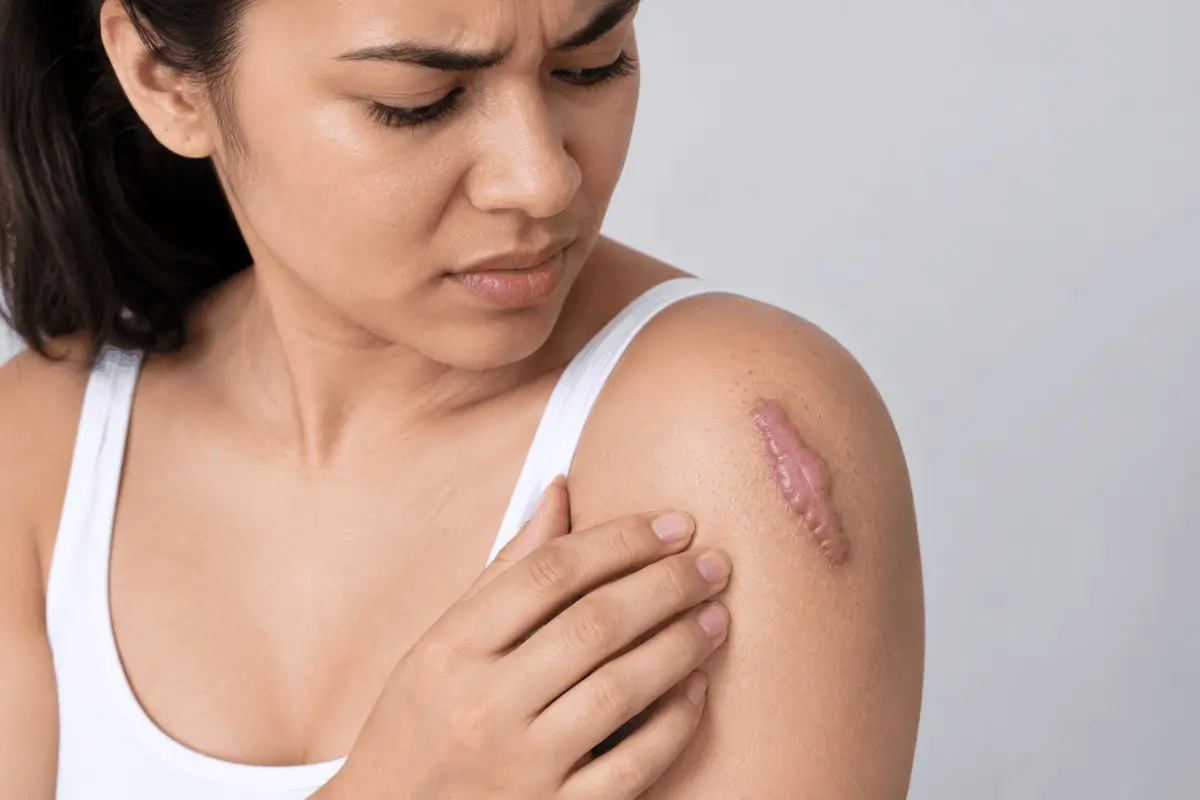
A skin cyst that has been quiet for months or years can turn sore almost overnight. One day it is a smooth, painless lump that you barely notice. The next day it is tender to touch, red around the edges and hard to ignore. A sore cyst is a common reason to book a doctor's appointment and in most cases the cause is treatable. This guide explains why a sore cyst develops, how to tell inflammation from infection, what you can safely do at home and which warning signs mean you should be seen quickly. It also explains how a sore cyst is treated and what to expect from a private consultation at Friends Medical Service in Lurgan.
What Is a Skin Cyst?
A skin cyst is a closed, sac-like lump that sits just beneath the surface of the skin. The sac is lined with cells and filled with a soft material, usually a protein called keratin that the skin makes naturally. Skin cysts are common and anyone can develop one. The National Health Service (NHS) describes them as usually harmless and says that many need no treatment. Many people call these lumps sebaceous cysts. That name is widely used but it is not strictly accurate. The British Association of Dermatologists (BAD) explains that the lumps most people call sebaceous cysts are really epidermoid or pilar cysts, because they arise from other cells in the skin and not from the oil-producing sebaceous glands. The two types look similar but they behave in slightly different ways.
Epidermoid Cysts
An epidermoid cyst forms when surface skin cells become trapped beneath the skin and keep producing keratin. These cysts often appear on the face, neck, chest and back. They can also develop on the scrotum. They are more common in younger adults and in people who have had acne. An epidermoid cyst often has a tiny dark opening at the centre called a punctum.
Pilar Cysts
A pilar cyst forms from the lining of a hair follicle. About nine in ten occur on the scalp. They are more common in women and tend to appear in middle age. Pilar cysts often run in families, so a close relative with scalp cysts raises the chance that you will develop one. A pilar cyst is usually firm and smooth with no central opening. Both types are non-cancerous. You cannot catch a skin cyst from another person and cysts are not caused by poor hygiene.
Why Does a Cyst Become Sore?
Most skin cysts cause no discomfort at all. A sore cyst usually means something has changed in or around the sac. The main causes are:
- Inflammation without infection. The cyst wall can leak keratin into the surrounding tissue. The body treats this material as a foreign substance and responds with redness, swelling and tenderness even when no bacteria are present.
- Bacterial infection. Bacteria from the skin can enter the cyst through the central opening or a small break in the skin. The result is a hot, red and painful lump that may fill with pus.
- Rupture. A cyst can burst under the skin or through the surface. A ruptured cyst may release a thick, cheesy and sometimes foul-smelling discharge.
- Friction and pressure. A cyst on the scalp can catch on a comb. A cyst on the neck or back can rub against a collar or bra strap. Repeated irritation makes the area tender.
- Squeezing or picking. Pressing on a cyst pushes its contents into the surrounding tissue and can introduce bacteria. The NHS advises against squeezing a skin cyst for this reason.
- Shaving or other minor injury. A razor passing over a raised cyst can nick the surface and give bacteria a way in.
Inflamed but Not Infected
An inflamed cyst can look much like an infected one. It is red and swollen with a tender centre. The difference is that inflammation may settle by itself over several days without any antibiotics. A doctor can usually tell the two apart by examining the cyst and asking how quickly the symptoms developed.
Infected Cysts
An infected cyst typically becomes more painful over a day or two. The skin over it turns red and feels warm. The lump may grow larger and soften as pus collects inside. You may notice a yellow or white point on the surface. Some people also feel generally unwell with a raised temperature. An infected cyst can behave like a skin abscess, which is a collection of pus that sometimes needs draining.
Ruptured Cysts
When a cyst bursts, the pain can ease for a short time because the pressure drops. The lump often returns if the sac wall stays behind and refills. A ruptured cyst also carries a risk of infection while the skin is open, so it needs clean and careful handling.

Signs of a Sore Cyst
A sore cyst may show some or all of the following:
- Pain or tenderness when the lump is touched or pressed
- Redness of the skin over the lump (redness can be harder to see on brown or black skin)
- Warmth in the area
- Swelling that grows over hours or days
- A discharge that is thick, yellow or white and sometimes foul-smelling
- A lump that feels firmer than before
- A raised temperature or a feeling of being hot and shivery
On darker skin the colour change may look purple or darker brown instead of red. Tenderness, warmth and swelling are often the more reliable signs.
Sore Cyst or Something Else?
Not every sore lump is a cyst. Other conditions can look similar and some need different care. The table below compares the most common causes. Use it to organise your thinking and not as a way to diagnose yourself.
| Feature | Sore skin cyst | Skin abscess or boil | Lipoma | Skin cancer |
|---|---|---|---|---|
| Usual feel | Round and smooth with a firm sac | Hard at first then soft and fluid-filled | Soft and doughy; moves under the skin | Firm lump or scaly patch; may be crusted |
| Pain | Painless until inflamed or infected | Painful and throbbing | Rarely painful | Often painless in early stages |
| Speed of change | Slow growth with sudden flare-ups | Develops over days | Very slow growth over years | Slow growth; can be faster in some types |
| Opening | Sometimes a tiny central dark spot | Often a visible pus point | None | May ulcerate or bleed |
| Needs checking | Yes when sore or changing | Yes; may need draining | Yes if growing or painful | Yes; see a doctor promptly |
What to Do at Home for a Sore Cyst
Gentle self-care can ease a mildly sore cyst while you arrange an examination.
- Leave it alone. Do not squeeze, pick or try to burst the cyst. This is the single most important step.
- Use a warm compress. Hold a clean, warm and damp flannel against the area for about ten minutes a few times a day. Warmth can ease tenderness and may help a cyst settle.
- Keep the area clean. Wash gently with mild soap and water and pat dry.
- Reduce friction. Wear loose clothing over the area. Avoid combing hard over a scalp cyst.
- Use simple pain relief if suitable for you. Ask a pharmacist if you are unsure what is safe with your other medicines.
- Watch for change. Note whether the redness spreads or the pain increases and photograph the area daily so you can show a clinician how it has changed.
A sore cyst that has not improved after a few days of home care should be examined.
When to See a Doctor About a Sore Cyst
The NHS advises asking for an urgent GP appointment if you have a sore or red lump on your skin. Treat the following as reasons to be seen quickly:
- A lump that is painful, red or hot
- Swelling or redness that is spreading away from the lump
- A temperature or a feeling of being hot and shivery
- Pus coming from the lump
- A cyst on the face or near the eye
- Diabetes or a weakened immune system together with a sore lump
In Northern Ireland you can use your GP surgery or the out-of-hours GP service when your own surgery is closed. Our decision guide to
A&E, GP out-of-hours and private GP care explains which option suits which situation. Call 999 or go to an emergency department if a sore lump comes with high fever, confusion, a very fast heartbeat, severe weakness or rapid spreading redness. These can be signs of a serious infection. Our sepsis awareness guide lists the warning signs. Book a routine appointment for any cyst that has stayed the same for a long time but that you would like checked. A GP can confirm what the lump is and talk through your options.How a Sore Cyst Is Treated
Treatment depends on whether the cyst is simply inflamed or infected and on how much it bothers you.
- Watchful waiting. A mildly inflamed cyst may settle without treatment. Small cysts that cause no trouble can safely be left alone.
- Antibiotics. The BAD notes that a doctor may prescribe an antibiotic if a cyst becomes infected.
- Drainage. If a cyst has formed an abscess a doctor may make a small cut under local anaesthetic to let the pus out. This relieves the pain quickly but it does not always remove the sac.
- Complete removal. Minor surgery removes the cyst along with its wall. This is the approach most likely to stop the cyst coming back. Surgeons often wait until a very inflamed cyst has calmed down before operating because inflamed tissue is harder to remove cleanly.
If any part of the sac wall remains the cyst can refill and become sore again. This is why a cyst that keeps returning in the same place often benefits from removal once the inflammation has settled.
Removing a Cyst: What to Expect
At Friends Medical Service our minor surgical procedures service includes excision of skin lesions and is delivered at our Lurgan clinic by our consultant surgical team. This includes Mr Abid Rashid, Consultant Plastic Surgeon. At your consultation the surgeon examines the cyst and advises whether removal is suitable for you and when it should happen. A typical pathway looks like this:- Consultation and examination. The surgeon looks at the lump and asks about its history. They explain whether it is a cyst and whether it should be treated now or after a sore period has settled.
- Local anaesthetic. The skin around the cyst is numbed so that you feel pressure and not pain.
- The procedure. The surgeon removes the cyst and its wall through a small cut. The time taken depends on the size and position of the cyst.
- Closure and dressing. The wound is closed and dressed and you receive written aftercare advice.
- Laboratory testing where indicated. Where there is any uncertainty about what the lump is, the tissue can be sent for histology so that you receive a confirmed answer.
- Home the same day. Minor procedures are carried out on an outpatient basis. Most people return to normal activities quickly although your surgeon will advise on the area treated.
Price depends on the cyst and the procedure recommended. The cost of any procedure is confirmed at your consultation before anything goes ahead.

Choosing the Right Appointment
| Route | Best for | Where | Referral needed | Cost |
|---|---|---|---|---|
| Private GP appointment (face to face) | A first examination of a sore lump; antibiotics if appropriate | Our clinic | No | From £70 |
| Same-day private GP appointment | A sore or red lump that needs to be seen today | Our clinic | No | See service page |
| Minor surgical consultation | Assessment and discussion of removal | Lurgan clinic | No | £225 (includes £25 booking fee) |
| Private ultrasound scan | Imaging of a soft tissue lump when its nature is unclear | Our clinic | Yes; a GP can provide it | From £230 |
An online video appointment is not suited to a sore lump because the clinician cannot feel or examine it. Our GP appointment page asks patients to book face to face when a lump needs to be palpated. Our partner site, Friends Medical GP, offers
same-day private GP appointments and explains how skin concerns are seen. If you are nervous about your first visit you can read what to expect at your first private GP appointment.How Friends Medical Service Can Help
Friends Medical Service offers a clear route from a sore lump to a clear answer:
- Fast access. Same-day and fast appointments are available and walk-in patients can take the earliest available GP slot that day during normal service hours.
- Continuity. You can see the same GP each time. You can read about Dr Abdel Nasir Nour or browse our full consultants directory.
- Imaging when it helps. Our ultrasound service covers soft tissue lumps and swellings with results explained on the day.
- Minor surgery in Lurgan. Minor surgical procedures take place at our Lurgan clinic. Our Limavady and L/Derry clinics provide No Scalpel Vasectomy appointments only.
- Wide catchment. Patients travel to Lurgan from Craigavon and Portadown. They also come from Lisburn and Banbridge. Armagh and Belfast are close too. Patients from the Republic of Ireland are welcome and our cross-border patients page explains how it works.
We are not a dermatology unit. If an examination suggests that a lump needs specialist input we explain the next step and arrange onward referral.
Frequently Asked Questions
Why is my cyst suddenly sore?
A cyst usually becomes sore because its wall has leaked into surrounding tissue or because bacteria have entered the sac. Pressure and friction from clothing can also irritate a cyst. A cyst that was painless and has become tender needs to be looked at if the soreness lasts more than a few days.
Is a sore cyst always infected?
No. A cyst can be inflamed without any infection. Inflammation can look just like infection with redness, swelling and tenderness. A clinician examines the lump and the history of symptoms to decide whether antibiotics are needed.
Should I pop a sore cyst?
No. Squeezing a cyst can push its contents deeper into the skin and carry bacteria into the area. The NHS advises against squeezing skin cysts. If the cyst needs draining a clinician can do this safely under local anaesthetic.
Do I need antibiotics for a sore cyst?
Only if the cyst is infected. The BAD says a doctor may give an antibiotic when a cyst becomes infected. Antibiotics do not remove the cyst sac so a cyst that returns may need minor surgery.
Can a sore cyst be removed while it is inflamed?
Surgeons often prefer to wait until the inflammation has settled because inflamed tissue is harder to remove cleanly. Your surgeon will advise on timing. A drainage procedure may be done first when pus has collected.
What is the difference between a sore cyst and an abscess?
A cyst is a sac that is present before it becomes sore. An abscess is a collection of pus that forms in response to infection. An infected cyst can become an abscess. Both are painful and red and a doctor can tell them apart by examination.
Do I need a GP referral to see a surgeon about a cyst?
No. You can book a minor surgical consultation with Friends Medical Service directly. If you want an ultrasound scan of a lump you will need a clinical referral. A private GP appointment with us can provide one.
Further Reading
If you'd like to read more from independent, patient-focused sources before your consultation, the following are reputable places to start:
- NHS: Skin Cyst: symptoms, types, causes and treatments for skin cysts
- NHS: Skin Abscess: how to recognise an abscess and when to get urgent help
- British Association of Dermatologists: Epidermoid and Pilar Cysts: a dermatologist-written patient leaflet
- Patient.info: Epidermoid and Pilar Cysts: a clear overview of causes and removal
- NHS: Non-Melanoma Skin Cancer: the signs that a lump or sore should be checked
These sources supplement but do not replace a clinical assessment of your own skin.
Final Thoughts
A sore cyst is uncomfortable but it is usually treatable. Leave the lump alone and keep the area clean. Seek an examination if the pain is increasing or the redness is spreading. If the cyst keeps coming back an examination can lead to a lasting solution. To have a sore cyst examined
book a private GP appointment or book a minor surgical consultation at our Lurgan clinic. If you prefer to speak to our team first get in touch through our contact page or book online with Friends Medical GP. If your cyst has changed in colour, size or shape, our companion guide on cysts changing in colour, size and shape explains what that can mean.