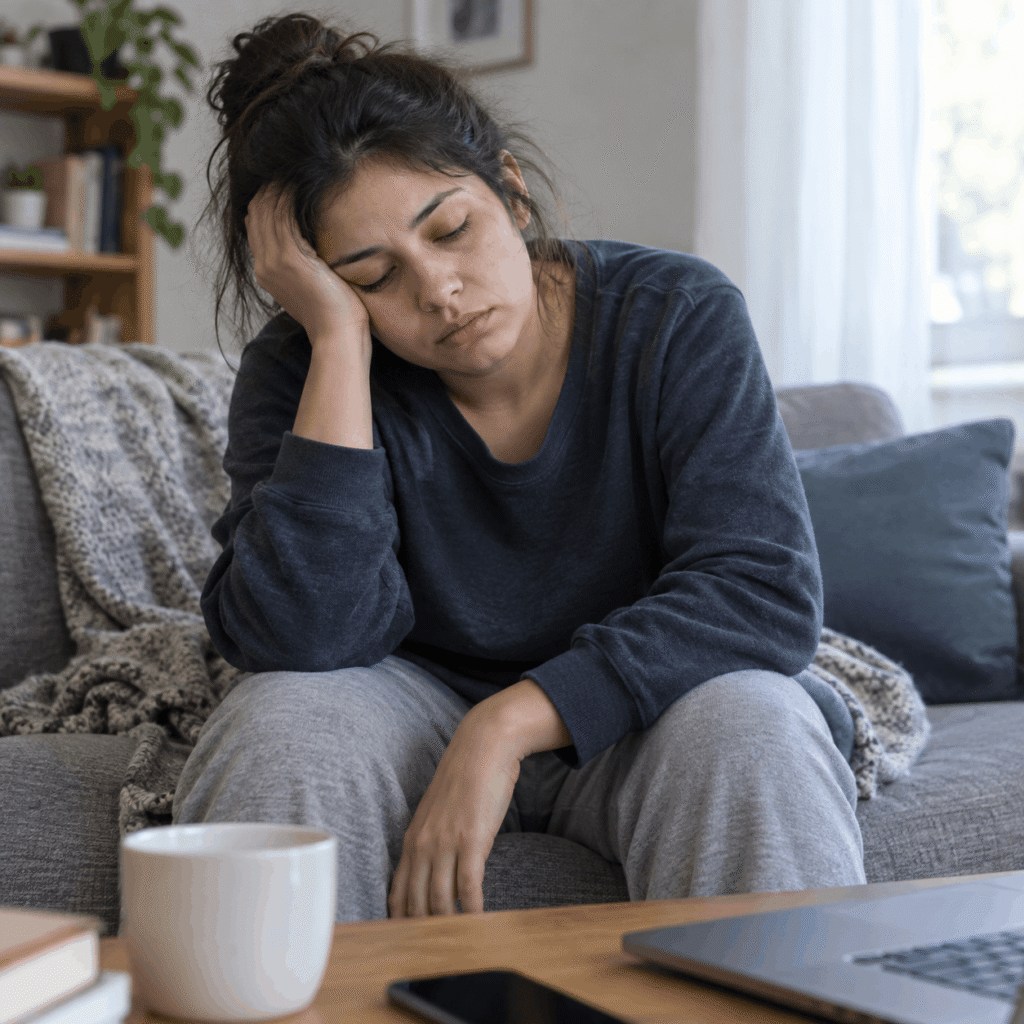
A morning headache and daytime sleepiness are easy to dismiss separately, but together they point to a pattern worth investigating. Each symptom has plenty of harmless explanations, yet together they form one of the best-known patterns of obstructive sleep apnoea (OSA), a condition in which the airway narrows or closes repeatedly during sleep. Many people put the pattern down to stress, a busy schedule or getting older and live with it for years before anyone suggests a sleep study.
This guide explains what causes morning headaches and daytime sleepiness, how to tell a simple bad night from a sleep disorder, which warning signs need urgent attention and how a private sleep study in Northern Ireland works. It also covers the practical points many patients ask about, including driving, treatment and what happens after a diagnosis.
Why Morning Headaches and Daytime Sleepiness Appear Together
Sleep is the body’s maintenance window. When breathing is repeatedly disturbed overnight, sleep becomes fragmented and unrefreshing, even if you spend eight hours in bed. The result is a pair of symptoms that feed each other: a headache on waking and a heavy, foggy tiredness that lingers through the day.
The National Health Service (NHS) lists a headache when you wake up and feeling very tired among the signs to look out for with sleep apnoea. Sleep apnoea is not the only explanation, though, so it helps to understand each symptom separately before looking at how they connect.
What Counts as a Morning Headache?
A morning headache is one that is present when you wake or develops within the first hour or two of the day. It may be a dull pressure across the forehead, a tight band around the head or a throbbing ache that eases as you move around. Waking with a dry mouth, a sore throat or a feeling that you have not slept at all can come alongside it.
Everyone gets an occasional bad morning. The pattern becomes significant when morning headaches:
- Happen several times a week or most mornings
- Improve once you have been up for a while
- Come with loud snoring or a partner noticing pauses in your breathing
- Arrive alongside heavy tiredness that sleep never seems to fix
- Have continued for weeks rather than a few days
Common Causes of Morning Headaches
Sleep apnoea is only one entry on a long list. A GP will think through several possibilities before deciding on tests.
- Tension-type headache: the most common headache type, linked to stress, poor posture and tight neck muscles
- Migraine: can strike on waking and may bring nausea or sensitivity to light and noise
- Medication overuse: taking painkillers on most days can itself trigger daily headaches
- Caffeine and alcohol: late drinks disturb sleep and cause dehydration by morning
- Teeth grinding: clenching overnight strains the jaw and temples
- Poor sleep habits: irregular bedtimes, too little sleep or too much sleep
- Low mood and anxiety: both disturb sleep and increase headache frequency
- High blood pressure: can contribute to headaches in some people and is also linked with sleep apnoea. Our guide to high blood pressure and hypertension explains how it is diagnosed
Our private GP team has a dedicated page on headache and migraine appointments, which explains how a longer consultation helps separate these causes from one another.
Common Causes of Daytime Sleepiness
Daytime sleepiness means feeling an unusually strong urge to doze during the day, particularly in quiet situations such as reading, watching television or sitting in traffic. It differs from ordinary tiredness, where you feel worn out but could still stay awake if you had to.
Causes include:
- Not enough sleep: the simplest explanation and the first to rule out
- Shift work or an irregular body clock
- Sleep apnoea and related breathing disorders
- Medical conditions: anaemia, an underactive thyroid, diabetes and kidney problems can all cause persistent fatigue
- Medication side effects: some prescribed and over-the-counter medicines cause drowsiness
- Low mood or anxiety
- Other sleep disorders: narcolepsy and restless legs syndrome, for example
Because so many conditions overlap, a blood test is a common part of a sensible work-up. Our post on why you might be always tired covers the medical causes and the blood panels that help find them.

Sleep Apnoea: The Link Between Both Symptoms
Obstructive sleep apnoea happens when the muscles and soft tissues of the throat relax during sleep and block the airway. Breathing pauses or becomes shallow, oxygen levels dip and the brain briefly wakes the body to restart breathing. You rarely remember these awakenings, but they can happen many times an hour and leave sleep badly broken.
Not everyone with the condition is overweight. Neck size, jaw shape, age, alcohol, smoking and family history all play a part. A sleep study is the only reliable way to confirm it.
Symptoms of Sleep Apnoea
Alongside morning headaches and daytime sleepiness, sleep apnoea symptoms include:
- Loud, persistent snoring
- Gasping, snorting or choking sounds during sleep
- Breathing that stops and starts, noticed by a partner
- Waking frequently during the night, sometimes to pass urine
- A dry mouth or sore throat on waking
- Poor concentration and memory
- Irritability or mood changes
If you live alone, it can be hard to know what happens while you sleep. The NHS suggests asking someone to stay with you for a night and watch for the signs of sleep apnoea. Snoring is the symptom partners notice first, and our guide to loud snoring and the warning signs of sleep apnoea explains when it points to something more.
How Severe Can Sleep Apnoea Be?
Severity is graded using the apnoea-hypopnoea index (AHI), which counts breathing interruptions per hour of sleep:
- Mild: 5 to 14 events per hour
- Moderate: 15 to 29 events per hour
- Severe: 30 or more events per hour
Symptoms do not always match the number. Someone with mild sleep apnoea can feel dreadful, while another person with severe disease may barely notice. That is why symptoms alone are never enough to decide.
Warning Signs That Need Urgent Attention
Most morning headaches are not dangerous, but a small number need fast medical help. Do not book a routine appointment if you have any of the following.
Call 999 or go to the nearest emergency department if:
- The headache is sudden and the worst you have ever had
- A headache comes with fever, a stiff neck or a rash
- A headache comes with weakness, slurred speech, confusion or collapse
- The headache follows a head injury
Ask for an urgent GP appointment if:
- A headache comes with vision problems
- A headache is triggered or worsened by coughing, sneezing, bending or exercise
- You have jaw pain when eating or a tender scalp
- Your headache pattern changes suddenly
How Daytime Sleepiness Is Measured: The Epworth Sleepiness Scale
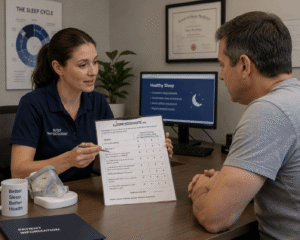
Clinicians use a short questionnaire called the Epworth Sleepiness Scale (ESS) to measure how likely you are to doze off in everyday situations. Asthma + Lung UK explains that a total score between 11 and 24 may suggest unusual sleepiness during the day. The scale cannot diagnose sleep apnoea on its own, but a high score alongside the right symptoms is a strong reason for a sleep study.
The National Institute for Health and Care Excellence (NICE) guideline NG202 recommends that people with suspected obstructive sleep apnoea are assessed for risk using tools such as the ESS and the STOP-Bang questionnaire before further investigation.
Driving and Daytime Sleepiness
Sleepiness at the wheel is a serious safety issue. The NHS advises that if sleep apnoea is confirmed, you must not drive until symptoms such as feeling very tired are under control. GOV.UK states that you must tell the Driver and Vehicle Licensing Agency (DVLA) about confirmed moderate or severe obstructive sleep apnoea syndrome with excessive sleepiness.
If you drive for a living, an early diagnosis protects both your safety and your licence. Our HGV, LGV and D4 driver medical service supports professional drivers who need DVLA paperwork completed.
How Sleep Apnoea Is Diagnosed
Step One: A GP Assessment
Diagnosis starts with a conversation. A GP will ask about your sleep, snoring, daytime energy, alcohol, medicines and general health and may check your blood pressure, weight and neck size. They may also arrange blood tests to rule out other causes of fatigue and complete the Epworth Sleepiness Scale with you.
At Friends Medical Service (FMS), our GP Appointment service offers face-to-face and online video consultations with same-day and fast availability. We recommend a 30-minute slot for sleep concerns, migraine or ongoing fatigue so there is time to review everything properly. Our team at Dr Abdel Nasir Nour’s consultant page can tell you more about our GP.
Step Two: A Sleep Study
NICE describes diagnosis as monitoring breathing during sleep, which is what a sleep study does. A home sleep study, also called a home sleep apnoea test, uses a small portable monitor that records breathing, oxygen levels and heart rate overnight in your own bed.
Private Sleep Study at Friends Medical Service
Our Sleep Analysis service is delivered in collaboration with Sleep Medical NI, with sleep physiologist Niall Totten leading the clinical side. The test investigates for sleep apnoea and Upper Airway Resistance Syndrome (UARS) and is done at home.
How It Works
- Get a referral. A GP referral is required. This can come from your own GP or from our private GP, either through a standard appointment or a 15-minute online booking.
- Book your sleep study. If you already have a referral, upload it, email it or drop it into the clinic.
- Receive your kit. A sleep diagnostic kit with instructions and a video guide is posted to your home within three days. You can carry out the test that same night.
- Wear the monitor overnight. You do not need to attend a physical appointment.
- Get your results. You and the referring GP receive the results within seven days of the test.
- Follow up with your GP. A treatment plan is discussed at a follow-up appointment.
Pricing
| Service | Price |
|---|---|
| Sleep study including FMS private GP referral and management | £280 |
| Sleep study with your own GP referral | £210 |
| Face-to-face GP consultation | From £70 |
| Online video GP consultation | From £55 |
| Referral appointment with our GP | £70 |
Prices are taken from our live service pages and may change, so please check the relevant page before booking.
What This Test Does Not Diagnose
It is important to know the limits. This home test does not investigate or diagnose insomnia, narcolepsy, restless legs syndrome or parasomnias such as sleepwalking. If your symptoms suggest one of these, your GP will explain the next step.
NHS or Private: Which Route Suits You?
NHS sleep services follow a GP referral and can involve a wait for assessment. Choosing a private sleep clinic shortens that wait. Our existing guide to private sleep studies in Northern Ireland compares both routes in detail. Whichever you choose, the first step is the same: tell a GP about your symptoms.
Treatment After a Diagnosis
Treatment depends on severity and how much your daily life is affected.
- Lifestyle changes: weight loss where relevant, cutting alcohol in the evening and stopping smoking can improve mild cases. The NHS also advises avoiding sleeping pills unless a doctor recommends them, as they can make sleep apnoea worse
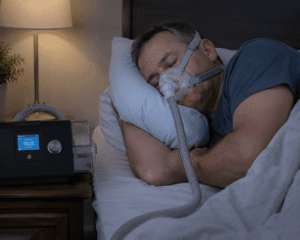
- Continuous positive airway pressure (CPAP): a machine that delivers air through a mask to keep the airway open overnight, recommended for moderate and severe cases
- Positional or dental devices: suitable for selected mild cases
- Regular review: to check the treatment is working and symptoms are improving
If excess weight is contributing, our Weight Management service offers doctor-led support. Where breathing problems extend beyond sleep, the Respiratory Consultant Service may help.
Practical Steps to Try Before Your Appointment
While you arrange an assessment, these habits can reduce morning headaches and improve alertness:
- Keep a regular bedtime and wake time, including weekends
- Avoid alcohol and heavy meals close to bedtime
- Limit caffeine after midday
- Sleep on your side rather than your back
- Keep a headache and sleep diary, noting timing, painkiller use and how you feel on waking
- Avoid taking painkillers on most days without medical advice
Low mood and anxiety can both cause poor sleep and daytime exhaustion. If worry or stress is part of the picture, our post on mental health support in Northern Ireland explains the options available.
How FMS Can Help
Our clinic in Lurgan serves patients across Craigavon, Belfast, Lisburn and the wider area. Patients from the Republic of Ireland are welcome. You can read more on our cross-border patients page.
Our team can support you with:
- A GP consultation to assess your symptoms and arrange a referral
- A home sleep study through our Sleep Analysis service
- Blood tests and health checks to look for anaemia, thyroid problems or diabetes
- Ongoing GP care, including through our GP Appointment service and private GP site
If you cannot travel to the clinic, our online GP service allows you to discuss symptoms by video.
Frequently Asked Questions
Can sleep apnoea cause morning headaches?
Yes. A headache on waking is a recognised symptom of sleep apnoea. The NHS lists it among the signs to watch for. Morning headaches have other causes too, including tension headaches, migraine and overuse of painkillers, so a proper assessment is needed.
Are morning headaches always a sign of something serious?
No. Most are linked to common and treatable causes. However, sudden severe headaches, headaches with fever or neck stiffness and headaches with weakness or speech changes need emergency care.
How do I know if my tiredness is daytime sleepiness?
Ordinary tiredness feels like being worn out. Daytime sleepiness is a strong urge to fall asleep during quiet activities such as reading, watching television or driving. The Epworth Sleepiness Scale helps measure it. A score between 11 and 24 may suggest unusual sleepiness.
Do I need a referral for a private sleep study?
Yes. A GP referral is required. You can use one from your own GP or see our private GP for a consultation or referral appointment.
Can I do a sleep apnoea test at home?
Yes. Our test is carried out at home using a diagnostic kit posted to you within three days. You can complete it that same night and results go to you and your GP within seven days.
Will a home sleep test diagnose insomnia or narcolepsy?
No. The test is designed to investigate sleep apnoea and Upper Airway Resistance Syndrome. It does not diagnose insomnia, narcolepsy, restless legs syndrome or parasomnias.
Can I keep driving if I feel very sleepy?
If excessive sleepiness makes driving unsafe, you should not drive. The NHS advises that anyone with confirmed sleep apnoea must not drive until symptoms are under control. GOV.UK explains when the DVLA must be told.
How much does a private sleep study cost?
At FMS the sleep study costs £210 with your own GP referral or £280 including our private GP referral and management. Please check the live service page for current pricing.
Is sleep apnoea only a problem for people who are overweight?
No. Excess weight raises the risk but the condition also affects people of average weight. Anatomy, age, alcohol, smoking and family history all contribute.
Further Reading
If you’d like to read more from independent, patient-focused sources before your consultation, the following are reputable places to start:
- NHS: Sleep apnoea
- NHS: Headaches
- NICE guideline NG202: Obstructive sleep apnoea/hypopnoea syndrome and obesity hypoventilation syndrome in over 16s
- Asthma + Lung UK: Epworth Sleepiness Scale
- GOV.UK: Obstructive sleep apnoea and driving
- The Sleep Apnoea Trust
These sources supplement but do not replace a clinical assessment of your own symptoms.
Book Your Assessment
If you wake with a morning headache and go on to experience daytime sleepiness, you do not have to wait for it to pass. Start with a GP appointment or a same-day slot through our private GP site, then move on to a home sleep study through our Sleep Analysis service when a referral is in place.
You can also reach our team through the contact page or request a call back. Book today and get clear answers about your sleep.