
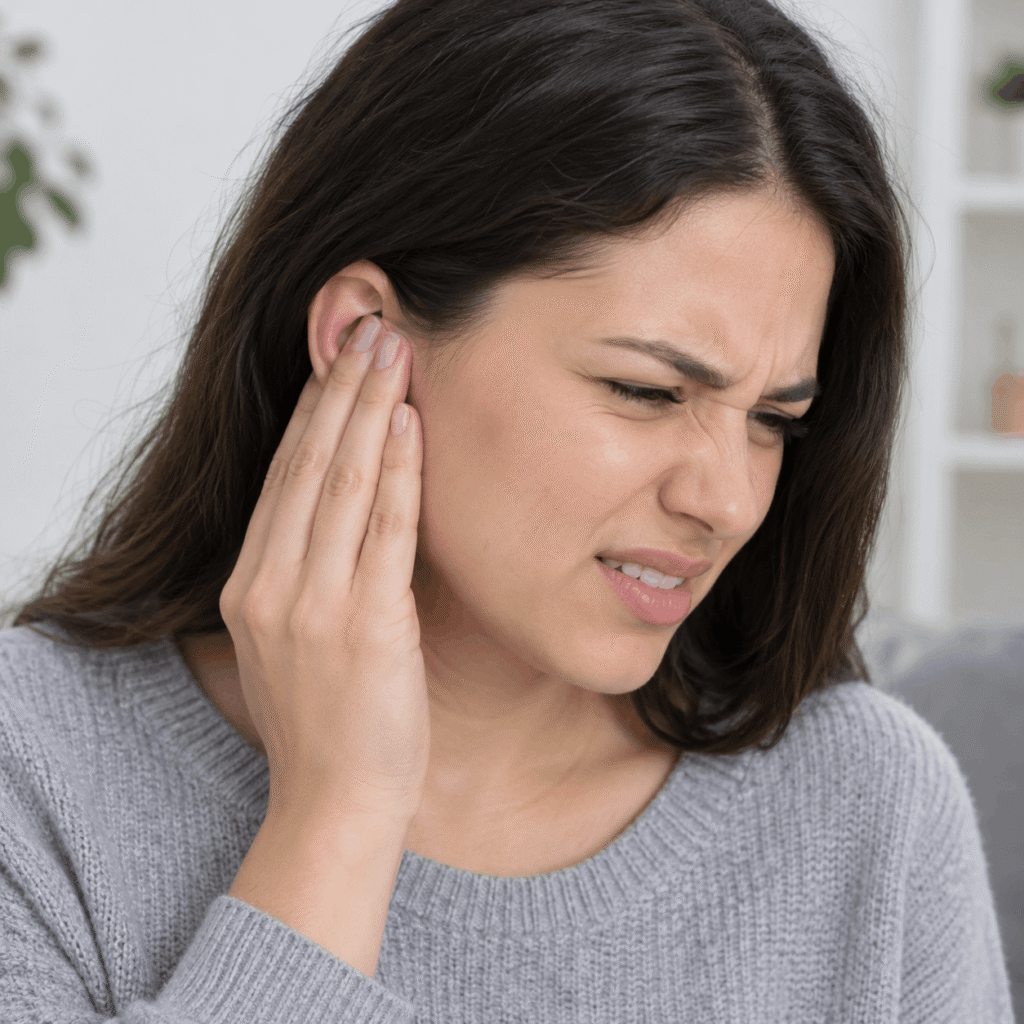
A torn, stretched or split earlobe is one of the most common reasons people seek out a private minor surgical procedure. Earlobe repair is a quick, low-risk solution carried out under local anaesthetic. A split earlobe can usually be corrected in a single short appointment with a natural-looking, lasting result. The damage might happen suddenly, such as from a caught earring or an accident. It can also build up gradually over years of wearing heavy jewellery or stretching a piercing with gauges.
At Friends Medical Service, split earlobe repair is one of the minor surgical procedures available at our Lurgan clinic, alongside skin tag removal, mole removal and lipoma removal. This guide explains what causes a split or torn earlobe, how earlobe repair works, what recovery looks like and what to consider before booking.
What Is a Split Earlobe?
A split earlobe, sometimes called a torn earlobe or earlobe cleft, happens when the fleshy lower part of the ear separates, either partially or completely. Because the earlobe is made up of skin and soft fatty tissue rather than cartilage, it has no rigid structure to resist pulling, tearing or gradual stretching. This makes it vulnerable to injury in a way the rest of the ear is not.
A split earlobe generally falls into one of three categories:
- Partial: the earlobe has thinned, stretched or begun to tear, but the two edges have not fully separated
- Complete: the earlobe has torn all the way through, often leaving two separate flaps of skin
- Gradual: caused by years of wearing heavy earrings or stretching a piercing hole with gauges, resulting in an enlarged or elongated hole rather than a sudden tear
Earlobe repair, sometimes referred to as lobuloplasty, is designed to close the gap, remove any thinned or damaged tissue and restore a natural earlobe shape. For wider background on ear surgery in general, the British Association of Plastic, Reconstructive and Aesthetic Surgeons publishes a patient information guide on ear surgery.
Common Causes of a Torn or Stretched Earlobe
Earlobe splits and tears happen for a range of reasons. Most patients who book this procedure with us fall into one of the following groups:
- A sudden pull or snag, such as an earring caught on clothing, a towel, a child’s hand or a pet
- Long-term wear of heavy or dangling earrings, which gradually stretches the piercing hole
- Deliberate stretching of a piercing with gauges or tapers, leaving an enlarged hole once the jewellery is removed
- A piercing placed too close to the edge of the lobe, which is more likely to tear under tension
- Multiple piercings positioned too close together, which can weaken the tissue between them
- Trauma from sport, an accident or an assault
- Natural thinning of the earlobe with age, which can make an existing piercing more prone to splitting
Whatever the underlying cause, once the skin has separated it will not knit back together on its own in a way that restores the earlobe’s original shape. Surgical repair is the only reliable way to close a split permanently.
When to Consider Earlobe Repair
It is worth considering earlobe repair if any of the following apply to you:
- You have a visible tear, split or notch in one or both earlobes
- Your piercing hole has stretched so much that earrings no longer sit properly or keep falling out
- You have an old gauged piercing you would like removed, with a natural-looking lobe restored
- A partial tear seems to be getting worse and you are concerned it will split completely
- You would like the option to be re-pierced in future, once the area has healed
Because the earlobe has a rich blood supply, most people are good candidates for this procedure. It is usually straightforward regardless of whether the split is partial, complete or the result of gradual stretching.

How Split Earlobe Repair Works at Friends Medical Service
The procedure at our Lurgan clinic follows the same careful, consultation-led approach we use for all of our minor surgical procedures.
Consultation and assessment
Before any procedure goes ahead, a clinician examines the earlobe to assess the extent of the split, whether one or both ears are affected and the most suitable surgical approach. This is also your opportunity to discuss the likely appearance afterwards, ask about re-piercing in future and get a clear price before committing to anything.
The procedure
- Local anaesthetic is injected into the earlobe so the area is completely numb
- The edges of the split are trimmed to create a clean, fresh wound edge
- The two sides are carefully realigned and stitched together in layers
- A small dressing is applied to protect the area while healing begins
The procedure is normally completed within thirty to sixty minutes per ear depending on the extent of the damage and is carried out as a day case so you go home the same day.
Aftercare and recovery
You will be given written aftercare advice covering wound care, when stitches will be removed and what to expect as the area heals. Most people return to normal daily activities within a day or two, although full healing of the earlobe takes longer.
What to Expect During Recovery
Recovery is generally straightforward, but it helps to know what is normal at each stage:
- First 24 to 48 hours: some tenderness, mild swelling and slight redness around the wound is normal
- First week: the area should be kept clean and dry. Your clinician will advise on washing and showering
- 7 to 14 days: stitches are typically removed or dissolve on their own depending on the technique used
- Several weeks: the scar continues to settle and soften. Some pinkness is normal during this time
- Around three months: most people can consider re-piercing, once the area has fully healed and a clinician has confirmed it is ready
Everyone heals slightly differently, so your clinician will give you a recovery timeline based on your specific procedure.
Possible Risks and Complications
This is a low-risk, minor procedure, but as with any surgery there are some things to be aware of:
- Scarring: any incision leaves some scar, though this is usually thin and well hidden along the natural fold of the earlobe
- Keloid or raised scarring: some people are more prone to keloid scars, which extend beyond the original wound; this is worth mentioning at your consultation if you have a personal or family history of keloids
- Infection: as with any wound, there is a small risk of infection, which is why aftercare advice should be followed closely
- Asymmetry: if only one ear is repaired, there may be a slight difference in size or shape compared with the other, which your clinician will discuss with you beforehand
- Numbness or altered sensation: temporary numbness around the wound is common and usually settles as the area heals
If you notice increasing pain, spreading redness, discharge or a fever after your earlobe repair, contact your clinician promptly. The NHS has more detailed information on recognising and managing keloid scars if this is a particular concern for you. Their guide to infected piercings covers the signs to watch for and when to seek help.
Re-Piercing After Your Repair
Many people choose this procedure specifically so they can be re-pierced in future, whether to return to their original piercing or to start fresh with a different placement. As a general rule:
- Re-piercing should not be attempted until the repaired earlobe has fully healed, usually around three months
- A new piercing should be placed slightly away from the original scar line rather than directly through it, to reduce the risk of the tissue tearing again
- If you are prone to keloid scarring, it is worth discussing this with your clinician before deciding whether to be re-pierced at all
Split Earlobe Repair Cost
The cost of earlobe repair depends on factors including whether one or both ears need treatment and the extent of the tear or stretching. As with our other minor surgical procedures, prices are confirmed at your consultation before any procedure goes ahead and are for guidance only until then.
Where to Have Earlobe Repair in Northern Ireland
Split earlobe repair and all of our other minor surgical procedures, including mole removal, skin tag removal and lipoma removal, are carried out exclusively at our main clinic:
Friends Medical Service, Southside Healthcare, 41 High Street, Lurgan, Craigavon BT66 8AH
This clinic serves patients from across Lurgan, Craigavon, Portadown, Banbridge, Armagh, Belfast, Lisburn and the wider Northern Ireland area. We also welcome cross-border patients from the Republic of Ireland.
Our Limavady (Bovally Medical) and L/Derry (Quayside Medical) locations provide no-scalpel vasectomy appointments only. Earlobe repair and other minor surgical or gynaecological procedures are not available at these two clinics, so if you are based in Limavady or the North West, you will need to travel to Lurgan for this particular treatment.
Our Surgical Team
Minor surgical procedures at Friends Medical Service are carried out by experienced clinicians, including Mr Abid Rashid, Consultant Plastic Surgeon, alongside Mr Muhammad Yousuf, Consultant General Surgeon. Both bring extensive NHS and private surgical experience to our Lurgan clinic. If your visit raises other ear health questions, our audiology service also offers hearing tests and ear wax removal.
Why Choose Friends Medical Service
- Procedures carried out by experienced clinicians, not technicians
- No long waiting lists, with appointments usually available quickly
- Clear, up-front pricing agreed before your procedure
- ISO 9001, 14001 and 27001 accredited at our Lurgan site
- Rated highly by verified patients on Doctify
If your visit uncovers other minor skin concerns, we also treat moles, skin tags and lipomas at the same clinic, so several minor procedures can often be combined into a single visit.

Frequently Asked Questions
What is split earlobe repair?
Split earlobe repair is a minor surgical procedure that closes a torn, split or over-stretched earlobe. It involves trimming the damaged edges of the tear and stitching the earlobe back together to restore a natural shape.
Is the procedure painful?
It is carried out under local anaesthetic, so the earlobe is numb throughout and you should not feel pain during the repair itself. Some mild tenderness and swelling afterwards is normal and usually settles within a few days.
How long does it take to heal?
Stitches are typically in place for around one to two weeks, with the wound continuing to settle over the following weeks. Most scars have softened significantly by around three months, which is also when re-piercing can usually be considered.
Can I get my ears re-pierced afterwards?
Yes, in most cases. Once the earlobe has fully healed, usually around three months after surgery, a new piercing can be placed slightly away from the original scar line. Your clinician will confirm when it is safe to do so.
Will it leave a visible scar?
Any surgical repair leaves some scar, but incisions are placed to follow the natural fold of the earlobe wherever possible, so results are usually discreet. Some people, particularly those prone to keloid scarring, may see a more noticeable scar, which your clinician will discuss with you at your consultation.
How much does split earlobe repair cost?
The cost depends on the extent of the tear and whether one or both ears are treated. We confirm pricing at your consultation before any procedure goes ahead, in line with our approach across all minor surgical procedures.
Do I need a GP referral?
No referral is needed. You can book a consultation directly with our team to have your earlobe assessed and discuss your treatment options.
Can both earlobes be repaired in the same appointment?
Yes, both earlobes can usually be treated during the same visit if needed. This will be confirmed at your consultation, along with an accurate price for treating one or both ears.
Book Your Consultation
A split, torn or stretched earlobe is easily corrected with a short, local anaesthetic procedure at our Lurgan clinic. If you are ready to discuss your options, contact our team to arrange a consultation or find out more about our full range of minor surgical procedures before you book.