
Private Rheumatology Services in Northern Ireland: Your Guide to Arthritis, Gout and Cortisone Injections
Joint pain, stiffness and swelling can affect every part of daily life, from walking the dog to typing at a desk. If you have been searching for a “rheumatologist near me” or a “private rheumatologist near me” in Northern Ireland, this guide explains what rheumatology covers, what causes common conditions such as gout and rheumatoid arthritis and how treatments like cortisone injections can help. It also sets out how a private rheumatology consultation at Friends Medical Service can allow you to be seen quickly, without a lengthy waiting list.
What Is Rheumatology?
Rheumatology is the medical specialty concerned with diagnosing and managing conditions affecting the joints, muscles, bones, tendons, ligaments and connective tissues. A rheumatologist is a consultant who has trained specifically in identifying and treating these conditions, many of which are autoimmune or inflammatory in nature.
Rheumatic diseases cover more than 100 separate disorders. Broadly, they fall into the following categories:
- Inflammatory arthritis, including rheumatoid arthritis and psoriatic arthritis
- Degenerative joint disease, such as osteoarthritis
- Connective tissue diseases, such as lupus and scleroderma
- Crystal-induced arthritis, such as gout
- Vasculitis (inflammation of the blood vessels)
- Soft tissue disorders, including fibromyalgia
While most rheumatic conditions centre on the musculoskeletal system, some can also involve the skin, eyes, lungs, heart and kidneys, which is why an accurate diagnosis from a rheumatologist matters.
What Is Arthritis? Understanding Gout and Rheumatoid Arthritis
Two of the most common questions we hear at our clinic are “what are arthritis and gout?” and “what is gout and what are the causes?” Arthritis is an umbrella term for joint inflammation and it comes in many forms. Two of the most frequently diagnosed types are gout and rheumatoid arthritis (RA) and although both cause joint pain, they are very different conditions.
Arthritis and RA: What Sets Rheumatoid Arthritis Apart?
Rheumatoid arthritis is an autoimmune condition, meaning the immune system mistakenly attacks the lining of the joints. This typically causes symmetrical pain, swelling and stiffness, often starting in the hands and feet before it can also appear as rheumatoid arthritis on legs, knees, wrists and elbows. Left untreated, RA can lead to progressive and irreversible joint damage.
A common question patients ask is “can rheumatoid arthritis go away?” RA is a long-term, chronic condition, but with early diagnosis and appropriate treatment, many people achieve periods of remission where symptoms are well controlled. This is why prompt referral to a private rheumatologist, which can be easily arranged through our GP subscription service, is so valuable.
What Is Gout and What Causes It?
Gout is a form of crystal-induced arthritis. So, what is gout and what causes it? Gout develops when there is too much uric acid in the blood, which forms sharp crystals in and around a joint. The body naturally produces uric acid when it breaks down purines, substances found in certain foods and drinks.
Causes of gout in the foot and elsewhere in the body include:
- A diet high in red meat, organ meat and shellfish
- Regular alcohol consumption, particularly beer and spirits
- Being overweight
- Dehydration
- Certain medications, such as diuretics
- Kidney conditions that reduce the body’s ability to remove uric acid
- A family history of gout
- Underlying conditions such as high blood pressure or diabetes
So, where can you get gout? Gout most commonly develops in the joint of the big toe, but it can also affect the midfoot, ankle, knee, fingers and elbows.
If you are concerned about your uric acid levels, our blood testing and health checks service can help confirm a diagnosis quickly.
Gout Symptoms: How Do You Know If You Have Gout?
Recognising the symptoms of gout early can help you seek treatment before an attack becomes severe. So, what are the symptoms of gout?
Typical symptoms of gout in the feet include:
- Sudden, intense joint pain, often starting at night
- Swelling and redness around the affected joint
- Warmth in the joint
- Skin that looks shiny or feels tender to touch
- Reduced range of movement once swelling sets in
Gout in the Toe, Foot and Fingers
Gout in the foot most often appears as gout in the big toe, though it can also develop as gout on the 2nd toe or gout in the middle toe. Symptoms usually come on quickly, with the joint becoming hot, swollen and extremely painful, sometimes within just a few hours.
Gout in the fingers is less common than gout in the foot but can still occur, particularly in people who have had gout for a longer period. Early stage gout in fingers may present as mild aching or tenderness before progressing to more obvious swelling and redness, so it is worth having any unusual finger joint pain assessed.
How to Treat Gout in the Foot
If you are wondering how to treat gout in the foot, the main options include:
- Anti-inflammatory medication to reduce pain and swelling during a flare-up
- Lifestyle changes, such as reducing alcohol intake and adjusting diet
- Medication to lower uric acid levels and prevent future attacks
- Staying well hydrated
- In some cases, a cortisone injection directly into the affected joint
Many people ask, “does gout go away on its own?” A mild attack can settle within a week or two, but the underlying cause remains, so gout will usually recur without treatment or lifestyle changes. There is no single instant cure for gout in the foot, but with the right combination of medication and lifestyle adjustment, most people can manage it effectively and reduce how often flare-ups happen.
Cortisone Injections: What to Expect
A cortisone injection is a common and effective treatment for inflamed joints, including those affected by gout, rheumatoid arthritis and other forms of arthritis. Cortisone is a steroid medication that reduces inflammation directly at the source, offering targeted relief where oral medication may not be as effective.
Cortisone injections can be used in almost any joint, including a cortisone injection shoulder, as well as the knee, hip, wrist, elbow and smaller joints of the hands and feet.
Does a Cortisone Injection Hurt?
A frequent concern before treatment is, “does a cortisone injection hurt?” Most patients feel a brief sting or pressure as the needle is inserted, but the procedure itself is quick and any discomfort is generally short-lived. At Friends Medical Service, injections can be carried out under ultrasound guidance for greater precision and comfort.
Private Cortisone Injection Cost
If you are comparing cortisone injection cost or asking about private cortisone injection cost, private treatment typically allows you to be assessed, diagnosed and treated far more quickly than waiting on an NHS list. Because pricing depends on the joint being treated and whether ultrasound guidance is used, we recommend contacting our team directly for an accurate, up-to-date cortisone injection price for your specific needs.
Why Choose a Private Rheumatologist in Northern Ireland
Searching for a “rheumatologist close to me,” “arthritis specialist near me” or “rheumatology near me” usually means you are dealing with pain that is affecting your daily life and want answers quickly. Choosing one of the private rheumatologists near me at Friends Medical Service means:
- Faster access to a consultant rheumatologist, without lengthy NHS waiting times
- A thorough assessment to establish an accurate diagnosis
- Access to on-site blood tests, ultrasound scans and guided injections
- A personalised treatment plan tailored to your condition
- Ongoing monitoring to track your progress and adjust treatment as needed
We also see patients seeking a fibromyalgia specialist near me, as fibromyalgia and other soft tissue disorders fall within the scope of our rheumatology service, alongside rheumatoid arthritis, gout and other forms of arthritis.

Our Private Rheumatology Services
At Friends Medical Service, our rheumatology service includes:
- Rheumatology consultation with an experienced consultant
- Blood tests to check for markers of inflammation and autoimmune activity
- Ultrasound scans and guided injections, including cortisone injections (see our ultrasound and guided injection service)
- Steroidal injections for inflamed joints and soft tissue
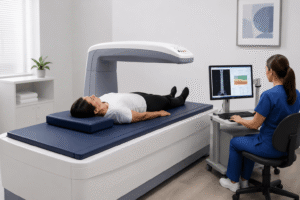
- Bone density (DEXA) scans
- Joint fluid analysis
- Referral for further diagnostics, including X-ray and MRI scans where required
You can view our full range of private medical services to see how rheumatology fits alongside our other clinics.
When Should You See a Rheumatologist?
You may benefit from a consultation with one of our rheumatologists near me if you experience:
- Persistent joint pain, swelling or stiffness
- Unexplained muscle pain or weakness
- Recurrent episodes of joint inflammation, such as gout attacks
- Chronic back pain
- Symptoms suggestive of an autoimmune or connective tissue disease
- Abnormal blood test results linked to inflammation or autoimmunity
Early diagnosis matters. Conditions such as rheumatoid arthritis and psoriatic arthritis can cause progressive, irreversible joint damage if left untreated, whereas early intervention helps control inflammation, preserve joint function, protect other organs and support your overall quality of life. You can read more about the wider benefits of choosing a private medical centre for conditions like these and how ultrasound-guided treatment compares to standard injections in our article on whether ultrasound-guided injections are painful.
Frequently Asked Questions
What is arthritis and what is gout?
Arthritis is a general term for joint inflammation. Gout is one specific type of arthritis, caused by a build-up of uric acid crystals in a joint, most commonly the big toe.
What causes gout in the foot?
Gout in the foot is caused by excess uric acid forming crystals in the joint. Diet, alcohol, dehydration, certain medications and family history can all increase your risk.
What are the symptoms of gout in the feet?
Symptoms of gout in the feet include sudden severe pain, swelling, redness, warmth and tenderness, most often affecting the big toe joint.
How do you know if you have gout?
A rheumatologist can usually diagnose gout from your symptoms, joint examination and a blood test to measure uric acid levels. In some cases, fluid may be taken from the joint for analysis.
Does gout go away on its own?
A single flare-up may ease within a week or two, but without treatment or lifestyle changes, gout typically returns, so ongoing management is recommended.
Is there a cure for gout in the foot?
There is no single cure, but gout can be effectively controlled with medication, lifestyle changes and, where needed, treatments such as a cortisone injection.
Does a cortisone injection hurt?
Most patients feel only brief discomfort during the injection itself, with relief from inflammation following over the next few days.
How much does a private cortisone injection cost?
Cortisone injection cost varies depending on the joint treated and whether ultrasound guidance is used. Contact our team for current pricing.
Can rheumatoid arthritis go away?
Rheumatoid arthritis is a chronic condition, but with early treatment many patients achieve long periods of remission with well-controlled symptoms.
Where can you get gout?
While the big toe is the most common site, gout can also affect the foot, ankle, knee, fingers and elbows.
Book a Private Rheumatology Consultation
If you recognise any of these symptoms, do not wait for them to worsen. Whether you need an assessment for gout, rheumatoid arthritis, fibromyalgia or another rheumatic condition, our team at Friends Medical Service is here to help. Visit our rheumatology service page or meet our consultants to find out more or get in touch to book your private rheumatology consultation today.