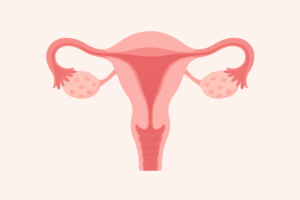

Cervical polyps are one of the most common findings during a routine gynaecology examination, yet many women have never heard of the term until a smear test or scan brings one to light. For others, a polyp is the reason behind bleeding that seems to come from nowhere, whether between periods, after sex or once periods have stopped altogether. Whichever way one is discovered, it is a reassuring diagnosis to receive, since the vast majority of cervical polyps are entirely benign.
This guide explains what a cervical polyp is, why they develop, the symptoms to watch for and what removal actually involves, including private cervical polyp removal in Northern Ireland.
What Is a Cervical Polyp?
A cervical polyp is a small growth of tissue that develops on the cervix, the neck of the womb that connects the vagina to the uterus. Polyps are usually finger-like or teardrop-shaped, red or purple in colour and often attached by a thin stalk, though some sit more broadly on the cervix without a distinct stalk. Most are small, somewhere between the size of a pea and a cherry, and it is common to have more than one at a time.
Polyps are classed by where they grow:
- Endocervical polyps develop inside the cervical canal, the passage leading up into the womb. These are the most common type and tend to occur in women who are still having periods.
- Ectocervical polyps grow on the outer surface of the cervix, the part visible during a speculum examination. These are seen more often after menopause.
Cervical polyps are almost always benign. They are not the same thing as cervical cancer, and having one does not mean your risk of cervical cancer is higher.
Symptoms of Cervical Polyps
Most cervical polyps cause no symptoms at all and are picked up incidentally during a smear test or an internal examination carried out for another reason. When symptoms do occur, they are usually related to bleeding, since a polyp can contain small blood vessels that are easily disturbed. These include:
- Spotting or bleeding between periods,
- Bleeding after sexual intercourse,
- Bleeding after the menopause,
- Heavier or longer periods than usual, or
- Increased vaginal discharge, which can occasionally have an unpleasant smell if the polyp becomes infected.
A polyp can also sit in a position that makes it harder to take an adequate smear sample, which is sometimes how one is first discovered.

What Causes Cervical Polyps?
The exact cause of cervical polyps is not fully understood, though several contributing factors are thought to play a part:
- Chronic inflammation or infection of the cervix,
- Congestion of the blood vessels within the cervical tissue, or
- An abnormal response to oestrogen, since polyps are more common during the reproductive years when oestrogen levels are naturally higher.
They are more frequently seen in women in their 40s and 50s who have had children, though they can develop at any age after puberty. Having one polyp does not necessarily mean more will follow, but they can recur, including after removal.
Are Cervical Polyps Cancerous?
Almost all cervical polyps are benign. Cancerous change is rare, affecting well under 1% of cases, though the risk is slightly higher in polyps found after menopause. This is precisely why removed polyps are routinely sent for laboratory examination (histology), so that any abnormal cells can be identified and, in the rare event they are found, managed promptly.
Bleeding after the menopause should always be checked by a doctor as soon as possible. In most cases the cause turns out to be something straightforward, such as a polyp or vaginal dryness, but it needs to be properly assessed to rule out anything more serious.
How Are Cervical Polyps Diagnosed?
A cervical polyp is usually diagnosed during a routine pelvic examination. A speculum is inserted into the vagina, in the same way as for a smear test, allowing the clinician to see the cervix clearly and confirm whether a polyp is present.
If the polyp is fully visible and appears to be coming from the cervix itself, it can often be removed there and then, during the same appointment. If a clinician suspects the polyp may actually be growing from higher up, inside the womb rather than the cervical canal, a hysteroscopy may be recommended instead. This involves a small camera passed through the cervix to examine the uterine cavity and ensure the whole polyp can be removed safely, usually arranged as a separate appointment.
A pelvic ultrasound scan can also be useful, particularly where bleeding is present, to check the uterus and ovaries and rule out other causes such as fibroids or endometrial polyps.
When Is Removal Recommended?
Removal is generally recommended if a polyp is causing symptoms, such as bleeding or discharge, or if it is larger than around 1cm. A small polyp with no symptoms may sometimes be left and monitored, though many women choose to have it removed regardless, both for peace of mind and because a polyp can make it harder to obtain a clear smear sample. If left in place, a polyp can also continue to grow over time.
What Happens During Cervical Polyp Removal?
Cervical polyp removal, sometimes called a polypectomy, is a quick outpatient procedure that most women find far less daunting than expected. With a speculum in place, the clinician grasps the base of the polyp with a specialised instrument called polyp forceps and gently twists it until it separates from the cervix.
Because cervical tissue has very little nerve supply, the procedure is usually painless or causes only mild discomfort similar to period cramps, and local anaesthetic is not typically needed. If there is any bleeding from the site where the polyp was attached, this is usually managed straightaway with a cauterising agent such as silver nitrate. The removed tissue is then sent to a laboratory for histology, with results generally available within a few weeks.
Recovery and Aftercare
Recovery from cervical polyp removal is usually straightforward. In the day or two afterwards, it is common to experience:
- Mild, period-like cramping, which normal painkillers can ease,
- Light bleeding or brown or red-tinged discharge for two to four days, or
- Occasionally, no discharge at all.
Heavy bleeding or infection are both uncommon, but it is worth contacting your clinician if you notice a high temperature, strong-smelling discharge or bleeding that is heavier than a normal period. Most clinics advise avoiding tampons and sexual intercourse for a few days afterwards, to allow the area to heal.
Cervical Polyps and Pregnancy
Cervical polyps can also develop during pregnancy and are usually found during a routine examination or scan. Where a polyp is not causing symptoms, it is often left alone and monitored rather than removed, particularly earlier in pregnancy. If bleeding or discomfort becomes an issue, removal can still be considered, and current evidence suggests it does not carry additional risk of miscarriage or preterm birth compared with a conservative, wait-and-monitor approach. Any decision here is very individual, and your consultant will talk you through the safest option for your circumstances.
Cervical Polyps vs Other Causes of Bleeding
A cervical polyp is only one of several possible explanations for irregular or unexpected bleeding, which is why an accurate diagnosis matters. Other common causes include hormonal contraception, uterine fibroids, endometrial polyps and, less commonly, infection. A pelvic or transvaginal ultrasound scan can help distinguish between these, particularly where a polyp inside the cervix is not visible on examination alone. If you use a coil for contraception, our comparison of the Mirena IUS and copper coil covers another common cause of changes to bleeding patterns worth ruling out.
When Should You See a Doctor?
It is worth arranging an appointment if you notice:
- Bleeding between periods that is new or ongoing,
- Bleeding after sexual intercourse,
- Any bleeding after the menopause, which should be checked urgently,
- Unusual or persistent vaginal discharge, or
- A polyp identified during a smear test that has not yet been assessed or removed.
Private Cervical Polyp Removal at Friends Medical Service
At Friends Medical Service, cervical polyps can be assessed and removed by our Consultant Gynaecologist as part of our private gynaecology services, with no GP referral needed. Appointments are usually available quickly, a female clinician can be arranged on request and an on-site pelvic ultrasound scan can be added where it would help confirm the diagnosis.
| Service | Price |
|---|---|
| Initial gynaecology consultation | £220 + £25 clinic fee |
| Cervical polyp removal (includes lab fee) | £310, in addition to the consultation fee |
| Pelvic / gynaecology ultrasound scan | £160, in addition to the consultation fee |
Our gynaecology clinic is based in Lurgan and welcomes patients from across the wider area, including Belfast, Craigavon, Portadown, Lisburn, Banbridge and Armagh. We also see cross-border patients from the Republic of Ireland.

Frequently Asked Questions
Does removing a cervical polyp hurt?
Most women experience little to no pain, since the cervix has very few nerve endings. Some mild cramping similar to period pain is common for a few hours afterwards, and local anaesthetic is not usually required.
How long does recovery take after cervical polyp removal?
Most women feel back to normal within a day or two. Light bleeding or discharge for two to four days is normal, and it is generally advised to avoid tampons and sexual intercourse for a short period while the area heals.
Can a cervical polyp come back?
Yes, new polyps can develop even after a previous one has been removed. If this happens, the same straightforward removal process can usually be repeated.
Do all cervical polyps need to be removed?
Not necessarily. Small polyps causing no symptoms may be monitored rather than removed, though removal is generally recommended once a polyp is symptomatic or larger than around 1cm, and many women choose removal for peace of mind regardless.
Can a cervical polyp affect fertility or pregnancy?
Cervical polyps do not generally affect fertility. During pregnancy, small asymptomatic polyps are often simply monitored, and current evidence suggests removal does not increase the risk of miscarriage or preterm birth compared with leaving them in place.
Is a cervical polyp the same as cervical cancer?
No. Cervical polyps are almost always benign growths and are not a form of cancer. Malignant change within a polyp is rare, which is why every removed polyp is sent for laboratory examination as a precaution.
How much does private cervical polyp removal cost?
At Friends Medical Service, cervical polyp removal costs £310, including the lab fee, in addition to the initial consultation fee of £220 plus a £25 clinic fee.
Further Reading
- NHS – Vaginal Bleeding Between Periods or After Sex
- NHS – Cervical Screening
- North Tees and Hartlepool NHS Foundation Trust – Cervical Polyps
- Cancer Research UK – Cervical Cancer Symptoms
Ready to Get Your Symptoms Checked?
Unexplained bleeding is always worth having looked at, even when the cause turns out to be something as straightforward as a polyp. Book an initial consultation with our Consultant Gynaecologist for an assessment, and if a cervical polyp is found and removal is recommended, it can often be carried out during the same visit.
Get in touch with Friends Medical Service today to book your appointment.