

Around 7.6 million people in the UK are living with cardiovascular disease and heart and circulatory conditions remain one of the leading causes of premature death across Northern Ireland. Much of this burden is preventable. Understanding your personal risk factors, recognising the warning signs early and knowing which tests are available can make a genuine difference to how long and how well your heart keeps working.
This guide covers the risk factors behind cardiovascular disease, the symptoms that should prompt you to seek help and the heart health checks available at Friends Medical Service in Lurgan, including electrocardiogram (ECG) testing and blood pressure and cholesterol screening.
Why Heart Health Deserves Your Attention
Cardiovascular disease is a broad term covering conditions that affect the heart and blood vessels, including coronary heart disease, heart failure, peripheral arterial disease and stroke. Many of these conditions develop silently over years, often without any noticeable symptoms until a heart attack or stroke occurs.
The encouraging news is that cardiovascular disease is largely preventable. A combination of lifestyle changes, regular monitoring and, where needed, early medical treatment can substantially reduce your risk. That starts with understanding which factors are working against you and which heart health checks can pick up problems before they become emergencies.
Understanding Your Risk Factors for Heart Disease
Some risk factors for cardiovascular disease cannot be changed, such as age, sex and family history. Others are within your control and addressing them is one of the most effective ways to protect your heart over the long term.
Key modifiable risk factors include:
- High blood pressure. Often called the “silent killer” because it rarely causes symptoms, high blood pressure puts continuous extra strain on your heart and arteries. Read our detailed guide to high blood pressure and hypertension for a full breakdown of symptoms, causes and treatment.
- High cholesterol. Raised cholesterol contributes to the fatty deposits that narrow your arteries and restrict blood flow to the heart.
- Smoking. Tobacco damages the lining of your arteries and significantly raises your risk of coronary heart disease.
- Diabetes. Poorly controlled blood sugar accelerates damage to blood vessels throughout the body. Our guide to diabetes management explains testing and treatment in more depth.
- Being overweight. Carrying excess weight, particularly around the waist, is closely linked to raised blood pressure, cholesterol and blood sugar. Friends Medical offers a specialist, doctor-led weight management programme for patients whose weight is affecting their wider health.
- Physical inactivity. Regular exercise strengthens the heart muscle and helps to control weight, blood pressure and cholesterol.
- Family history. Your risk is higher if a close relative developed heart disease at a relatively young age.
- Age. Risk increases naturally as you get older, which is why screening becomes more important from your forties onwards.
Most people carry more than one of these risk factors at once and they interact with each other rather than acting in isolation. Someone who is overweight, for example, is also more likely to have raised blood pressure and cholesterol, which is why a combined heart health check often makes more sense than testing a single measurement on its own.

Recognising the Warning Signs
Cardiovascular disease does not always announce itself clearly and some of the most serious warning signs are easy to dismiss as something less urgent.
Symptoms that need immediate emergency care include:
- Chest pain or a feeling of pressure, tightness or squeezing across the chest
- Pain spreading to the arms, neck, jaw, back or stomach
- Sudden shortness of breath
- Sweating, nausea or vomiting alongside chest discomfort
- Feeling lightheaded, faint or suddenly very unwell
If you or someone you are with experiences these symptoms, call 999 immediately or go straight to your nearest A&E. Do not wait to see if the symptoms pass and do not attempt to drive yourself.
Less urgent but still important symptoms, which are worth discussing with your GP, include:
- Persistent breathlessness on mild exertion
- Palpitations or an irregular heartbeat
- Swelling in the ankles, feet or legs
- Ongoing fatigue that is out of proportion to your activity levels
- Dizziness or fainting episodes
Women, older adults and people with diabetes are more likely to experience less typical symptoms, such as fatigue, indigestion-like discomfort or breathlessness without obvious chest pain, so it is worth taking any unexplained change in how you feel seriously rather than waiting for classic chest pain to appear.
How Your Heart Health Can Be Checked
Friends Medical Service offers a range of tests from our Lurgan clinic to help you understand how your heart is functioning, without the need for a GP referral.
Electrocardiogram (ECG)
An electrocardiogram, or ECG, records the electrical activity of your heart using small electrodes attached to your skin. It is one of the simplest and most widely used tests in medicine, takes only a few minutes and is completely painless. An ECG can help detect irregular heart rhythms and other signs that your heart’s electrical activity is not working as it should.
You can book an ECG directly at Friends Medical without a referral from your own GP and our in-house GP will review your results and discuss them with you as part of your appointment. For a fuller explanation of how the test works, read our detailed guide to the electrocardiogram (ECG) test, or visit our ECG service page to book.
Blood Pressure and Cholesterol Testing
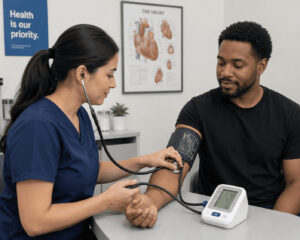
Blood pressure and cholesterol are two of the most important measurements for assessing cardiovascular risk and both can be checked quickly and painlessly as part of a blood testing and health check appointment. Cholesterol testing typically looks at total cholesterol, LDL cholesterol, HDL cholesterol, the cholesterol ratio and triglycerides, giving a much clearer picture of your cardiovascular risk than a single blood pressure reading alone.
The Heart Health Package
For a focused, combined check, Friends Medical offers a dedicated Heart Health Package, which includes an ECG, blood pressure measurement and a full cholesterol profile (total cholesterol, LDL, HDL, cholesterol ratio and triglycerides), reviewed with you by our GP. This kind of combined heart screening gives a more complete picture than any single test on its own and is a sensible option if you are over 40, have a family history of heart disease, or simply want reassurance about your cardiovascular health.
When Further Specialist Investigation Is Needed
Occasionally, an ECG or health check will pick up something that needs closer assessment. Tests you may hear mentioned in this context include an echocardiogram, which uses ultrasound to create moving images of your heart’s structure and how well it is pumping and a Holter monitor, sometimes called a tape test, which records your heart’s rhythm continuously over 24 hours or longer. These are more specialised cardiology investigations than a resting ECG and where they are clinically indicated, your GP can discuss your results with you and arrange the appropriate referral for further cardiology assessment.
Everyday Steps to Protect Your Heart
Alongside regular monitoring, day-to-day lifestyle choices have a substantial impact on your long-term cardiovascular health. Small, sustained changes tend to be more effective than short-lived, drastic ones.
- Eat a balanced diet. Reduce salt, saturated fat and processed food and increase your intake of fruit, vegetables, wholegrains and oily fish.
- Stay physically active. Aim for at least 150 minutes of moderate activity a week, such as brisk walking, cycling or swimming.
- Maintain a healthy weight. If your weight is affecting your blood pressure, cholesterol or blood sugar, our weight management service provides structured, doctor-led support.
- Stop smoking. Quitting smoking is one of the single most effective things you can do for your cardiovascular health, with benefits starting within weeks.
- Moderate your alcohol intake. Drinking within recommended limits helps protect against high blood pressure and irregular heart rhythms.
- Manage stress and prioritise sleep. Chronic stress and poor sleep, including untreated sleep apnoea, are both linked to raised blood pressure and cardiovascular risk. If a weight-related sleep disorder is suspected, our sleep analysis service can help.
- Attend regular check-ups. Routine monitoring of blood pressure, cholesterol and general health means changes can be caught and addressed early, before they progress.
Who Should Book a Heart Health Check
A heart health check is worth considering if any of the following apply to you:
- You are over 40, when cardiovascular risk naturally begins to rise
- You have a family history of heart disease, high blood pressure or high cholesterol
- You smoke, are significantly overweight, or have diabetes
- You have noticed symptoms such as palpitations, breathlessness or unusual fatigue
- You simply want a clear, current picture of your cardiovascular health
No referral is needed to book an ECG or a health check at Friends Medical. You can book a GP appointment to discuss your results and next steps and patients who prefer ongoing, regular monitoring may also want to look at our GP subscription plans. All of these services are delivered from our Lurgan clinic, which serves patients across Belfast, Craigavon, Portadown, Lisburn, Banbridge and Armagh, as well as cross-border patients travelling from the Republic of Ireland.
Frequently Asked Questions
What does a heart health check involve?
At Friends Medical, our Heart Health Package includes an ECG to check your heart’s electrical activity, a blood pressure reading and a full cholesterol profile covering total cholesterol, LDL, HDL, cholesterol ratio and triglycerides. Everything is reviewed with you by our GP as part of the appointment, so you leave with a clear understanding of what your results mean.
What is the difference between an ECG and an echocardiogram?
An ECG records the electrical signals produced by your heart as it beats, showing the rhythm and rate of your heartbeat. An echocardiogram is a different test that uses ultrasound to produce moving images of your heart’s structure, showing how well the chambers and valves are working. The two tests answer different questions and are sometimes used together, depending on what your GP is investigating.
Do I need a referral for a heart health check?
No. You can book an ECG or a blood testing and health check appointment directly with Friends Medical without a referral from your own GP.
What are the warning signs of a heart attack?
The most common signs include chest pain or a feeling of pressure, tightness or squeezing across the chest, pain spreading to the arms, neck, jaw, back or stomach, shortness of breath, sweating, nausea and feeling lightheaded. Symptoms can vary from person to person and are not always severe, so any of these signs should be treated as a medical emergency. Call 999 immediately.
How often should I have my heart checked?
This depends on your individual risk factors, so it is worth discussing with your GP. As a general guide, adults over 40 with no known heart problems often benefit from a cardiovascular check every few years, while those with risk factors such as high blood pressure, high cholesterol, diabetes or a family history of heart disease may be advised to have more frequent monitoring.
Can a normal ECG rule out heart disease?
Not entirely. An ECG is a snapshot of your heart’s electrical activity at the moment the test is taken and some conditions, particularly those that come and go, may not show up on a single resting ECG. This is why an ECG is usually considered alongside your symptoms, blood pressure, cholesterol and overall risk factors, rather than in isolation.
What should I do if I’m worried about my heart right now?
If you are currently experiencing chest pain, breathlessness or any other symptoms of a heart attack, do not use this website. Call 999 or go straight to your nearest A&E. If your concern is less urgent, such as ongoing fatigue or occasional palpitations, you can book a GP appointment or a heart health check with Friends Medical to have things properly assessed.
Further Reading
If you’d like to read more from independent, patient-focused sources before your consultation, the following are reputable places to start:
- NHS: Cardiovascular disease, for an overview of the main types of heart and circulatory disease and how they are treated
- NHS: Heart attack, for detailed guidance on symptoms and what to do in an emergency
- NHS: NHS Health Check, for information on routine cardiovascular screening
- British Heart Foundation: Information and Support, for expert, patient-friendly guidance on heart and circulatory conditions
- HEART UK: The Cholesterol Charity, for further information on cholesterol and cardiovascular risk
- NICE Guideline NG238: Cardiovascular Disease Risk Assessment and Reduction, the clinical guideline used across the UK for assessing and managing cardiovascular risk
These sources are a helpful starting point for understanding heart and circulatory health, but they are not a substitute for a proper clinical assessment of your individual risk.
Take the Next Step for Your Heart Health
Your heart works around the clock and a few simple tests can tell you a great deal about how well it is coping. Whether you are due a routine check, concerned about specific symptoms, or simply want peace of mind, Friends Medical Service can help.
Book a heart health check or ECG appointment at our Lurgan clinic, or contact our team to discuss which test is right for you.