
If you’ve spent years being told your periods are just heavy, that bad pain is normal, or that you have a low pain threshold, you are not imagining things and you are not alone.
In Northern Ireland, the average time from first symptoms to an endometriosis diagnosis is nine years and five months. That comes from Endometriosis UK’s 2026 State of Endometriosis Care report, which surveyed 3,075 people diagnosed across the UK since 2015. The figure has gone up. In 2020 it was eight years.
The same report found that 47% of respondents had been to their GP ten or more times with symptoms before diagnosis, and 70% had been five times or more. Only 10% said a GP raised endometriosis at their first or second appointment. Northern Ireland also has the longest gynaecology waiting lists in the UK, with more than 37,000 women on hospital lists at the last major review and 5% of those waiting close to three years.
Responding to the report, the Royal College of Obstetricians and Gynaecologists called the rise deeply concerning, noting that too many women wait far too long for care.
This post explains what endometriosis is, why the delay happens, and what you can do to move things along.
What Is Endometriosis?
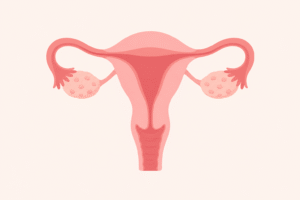
Endometriosis is a chronic inflammatory condition where tissue similar to the lining of the womb grows in other places: the ovaries, fallopian tubes, the outside of the womb, the bowel, the bladder, and occasionally further afield.
This tissue behaves like womb lining. It responds to your hormonal cycle, thickens, and bleeds. The difference is it has nowhere to go. The result is inflammation, scar tissue and adhesions, which can bind organs together and cause severe pain.
Around one in ten women of reproductive age have it. In Northern Ireland that works out at roughly 75,000 women, a figure raised in a Westminster debate on endometriosis services in March 2026.
This is not a rare condition and it is not a heavy period.
Symptoms to Watch For
Endometriosis presents differently in different people, which is part of the diagnostic problem. Common symptoms include:
- Severe period pain that stops you doing normal things, or that painkillers barely touch
- Chronic pelvic pain, including outside your period
- Pain during or after sex
- Painful bowel movements or urination, often worse around your period
- Heavy bleeding, flooding, or passing large clots
- Bloating, sometimes severe enough to change dress size within a day
- Fatigue that isn’t explained by anything else
- Difficulty conceiving, which for some people is the first clue
One thing worth knowing early: how bad your symptoms are tells you very little about how much disease is present. Extensive endometriosis can produce mild symptoms. Minimal disease can be agonising. Nobody can judge the extent of it from how much pain you describe.
Why Does Diagnosis Take So Long?
Several things go wrong at once, and they compound each other.
Period pain has been normalised
Most women are raised to expect period pain, and there’s no widely understood line between normal discomfort and something wrong. If your mother and sister also had brutal periods, which is common given endometriosis runs in families, you may reasonably conclude yours are ordinary.
Pain that stops you going to work or school, doesn’t respond to over-the-counter painkillers, or has you planning your life around your cycle is not normal, whatever you’ve been told.
Symptoms overlap with other conditions
Bowel and bladder symptoms lead to IBS or urinary investigations. Fatigue and bloating get put down to diet. Pain during sex gets attributed to stress or relationship difficulties. Every one of those is a reasonable thing for a doctor to consider, and every one of them can absorb months before anybody circles back.
The Endometriosis UK data shows how much of this happens in emergency settings. Over half of respondents had attended A&E with symptoms, 26% had been three or more times, and fewer than a fifth of those attending were referred to gynaecology on their first visit.
Hormonal contraception masks it
The combined pill is often the first thing prescribed for painful periods, and it frequently helps. That’s useful treatment. It can also suppress symptoms enough that nobody investigates what’s underneath them. Some women only find out years later, when they come off the pill to try for a baby.
Nothing shows on a routine examination
A standard pelvic examination is often completely normal in someone with endometriosis. Ultrasound can pick up endometriomas, which are cysts on the ovaries, and deep disease in some cases, but superficial endometriosis frequently doesn’t show on any scan.
For a long time, definitive diagnosis required laparoscopy, keyhole surgery under general anaesthetic. Waits for that procedure here have been extreme: BBC News NI reported an average wait of 69 weeks for laparoscopy, with the longest recorded at 311 weeks against a 13-week target.
NICE guidance now states that endometriosis should be suspected, and can be treated, on the basis of symptoms and imaging, without waiting for surgical confirmation. This isn’t applied consistently.
Being dismissed
This is the part women raise most often, and the data backs it up. In the Endometriosis UK survey, 78% of people who went on to receive a diagnosis had been told by at least one doctor that they were making a fuss about nothing, or words to that effect. Of those who attended A&E, 46% were sent home without treatment.
Being told nothing is wrong, repeatedly, has consequences. People stop going back. They lower what they expect. Some conclude, after enough appointments, that it must be in their head. One County Down woman interviewed by BBC News NI described being told exactly that. It took eleven years to get her diagnosis.
Why the Delay Matters
Nine and a half years is not just an inconvenience. Endometriosis progresses in many cases, and untreated disease can spread, forming adhesions that bind the bowel, bladder and pelvic ligaments. Some women reach diagnosis with damage that earlier treatment might have prevented. One woman quoted by BBC News NI, diagnosed after twelve years, described the disease reaching her bladder, bowel and the ligaments across her pelvis.
Fertility is the other cost. Endometriosis is a recognised cause of difficulty conceiving, and a decade of delay can land squarely on the years someone is trying to start a family.
Then there’s everything harder to measure. Education interrupted. Careers built around symptoms. Relationships under strain. Years of being disbelieved, which takes its own toll.
What You Can Do
None of this is your fault. Some things do improve your odds of being taken seriously, though.
Keep a symptom diary. Track pain scores, where the pain sits, what you were doing, how it maps to your cycle, and what you took for it. Note the days you couldn’t work or cancelled plans. A written record is far harder to wave away than a verbal account, and it lets a clinician see the pattern in seconds. Endometriosis UK publishes a free pain and symptom diary you can download.
Use the word. Saying “I think this might be endometriosis and I’d like it investigated” changes the conversation. It signals you’ve done your reading and moves the discussion towards a specific condition rather than general symptoms.
Mention family history. There’s a hereditary component. If your mother, sister or aunt has it, or had “terrible periods” and an eventual hysterectomy, say so out loud.
Ask for it to be recorded. If you’re told nothing is wrong, ask for your symptoms and the outcome to be noted in your records. It creates a paper trail.
Bring someone with you. Not always practical, but a second person in the room changes the dynamic of an appointment more than it should.
Don’t accept “come back if it gets worse” indefinitely. If you’ve heard that several times over, you can ask for a referral or a second opinion.
Private Assessment: What It Can and Can’t Do
Given the waiting lists, plenty of women here look at going private. It’s worth being straight about what that does and doesn’t get you.
A private gynaecology consultation gets you a specialist assessment without the wait: a full history, examination, pelvic ultrasound where appropriate, and a clinical opinion on whether endometriosis is likely. For a lot of women the most valuable part is simpler than any of that. Somebody listens, and somebody puts a name to it.
Where the history and imaging support the diagnosis, treatment can often begin on that basis under NICE guidance, without waiting on surgery.
What a private consultation doesn’t get you is laparoscopy. That remains the definitive route for some cases and needs a specialist endometriosis centre. Northern Ireland has one accredited BSGE endometriosis centre, at Altnagelvin. If surgery is what you need, a private assessment still helps by establishing a clear clinical picture to refer on with, rather than starting from nothing.
At Friends Medical Service, our private gynaecology clinic is led by Consultant Gynaecologist Dr Edgar Boggs, with pelvic ultrasound available on site.
Myths vs Facts About Endometriosis
- Myth: Bad period pain is just something you have to live with.
- Fact: Pain that regularly disrupts your work, education or daily life is not normal and warrants investigation.
- Myth: Endometriosis only affects older women.
- Fact: Symptoms often begin in the teens. Many women trace their pain back to their very first periods.
- Myth: Pregnancy cures endometriosis.
- Fact: Symptoms may ease during pregnancy because of hormonal changes, but they generally return afterwards. Pregnancy is not a treatment.
- Myth: A hysterectomy cures it.
- Fact: Because endometriosis grows outside the womb, removing the womb does not necessarily remove the disease or the pain.
- Myth: If your scan is clear, you don’t have endometriosis.
- Fact: Superficial endometriosis frequently doesn’t appear on ultrasound or MRI. A normal scan does not rule it out.
- Myth: You can’t have endometriosis if your periods are regular.
- Fact: Cycles are often perfectly regular. It’s the pain and associated symptoms that matter.

Frequently Asked Questions
How long does endometriosis diagnosis take in Northern Ireland?
Nine years and five months on average, according to Endometriosis UK’s 2026 report. That’s up from eight years in 2020. Northern Ireland also carries the longest gynaecology waiting lists in the UK, which is why a lot of women here end up looking at private assessment.
Is my period pain normal?
Pain that stops you working or studying, doesn’t respond to over-the-counter painkillers, or has you organising your life around your cycle isn’t normal. Worth having assessed whatever you’ve been told before.
Do I need a laparoscopy to be diagnosed?
Not always. NICE guidance says endometriosis can be suspected and treated on symptoms and imaging without surgical confirmation. Laparoscopy is still the definitive test and is sometimes necessary, particularly where surgery is being considered as treatment in its own right.
Can a scan detect endometriosis?
Sometimes. Ultrasound picks up ovarian endometriomas and some deep disease. Superficial endometriosis often doesn’t show at all. A clear scan does not rule the condition out, and that misunderstanding sends a lot of women back to square one.
Does endometriosis affect fertility?
It can. Endometriosis is a recognised cause of difficulty conceiving, though many women with it do conceive, with or without assistance. If you’re trying and struggling, raise it early rather than waiting to see.
Do I need a GP referral to see a gynaecologist privately?
No. You can book a private consultant gynaecology appointment with us directly.
I’ve been dismissed before. Will that happen again?
A private consultation gives you a full appointment with a consultant gynaecologist whose job in that room is working out what’s causing your symptoms. Bring your symptom diary if you’ve kept one.
Is there a cure?
No. Endometriosis is managed rather than cured, through medical treatment, surgery where appropriate, and pain management. A diagnosis is what gets you access to any of it.
If You’ve Been Waiting Too Long
Nine and a half years is an average, which means plenty of women wait a good deal longer than that. If you’ve recognised yourself anywhere in this post, the most useful shift you can make is to stop treating your symptoms as something to get through and start treating them as something to investigate.
Ready to talk to someone? Get in touch with Friends Medical Service or find out more about our private gynaecology services.