
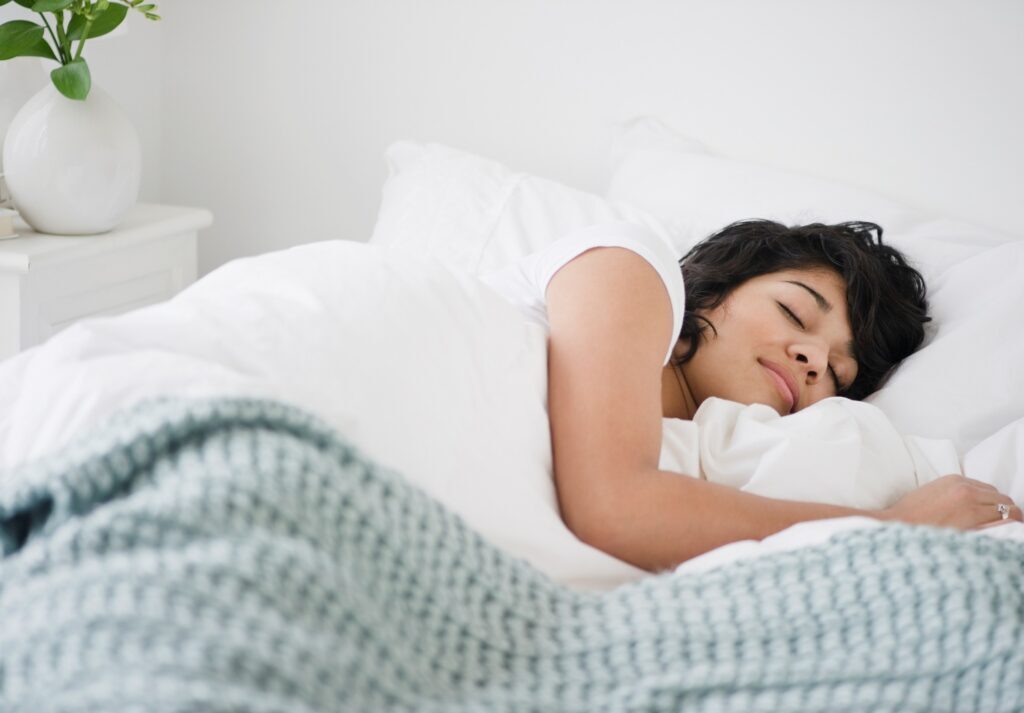
Loud snoring is one of the most common sleep complaints in adults. For many people it is harmless but for others, it is the first audible sign of a breathing problem. This could be such a problem that fragments sleep, strains the heart and leaves them exhausted by mid-afternoon. Knowing which group your snoring belongs to is the first step towards quieter nights and better health.
This guide explains what causes snoring, how to tell simple snoring from obstructive sleep apnoea (OSA), what you can do at home and how a private sleep study works in Northern Ireland. At Friends Medical Service (FMS) our Sleep Analysis service is led by sleep physiologist Niall Totten and delivered with our partners at Sleep Medical NI, so you can get answers without a long wait.
What Is Snoring and Why Does It Happen?
Snoring is the sound produced when tissues in the nose, mouth and throat vibrate as you breathe during sleep. As you drift off, the muscles that hold your airway open relax and the passage narrows. Air forced through a tighter space makes the surrounding tissue flutter; the narrower the gap, the louder the snoring.
An occasional night of snoring after a cold or a late evening out is normal. Persistent snoring on most nights deserves more attention, particularly if your partner hears pauses in your breathing or you wake up feeling unrefreshed.
Common Causes of Loud Snoring
Several factors can narrow the airway or relax the muscles around it. Most people have more than one.
Lifestyle and Everyday Triggers
- Excess weight: fat around the neck and throat narrows the airway, which is why weight is one of the strongest risk factors for snoring
- Alcohol in the evening: it relaxes the throat muscles further than normal sleep does
- Smoking: it irritates and inflames the lining of the nose and throat
- Sleeping on your back: gravity pulls the tongue and soft palate towards the back of the throat
- Sleeping tablets and sedatives: these deepen muscle relaxation and can bring on snoring in people who did not snore before
Nasal and Structural Causes
- A blocked nose from a cold, hay fever or sinusitis
- A deviated septum (the wall between the nostrils) or nasal polyps
- Enlarged tonsils or adenoids, which are a particular cause of snoring in children
- A small or recessed jaw or a large tongue
Age, Sex and Hormones
The muscles of the throat lose tone with age, so snoring becomes more common in middle and later life. Men snore more often than women, but the gap narrows after the menopause. If your snoring started alongside other changes in your forties or fifties, our guide to menopause symptoms, diagnosis and treatment explains the wider picture; our private GP service for menopause can help you act on it.

Is It Simple Snoring or Sleep Apnoea?
Simple snoring makes noise but does not interrupt your breathing. Obstructive sleep apnoea is different: the airway narrows or closes repeatedly during sleep, breathing stops and starts; the brain briefly wakes you to restart it. You do not remember these awakenings, but they stop you reaching deep, restorative sleep.
| Feature | Simple snoring | Obstructive sleep apnoea |
|---|---|---|
| Breathing during sleep | Continuous but noisy | Repeatedly stops and starts |
| Sound | Steady rumbling or rattling | Loud snoring broken by silences, then gasps or snorts |
| Daytime energy | Normal | Persistent tiredness and poor concentration |
| Morning | Refreshed | Headache or dry mouth |
| Health impact | Mainly disturbs your partner | Linked to high blood pressure, heart disease and type 2 diabetes |
| Next step | Lifestyle changes | Sleep study and treatment |
A related condition, Upper Airway Resistance Syndrome (UARS), sits between the two. The airway narrows enough to fragment sleep and cause daytime sleepiness without full pauses in breathing. Our home sleep study investigates both sleep apnoea and UARS.
Sleep Apnoea Symptoms to Watch For
If you live alone, nobody may be around to notice what happens at night, so daytime clues matter just as much. Common sleep apnoea symptoms include:
At night
- Loud, persistent snoring
- Pauses in breathing noticed by a partner
- Gasping, snorting or choking sounds
- Waking up gasping for air
- Restless sleep and frequent trips to the toilet
During the day
- Overwhelming tiredness even after a full night in bed
- Waking with a headache or a dry mouth
- Trouble concentrating, memory slips and irritability
- Dozing off while reading, watching television or driving
Some people also notice noisy, laboured breathing or snoring when awake, for example while resting in a chair. This can point to a blocked nose or a narrowed airway and is worth mentioning at your appointment.
Mild, Moderate and Severe Sleep Apnoea
A sleep study measures how many times breathing is reduced or interrupted each hour. This figure is the apnoea-hypopnoea index (AHI). It grades the condition:
- Mild sleep apnoea: an AHI of 5 to 14. Lifestyle changes may be enough, although some people still benefit from further treatment.
- Moderate sleep apnoea: an AHI of 15 to 30. Active treatment is recommended.
- Severe sleep apnoea: an AHI above 30. Prompt treatment lowers the long-term health risks.
You cannot work out your grade from symptoms alone, which is why testing matters. If you are wondering how to know if you have sleep apnoea, a sleep apnoea test is the only reliable answer.
Why Persistent Snoring Matters
Untreated obstructive sleep apnoea does more than spoil your energy. It is linked with:
- High blood pressure and a higher risk of stroke
- Heart disease
- Type 2 diabetes
- Low mood, anxiety and depression
- Accidents at work and on the road caused by tiredness
Tiredness that does not shift is also a reason to look wider. Our guide on why you are always tired explains how a blood test can rule out iron deficiency, thyroid problems and other causes alongside a sleep study.
Snoring, Sleepiness and Driving
If sleep apnoea makes you excessively sleepy, you must not drive until your symptoms are controlled. In Northern Ireland, medical conditions that affect driving are reported to the Driver and Vehicle Agency (DVA), which lists sleep apnoea syndrome and any condition causing excessive daytime sleepiness among the conditions to declare. Professional drivers can read about our HGV, LGV and D4 driver medical service.
When to See a GP About Snoring
Book an appointment if any of the following apply:
- Lifestyle changes have not reduced your snoring after a few weeks
- Your snoring affects your own sleep or your partner’s
- You feel sleepy during the day
- Someone has seen your breathing stop and start
- You wake up gasping or choking
- You have high blood pressure, type 2 diabetes or a heart condition alongside loud snoring
Bring your partner if you can. Alternatively ask them to record a short audio clip of a typical night. Their description helps your GP judge whether sleep apnoea is likely.
How to Reduce Snoring at Home
If your snoring is mild and you have no daytime symptoms, these steps are worth trying first:
- Sleep on your side. A wedge pillow, a body pillow or a tennis ball sewn into the back of your nightwear stops you rolling onto your back.
- Lose excess weight. Even a modest loss can reduce pressure on the airway. Our doctor-led Weight Management service supports adults who need structured help.
- Cut back on alcohol. Avoid drinking in the hours before bed.
- Stop smoking. Our guide on how to quit smoking in Northern Ireland sets out the support available.
- Clear your nose. Saline rinses, nasal strips and treating allergies can open the nasal passages.
- Avoid sleeping tablets unless a doctor has prescribed them.
- Keep a regular bedtime. Overtiredness leads to deeper muscle relaxation and louder snoring.
If your partner is the one losing sleep in the meantime, earplugs are a sensible stopgap while you work on the cause.
Medical Treatments for Snoring and Sleep Apnoea
When home measures fall short, treatment depends on what is causing the problem:
- Mandibular advancement device: a mouthpiece, similar to a gum shield, that moves the lower jaw and tongue forward to keep the airway open
- Chin strap or vestibular shield: these help people whose mouth falls open during sleep to breathe through the nose
- Nasal dilators, decongestants and sprays: these treat snoring caused by a blocked or narrow nose
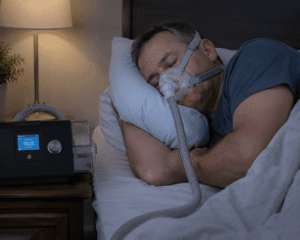
- Continuous positive airway pressure (CPAP): a CPAP sleeping machine delivers gentle air pressure through a mask to hold the airway open; it is the standard treatment for moderate and severe obstructive sleep apnoea
- Surgery: reserved for cases where other treatments have failed, because it does not always work and snoring can return
The National Institute for Health and Care Excellence (NICE) guideline on obstructive sleep apnoea in adults sets out which treatment suits each level of severity.
How Snoring and Sleep Apnoea Are Tested
Diagnosis starts with a conversation. Your GP will ask about your symptoms, check your nose and mouth and may ask you to complete the Epworth Sleepiness Scale. This short questionnaire asks how likely you are to doze off in everyday situations. A score above 10 points to excessive daytime sleepiness.
If sleep apnoea is suspected, the next step is a sleep study. You wear a small monitor overnight that records your breathing and heart rate; for most people this happens at home. A few people need to stay in a sleep clinic overnight.
On the NHS, this route starts with a GP referral. NHS sleep study waiting list times vary between trusts and can run to months in some areas, which is why many people choose a private sleep study instead.
Private Sleep Study at Friends Medical Service
Our home sleep study investigates sleep apnoea and UARS by monitoring your sleep patterns, breathing and heart rate. It is delivered in collaboration with Sleep Medical, which has more than 15 years of experience in sleep studies. The test does not investigate or diagnose other sleep conditions such as insomnia, narcolepsy, restless legs syndrome or parasomnias, so tell your GP if those are your main concern.
How It Works
- Choose your route. See our private GP for a referral. Alternatively upload one you already hold.
- Book online. Use the booking link on our Sleep Analysis page.
- Receive your kit. A home diagnostic kit and instructions are posted to you within three days of booking.
- Test at home. You wear the monitor overnight in your own bed.
- Get your results. Your data is analysed and the next steps are explained to you.
Sleep Study Pricing
| Option | Price |
|---|---|
| Sleep study including FMS private GP referral and management | £280 |
| Sleep study with your own GP referral (no physical appointment needed) | £210 |
Our sleep physiologist, Niall Totten, has around 15 years of experience in sleep physiology, is registered with the Registration Council for Clinical Physiologists and works as a Lead Respiratory/Sleep Physiologist in the Belfast Trust. You can meet the rest of our team on the Consultants page.
Joined-Up Care Around Your Sleep Study
Snoring has more than one cause for most people, so we look at the whole picture:
- GP appointments: see Dr Abdel Nasir Nour or another GP through our GP Appointment service. Our second website offers private GP appointments, same-day GP access and online GP consultations if travelling is difficult.
- Blood tests and health checks: our Blood Testing and Health Checks service can check for thyroid, diabetes and nutritional causes of tiredness.
- Lung health: if you smoke or have chronic cough, our Respiratory Consultant Service can assess your lungs; our COPD guide explains why COPD and sleep apnoea can coexist.
- Ongoing support: a GP subscription makes follow-up appointments easier to manage.
Our Lurgan clinic serves Craigavon, Belfast, Lisburn and the wider area. Patients from the Republic of Ireland are welcome too. Our Cross-Border (Ireland) Patients page explains how to access our services. For a broader look at our sleep services, read our complete guide to private sleep studies in Northern Ireland.
Frequently Asked Questions
Why am I suddenly snoring so loudly?
A sudden change in snoring has an identifiable trigger. Weight gain, a cold or allergy that blocks the nose, more alcohol than usual, a new sedative or the start of the menopause can all narrow or relax the airway. If the change lasts more than a few weeks or your partner notices pauses in breathing, see a GP.
Is snoring always a sign of sleep apnoea?
No. Many people snore without having sleep apnoea. Loud snoring becomes a concern when it comes with witnessed pauses in breathing, choking or gasping at night or heavy tiredness during the day. Those features justify a sleep apnoea test.
How do I know if I have sleep apnoea?
The warning signs are loud snoring, breathing pauses seen by a partner, waking up gasping for air, morning headaches and daytime sleepiness. Only a sleep study can confirm the diagnosis and grade it as mild, moderate or severe.
Can I have a sleep apnoea test at home?
Yes. A home sleep study is suitable for most people with suspected obstructive sleep apnoea. You wear a monitor in your own bed and your breathing and heart rate are recorded overnight. Our kit is posted to your home within three days of booking.
Do I need a GP referral for a private sleep study?
Yes. You can upload a referral from your own GP. Alternatively choose the route that includes a referral from our private GP, which means you can arrange everything in one place.
How much does a private sleep study cost?
At FMS the sleep study costs £280 when it includes our private GP referral and management. It costs £210 if you already have your own GP referral and do not need a physical appointment.
Can losing weight stop snoring?
For people who are overweight, losing weight is one of the most effective ways to reduce snoring because it lessens the pressure on the airway. It can also improve mild sleep apnoea. It will not cure every case, particularly where the cause is nasal or structural, so persistent symptoms still need assessment.
What is the Epworth Sleepiness Scale?
It is a short questionnaire that scores how likely you are to fall asleep in eight everyday situations, such as reading or sitting in a car as a passenger. Clinicians use it alongside a sleep study to judge how much sleepiness affects your daily life.
Do I have to tell the DVA about snoring or sleep apnoea?
Snoring alone does not need reporting. Sleep apnoea syndrome and any condition that causes excessive daytime sleepiness do. If you are excessively sleepy, do not drive until your symptoms are controlled and contact the Driver and Vehicle Agency. Your GP can advise on your situation.
Further Reading
If you’d like to read more from independent, patient-focused sources before your consultation, the following are reputable places to start:
- NHS: Snoring
- NHS: Sleep apnoea
- NICE guideline NG202: Obstructive sleep apnoea/hypopnoea syndrome and obesity hypoventilation syndrome in over 16s
- The Sleep Apnoea Trust: Patient information
- GOV.UK: Excessive sleepiness and driving
- nidirect: Car and motorcycle medical questionnaires
These sources supplement but do not replace a clinical assessment of your own symptoms.
Ready to Get Your Snoring Checked?
You do not have to live with loud snoring or put up with unexplained tiredness while you wait months for an NHS sleep study. A home sleep study can tell you within days whether your snoring is harmless or a sign of sleep apnoea. A clear result puts you on the path to treatment.
Book your sleep study online with Friends Medical Service and explore the full details of our Sleep Analysis service today. Alternatively, you can contact our clinic to ask a question first before you book.