A cough that will not settle, a change in your breathing or an ache in your chest that lingers is unsettling for anyone. It is completely natural for lung cancer to be the first thing that crosses your mind. This remains one of the most common cancers diagnosed in the UK and is still the leading cause of cancer death, yet outcomes have been steadily improving as awareness grows and diagnosis happens earlier.
Understanding what raises your risk and which symptoms warrant a same day conversation with a GP can make a genuine difference to how early the disease is caught. This guide walks through the symptoms, causes, diagnostic pathway and treatment landscape and explains how patients across Lurgan, Belfast, Craigavon, Portadown, Lisburn, Banbridge and Armagh can access fast, private respiratory assessment.
What Is Lung Cancer?
Lung cancer develops when cells within the lung tissue begin to divide and grow in an uncontrolled way, forming a tumour that can interfere with normal lung function and spread to other parts of the body if left untreated. There are two broad types. Non-small-cell lung cancer (NSCLC) is the more common form and includes several subtypes that tend to grow and spread at a relatively slower pace. Small-cell lung cancer (SCLC) is less common but tends to grow more quickly and is very strongly associated with smoking history. The type, along with the stage at diagnosis, shapes which treatment options are appropriate and what the outlook is likely to be.
Because the lungs have a relatively large amount of functional reserve, the disease often grows for some time before it produces noticeable symptoms. This is one of the central challenges it presents and the reason that symptom awareness and prompt GP assessment matter so much.
How Common Is Lung Cancer in the UK?
Lung cancer is one of the most frequently diagnosed cancers in the UK and remains the single biggest cause of cancer death, responsible for around 32,800 deaths across the UK each year. That works out at roughly 90 people a day. The encouraging news is that mortality rates have fallen by more than a fifth over the past decade as treatments have improved and diagnosis pathways have become faster. Survival is also heavily linked to the stage at which the disease is found. One year survival for people diagnosed at the earliest stage is dramatically higher than for those diagnosed once it has already spread. This is why early recognition of symptoms and swift referral remain such powerful tools.
Northern Ireland does not currently have the same targeted lung cancer screening programme that has been rolled out across England, where adults aged 55 to 74 with a smoking history are proactively invited for a lung health check. Scotland and Northern Ireland are still working towards introducing an equivalent programme. Queen’s University Belfast has secured research funding to help establish a screening pathway across the island of Ireland. Until a local screening programme is in place, symptom awareness and a low threshold for seeing a GP are the most important tools available to patients here.
Signs and Symptoms of Lung Cancer
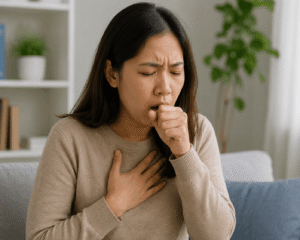
Lung cancer symptoms can be easy to dismiss because many overlap with more common and less serious respiratory conditions such as bronchitis or a lingering chest infection. Knowing what to look out for helps you decide when it is time to book an appointment rather than wait things out.
Common symptoms include:
- A new cough lasting three weeks or longer
- A noticeable change in a long-standing cough
- Coughing up blood, even a small amount
- Breathlessness or wheezing that develops for no obvious reason
- Chest infections that keep coming back or do not fully clear
- Chest or shoulder pain that does not settle
- A hoarse voice lasting three weeks or more
- Unexplained weight loss or loss of appetite
- Persistent tiredness or fatigue
Not everyone experiences symptoms early on. Some cases are picked up incidentally when a chest X-ray is carried out for an unrelated reason. Around 15 in every 100 people diagnosed with lung cancer have never smoked, so the absence of a smoking history should never be a reason to dismiss persistent symptoms.
What Causes Lung Cancer?
Smoking tobacco is by far the biggest risk factor for lung cancer and is responsible for the large majority of cases diagnosed in the UK. Cigarette smoke contains thousands of chemicals, dozens of which are known to cause cancer. The longer and more heavily someone has smoked, the greater their risk becomes. Quitting at any age reduces risk over time, even after decades of smoking.
Beyond smoking, several other factors contribute to risk:
- Passive smoking. Regular exposure to other people’s smoke raises risk even for people who have never smoked themselves.
- Radon gas. A naturally occurring radioactive gas found in some homes and workplaces that is a recognised cause of lung cancer.
- Occupational exposure. Asbestos, silica dust, diesel exhaust and certain industrial chemicals encountered in construction, manufacturing or mining raise risk, particularly when combined with smoking.
- Air pollution. Long term exposure to outdoor air pollution has been recognised as a contributing factor.
- Family history. Having a close relative diagnosed can slightly increase personal risk, even when shared smoking habits are accounted for.
- Age. Risk increases with age and most diagnoses occur in people over 65.
- Previous lung disease. Long-standing conditions such as chronic obstructive pulmonary disease (COPD) or pulmonary fibrosis are linked with a modestly higher risk.
Having one or more risk factors does not mean lung cancer is inevitable. Plenty of people with no obvious risk factors are still diagnosed and the reverse is also true. Risk factors shift the odds rather than determine outcomes.

When to See a GP About These Symptoms
If you notice any of the symptoms listed above and they last more than three weeks, it is worth booking a GP appointment to have them properly assessed. National guidance recommends that adults aged 40 and over with two or more unexplained symptoms, such as a persistent cough, breathlessness, chest pain, fatigue, weight loss or appetite loss, should be offered an urgent chest X-ray within two weeks. This threshold drops to just one symptom for anyone who has ever smoked. Coughing up blood at any age also warrants prompt investigation.
If you experience severe difficulty breathing, sudden collapse or chest pain that could suggest a heart problem, this needs emergency care rather than a routine appointment. Call 999 immediately.
For everything else, a same day or fast-access private GP appointment gives you the chance to discuss your symptoms, have an examination and be referred onward for the right tests without a long wait. Our private GP appointment service offers both face to face and video consultations. A face to face assessment is generally the right choice when a chest examination is needed.
How Lung Cancer Is Diagnosed
Diagnosing lung cancer is a staged process that usually starts in general practice and moves through to specialist respiratory assessment if anything of concern is found.
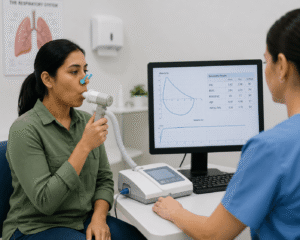
- Initial GP assessment. Your GP will take a history of your symptoms, examine your chest and may ask you to breathe into a device to measure your lung function. A blood test may also be arranged to rule out simpler explanations such as a chest infection.
- Chest X-ray. This is usually the first imaging test used to investigate suspected cases. Most lung tumours show up on an X-ray as an abnormal area of the lung, although an X-ray alone cannot confirm a diagnosis.
- CT scan. If the X-ray raises concern, a computed tomography (CT) scan provides much more detailed images and helps specialists understand the size and position of any abnormal area.
- Referral to a respiratory specialist. Where imaging findings are suspicious, you will be referred to a consultant in respiratory medicine for further assessment, which may include a bronchoscopy or biopsy to confirm the diagnosis and identify the exact cell type involved.
- Staging. If lung cancer is confirmed, further tests establish how far it has spread, which guides which treatments are most appropriate.
A lung function test measures how well your lungs are working and can form a useful part of the wider assessment of persistent breathlessness or cough, although it is important to understand that spirometry checks lung function rather than looking directly for a tumour. Chest imaging and specialist review remain the tests that actually identify the disease. Where a GP identifies findings that warrant specialist input, our respiratory consultant service provides fast, private access to Dr Hagan, a consultant respiratory physician whose areas of expertise on the NHS include asthma, chronic obstructive pulmonary disease, pulmonary fibrosis, sarcoidosis, chronic cough, lung cancer and bronchiectasis, alongside a particular interest in undiagnosed breathlessness.
Lung Cancer Screening: What Patients in Northern Ireland Should Know
In England, the NHS Targeted Lung Health Check programme invites current and former smokers aged 55 to 74 for a low-dose CT scan, aiming to catch the disease before symptoms appear, when treatment options are widest. This programme has not yet been introduced in Northern Ireland, Scotland or Wales, although research and pilot work are underway, including a Queen’s University Belfast-led project exploring how a screening pathway could be established across the island of Ireland.
Until that changes, patients in Northern Ireland cannot rely on a routine invitation to flag their risk. This makes it especially important to know the symptoms, understand your own risk factors and act quickly if something feels wrong rather than waiting to be called for a check. If you have a significant smoking history and are concerned about your risk, discussing this openly with a GP is the most reliable route to appropriate assessment while a formal screening programme remains unavailable locally.
Treatment Options for Lung Cancer
Treatment for lung cancer depends on the type and stage of the disease as well as a patient’s general health. A specialist multidisciplinary team plans the approach for each individual. Broadly, treatment options include:
- Surgery. Removing part or all of an affected lung offers the best chance of cure for early stage non-small-cell lung cancer in patients fit enough for the operation.
- Radiotherapy. High energy radiation is used to target and destroy cancer cells, either aiming for a cure in early disease or to control symptoms in more advanced cases.
- Chemotherapy. Medication that kills rapidly dividing cells throughout the body, often used alongside surgery or radiotherapy or as the main treatment for more advanced disease.
- Targeted therapy and immunotherapy. Newer treatments that work on specific genetic changes within cancer cells or that help the immune system recognise and attack cancer, now used for an increasing proportion of patients.
- Palliative and supportive care. For people with advanced disease, treatment focused on controlling symptoms and maintaining quality of life is an important and valid part of care.
Treatment planning sits with NHS specialist cancer teams. A diagnosis like this is understandably a great deal to take in. Charities such as Macmillan Cancer Support and the Roy Castle Lung Cancer Foundation offer dedicated guidance on what to expect at each stage, alongside practical, emotional support for patients and families.
Living With a Lung Cancer Diagnosis
A diagnosis affects far more than physical health. Many patients describe the period immediately after diagnosis as one of the hardest parts of the whole experience, simply because there is so much new information to absorb at once. Clinical nurse specialists attached to your treatment team are usually the first point of contact for practical questions between appointments. Most cancer centres in Northern Ireland have dedicated support staff who can help with everything from managing side effects to signposting financial and benefits advice.
Staying connected to family, friends and support groups tends to help people cope better through treatment. There is no requirement to manage everything alone. Support lines run by national charities can be a useful supplement to the care provided by your specialist team, particularly in the early days after diagnosis when questions often outnumber answers.
Reducing Your Risk and Protecting Your Lung Health
Stopping smoking is the single most effective action anyone can take to lower their risk. The benefit begins almost immediately after the last cigarette and continues to grow over the following years. If you smoke and want support to quit, your GP can talk through nicotine replacement therapy, prescription medication and local stop smoking services that significantly improve the chances of quitting for good. Our complete guide to quitting smoking walks through the stop smoking aids that work, how to build a practical quit plan and how to cope with cravings, whether this is your first attempt or your fifth.
Beyond smoking cessation, protecting your lung health more broadly includes reducing exposure to workplace irritants where possible, following safety guidance around substances such as asbestos and silica and staying aware of your own breathing and general wellbeing over time. Our Full Blood Count guide and wider blood testing and health check packages, which include tumour marker testing within our more comprehensive panels, can form part of a broader picture of your general health.
It is important to understand that tumour marker blood tests are not a stand-alone screening tool for lung cancer and cannot replace chest imaging where symptoms are present. If you notice new or worsening breathlessness, our guide to heart health is also worth reading, since heart and lung symptoms can overlap and both deserve prompt assessment.
If you already live with a respiratory condition such as asthma, COPD, emphysema or bronchitis, staying on top of your management plan and flagging any change in your usual symptoms to your GP promptly is particularly important, since a change outside your normal pattern is exactly the kind of signal that warrants a closer look.

How Friends Medical Service Can Help
At Friends Medical Service, our Lurgan clinic offers a clear, private pathway for anyone concerned about respiratory symptoms, including those that could indicate a more serious underlying condition.
- Private GP appointment. Book a face to face or video GP appointment to discuss your symptoms, have an examination and be guided onto the right next step, whether that is a referral for imaging, a lung function test or specialist review.
- Lung function test. Our lung function test service includes spirometry and FeNO testing to assess how well your lungs are working, forming part of a wider respiratory assessment alongside your GP’s clinical judgement.
- Respiratory consultant service. For fast, private specialist input, our respiratory consultant service gives you direct access to Dr Hagan for the assessment of persistent cough, breathlessness and other respiratory concerns. You can read more about our approach to respiratory care in our complete guide to respiratory consultations and lung function tests.
- Wider consultant team. Browse our full team on the consultants page to learn more about the specialists supporting your care.
We welcome patients from Lurgan, Belfast, Craigavon, Portadown, Lisburn, Banbridge and Armagh. We also see cross-border patients from the Republic of Ireland. You can find out more on our dedicated page for cross-border patients.
Frequently Asked Questions
Is a persistent cough always a sign of lung cancer?
No. A cough lasting more than three weeks has many possible causes, including chest infections, asthma, COPD, acid reflux and medication side effects. It is one of the less common explanations, but because a persistent cough is one of the more frequent early symptoms, it should always be assessed by a GP rather than left to resolve on its own, particularly in anyone over 40 or with a smoking history.
Can non-smokers get lung cancer?
Yes. While smoking is the leading cause, around 15 in every 100 people diagnosed have never smoked. Other risk factors such as radon exposure, occupational chemicals, air pollution, family history and certain genetic changes can all play a role in people who have never smoked, so symptoms should never be dismissed purely on the basis of smoking history.
What is the difference between small cell and non-small cell lung cancer?
Non-small-cell lung cancer accounts for the majority of cases and generally grows and spreads more slowly, offering a wider range of treatment options including surgery in early stages. Small-cell disease is less common, tends to grow and spread more quickly and is very closely linked to smoking history, so it is usually treated with chemotherapy and radiotherapy rather than surgery.
Is lung cancer screening available in Northern Ireland?
Not yet. England has introduced a targeted lung health check programme for people aged 55 to 74 with a smoking history, but this has not been rolled out in Northern Ireland, Scotland or Wales. Research including a Queen’s University Belfast project is exploring how a similar programme could be established locally. Until that happens, symptom awareness and prompt GP assessment remain the main route to early diagnosis for patients here.
Can a lung function test detect lung cancer?
A lung function test measures how well air moves in and out of your lungs and is useful for assessing conditions such as asthma and COPD or investigating unexplained breathlessness, but it does not directly detect tumours. Diagnosing it relies on chest imaging such as an X-ray or CT scan, followed by specialist assessment and often a biopsy, rather than on lung function testing alone.
How quickly should I be seen if lung cancer is suspected?
National guidance recommends an urgent chest X-ray within two weeks for adults aged 40 and over with relevant unexplained symptoms. A suspected cancer pathway referral applies for anyone with X-ray findings that suggest lung cancer or unexplained coughing up blood. Acting on symptoms promptly rather than waiting gives you the best chance of a fast, clear answer.
Does quitting smoking still help if I’ve already smoked for years?
Yes. Risk falls steadily the longer someone has been smoke-free, regardless of how long or how heavily they smoked beforehand. Quitting also reduces risk of heart disease, stroke and other smoking-related conditions. Support from a GP significantly improves the likelihood of quitting successfully and staying smoke-free.
What support is available if I or a family member is diagnosed?
Alongside your NHS specialist team, national charities such as Macmillan Cancer Support and the Roy Castle Lung Cancer Foundation offer telephone support lines, online communities and practical guidance covering everything from treatment side effects to financial support. Many patients find it helpful to bring a family member or friend to appointments, both for emotional support and as a second pair of ears for the information discussed.
What should I do if I’m worried about my symptoms?
Book an appointment with a GP rather than waiting to see if symptoms settle on their own. Most people who are investigated for possible symptoms turn out to have a different, less serious explanation, but the only way to know for certain is through proper assessment, so acting promptly is always the right choice.
Further Reading
If you’d like to read more from independent, patient-focused sources before your consultation, the following are reputable places to start:
- NHS: Lung cancer for an overview of symptoms, causes, diagnosis and treatment
- NHS: Lung cancer diagnosis for a detailed walkthrough of the tests involved
- NICE guideline NG12: Suspected cancer, recognition and referral for the clinical referral criteria used across the UK
- Cancer Research UK: Lung cancer for statistics, symptoms and support information
- Roy Castle Lung Cancer Foundation for dedicated information and patient support
- Macmillan Cancer Support: Lung cancer for practical and emotional support through diagnosis and treatment
These resources are a helpful starting point, but they supplement rather than replace a proper clinical assessment of your own symptoms and circumstances.
Final Thoughts
Most people who develop a persistent cough, unexplained breathlessness or other respiratory symptoms will not have lung cancer, but the only way to know for certain is to have those symptoms properly assessed rather than hoping they pass. Recognising the signs, understanding your personal risk factors and knowing when to seek help are the most powerful tools available to patients in Northern Ireland while a local screening programme remains some way off.
If you are concerned about a persistent cough, breathlessness, chest pain or any other symptom discussed in this guide, we encourage you to act promptly rather than wait. Book a private GP appointment for an initial assessment, arrange a lung function test as part of investigating your breathing or request fast, private access to our respiratory consultant service for specialist input. You can also get in touch with our team with any questions about which service is right for you.